🇵🇱 Country guide
Poland Travel Guide
A powerful history-and-nature route from a reborn capital to Baltic ports, Gothic cities and Tatra trails.
Gateway
Warsaw · WAW
Capital
Warsaw
Best time
April–June · September–December
Budget
Moderate
Don't miss
Going from the square in Kraków to the quiet morning trails of the Tatras
How to plan a route through Poland
For a first route, use the fast train between Warsaw and Kraków and give each four to five nights. Adding Gdańsk as a third city gives a strong 12–15-day backbone. Wrocław and Poznań are to the west, Lublin to the east; on a short holiday, don't gather both on the same line.
Toruń can be added with one or two nights between Gdańsk–Poznań or Warsaw. Zakopane makes more sense as a four-night mountain base with a weather buffer than as a crowded day transfer from Kraków. Plan Auschwitz-Birkenau, Majdanek and the war museums as places of remembrance and learning, not as entertainment stops.
What to know before travelling to Poland
The Schengen visa and the main-destination rule
Depending on your passport, a short tourist visit is visa-free or needs a Schengen visa. The Polish mission defines the type C visa within a framework of at most 90 days in 180; you apply when Poland is the sole or main destination, using only the official mission and the authorised VFS channel.
Pay in złoty
Cards are very common; even so, you'll need some PLN for mountain huts, markets and small rural connections. Read ATM fees, prefer bank machines and choose PLN, not your home currency or euros, on the card terminal.
Keep PKP Intercity separate from regional operators
PKP Intercity is the main source for long distances; different companies run regional lines. Check the train number, station, carriage and which operator your ticket is valid with. Don't mistake a city app's route suggestion for ticket validity.
At places of remembrance, behaviour is part of the route
At Auschwitz-Birkenau, Majdanek, the ghetto and war memorials, behave quietly, appropriately to the context and according to official rules. Don't turn human loss into a selfie backdrop; leave room for mental rest between intensive visits.
In the Tatras, park and rescue notices are decisive
TOPR and Tatra National Park may issue notices about weather, storms, avalanches, bears or trail closures. Don't enter closed routes; carry proper footwear, layers and water. Confirm mountain rescue cover with your insurer.
10–13 days
First Polish cities
Four to five nights per city; a rhythm of one memorial museum, one neighbourhood and one slow day.
7–10 days
A Baltic and Gothic route
Gdańsk four, Toruń two nights; add only one of Sopot/Gdynia or Malbork.
7–9 days
Western Polish cities
Wrocław four, Poznań three nights; choose Książ/Świdnica or Gniezno depending on your interests.
9–12 days
Mountains and eastern culture
Two separate, distant legs; transport via Kraków/Warsaw and at least four nights for each.
Practical information for Poland
Entry requirements
Poland is in the Schengen Area. Depending on your nationality, short stays of up to 90 days in any 180 are visa-free or require a Type C Schengen visa, applied for only through Poland's official representation or its authorised VFS channel when Poland is your main destination. The number of entries and the duration granted on a visa also determine what you can do.
Money and payments
The Polish złoty is used; card and contactless payments are very common. Carry some PLN for markets, mountain huts, small lockers and rural minibuses. Read the high fixed fees of independent ATMs; decline dynamic currency conversion by choosing PLN on the terminal rather than your home currency or euros.
Languages
Polish is the official language; in big cities and tourist areas you can often get by in English. Saving names such as Wrocław, Łódź and Gdańsk in their local spelling makes ticket searches easier. At sites linked to war, occupation, the Holocaust and the communist era, word choice and photography behaviour matter especially.
Phones, internet and apps
PKP Intercity is the main source for long-distance trains; regional trains are run by different operators. Jakdojade shows local public transport in many cities, but verify ticket validity with the operator. On a Tatra day, check TOPR/TPN weather and trail notices; on the coast, check the wind and last return on the day.
Budget
List Kraków and coastal weekends, Tatra transfers, museum bookings and fast-train fares separately; don't calculate złoty at old blog exchange rates.
On a budget plan, think hostels/guesthouses, milk bars, municipal transport and selected museums; mid-range brings central rooms, fast trains and two paid visits; a comfortable plan features boutique hotels, good restaurants and guided memory/nature tours. Kraków, Gdańsk in summer, New Year and Zakopane ski weeks push prices up fast.
Cities and nature routes to visit in Poland
The places to visit in Poland show the country's lively present and regional diversity as much as its wartime memory. Warsaw opens up reconstruction and a contemporary metropolis, Kraków royal and Jewish heritage, and Gdańsk the Baltic and the history of Solidarity. Wrocław is Silesia's islands, Poznań the early history of Greater Poland, Toruń brick Gothic and Copernicus, and Lublin a multicultural eastern route. Zakopane balances a city week with the Tatras' serious mountain conditions.
Original guides are live for all 8 cities
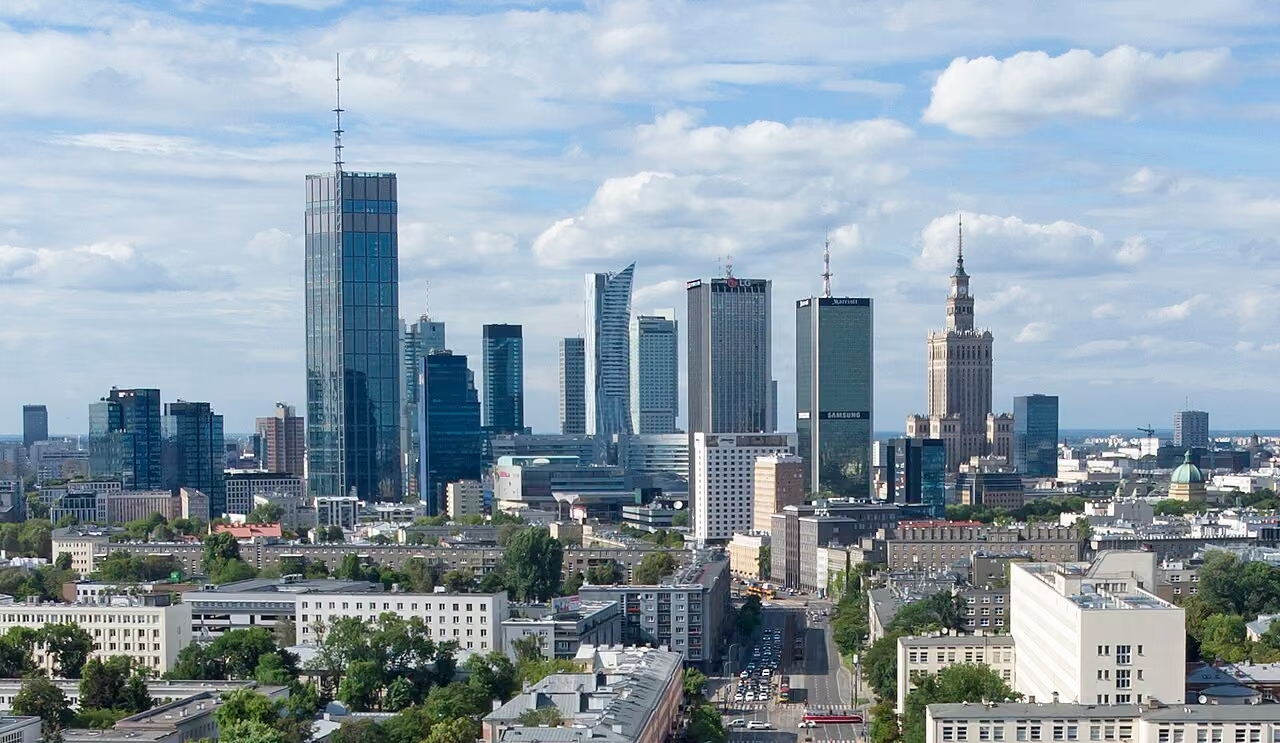 Guide live
Warsaw
A rebuilt old town, great memorial museums, the Vistula and modern neighbourhoods.
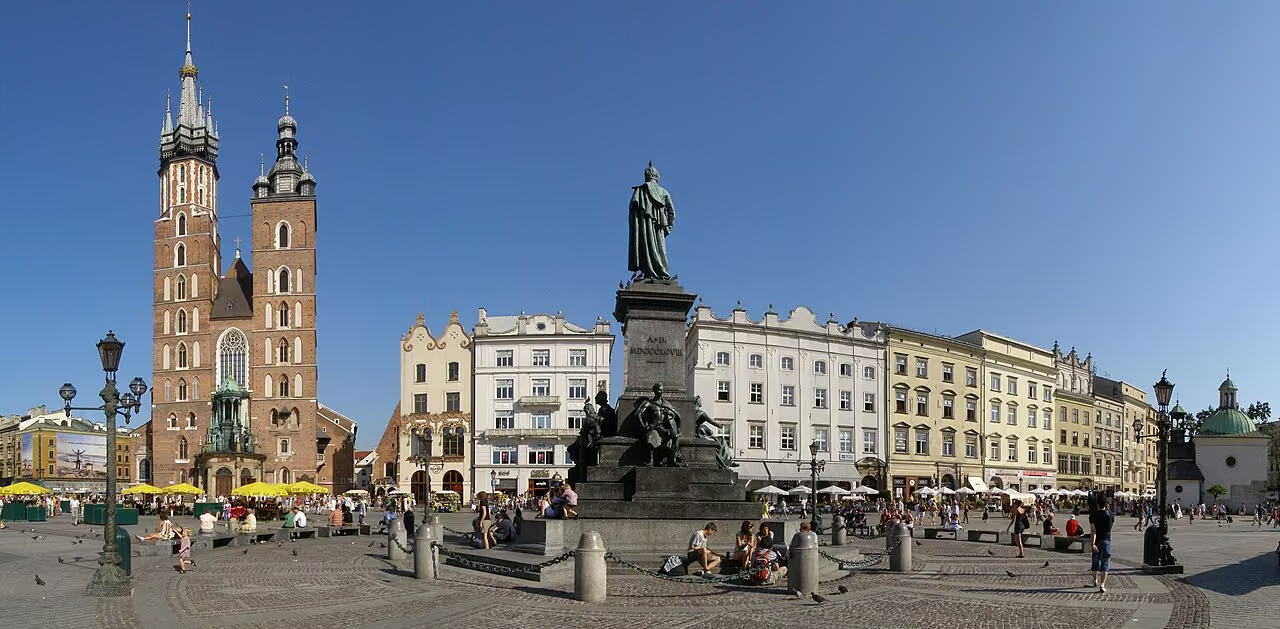 Guide live
Kraków
Wawel, the great medieval square, Kazimierz and memorial routes that call for care.
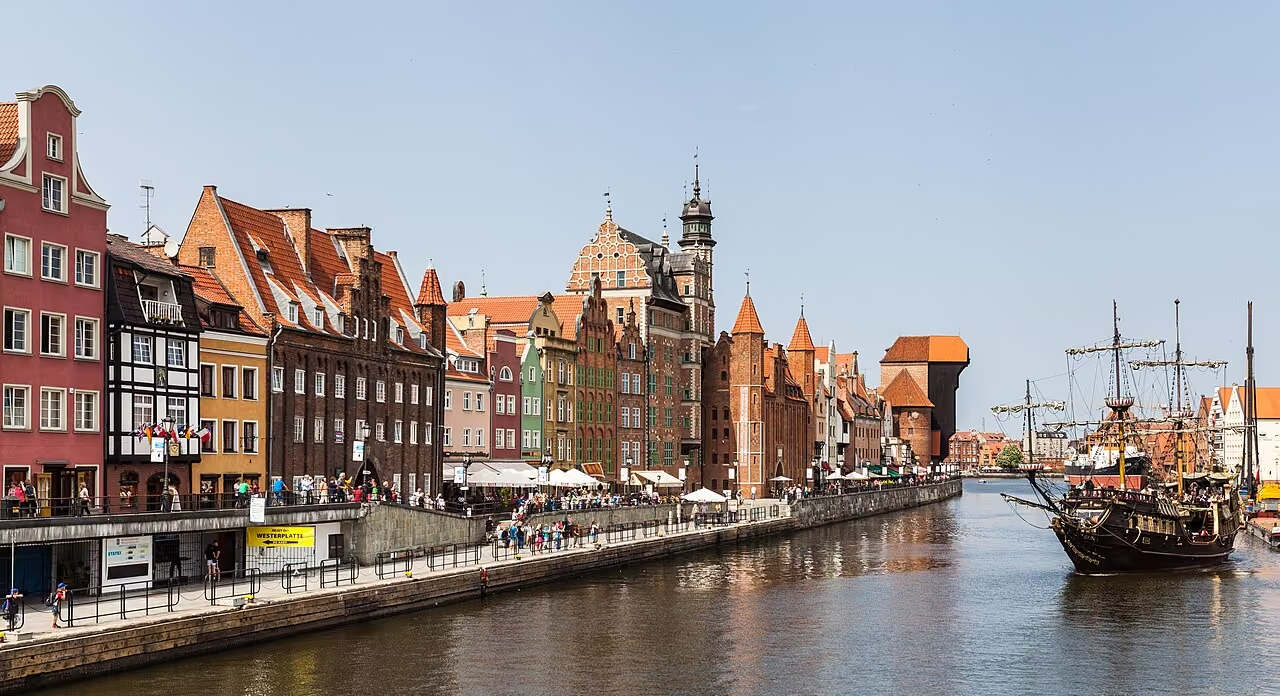 Guide live
Gdańsk
A many-layered Baltic port of Hanseatic façades, the shipyard and the history of Solidarity.
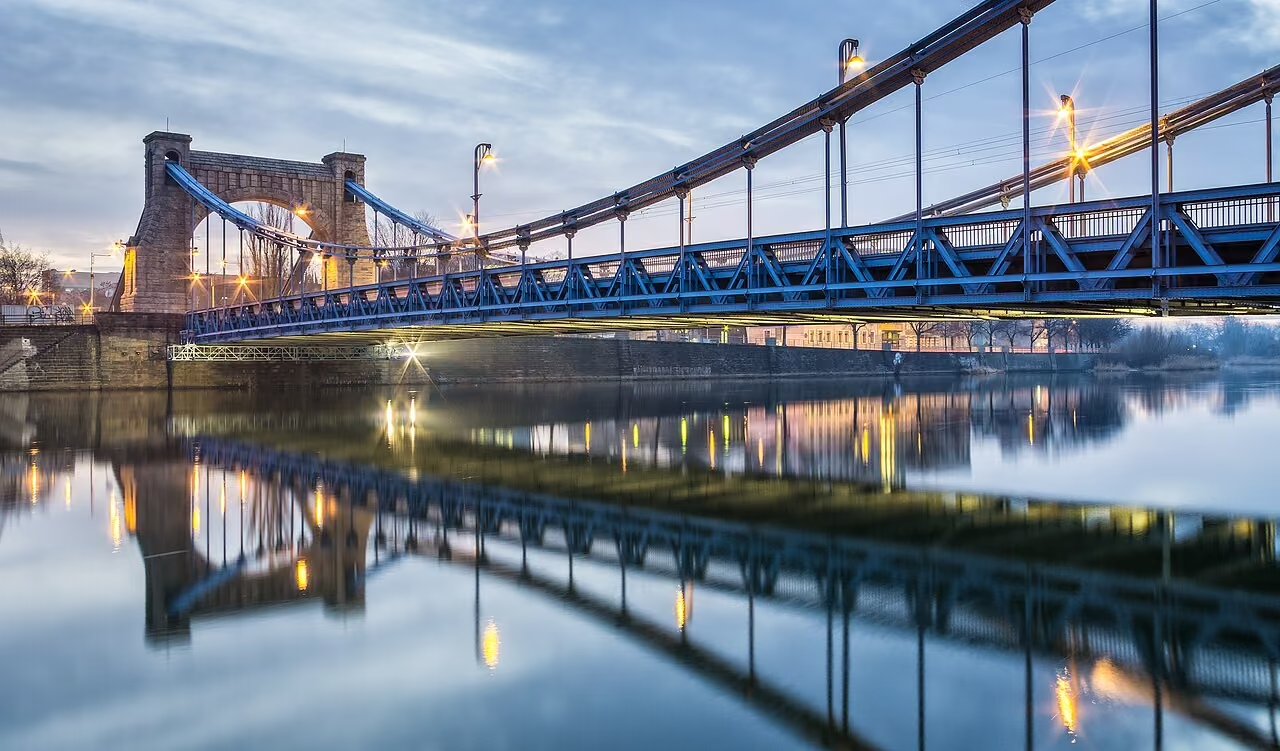 Guide live
Wrocław
The layered cultural capital of Silesia, with Oder islands, bridges and a colourful market square.
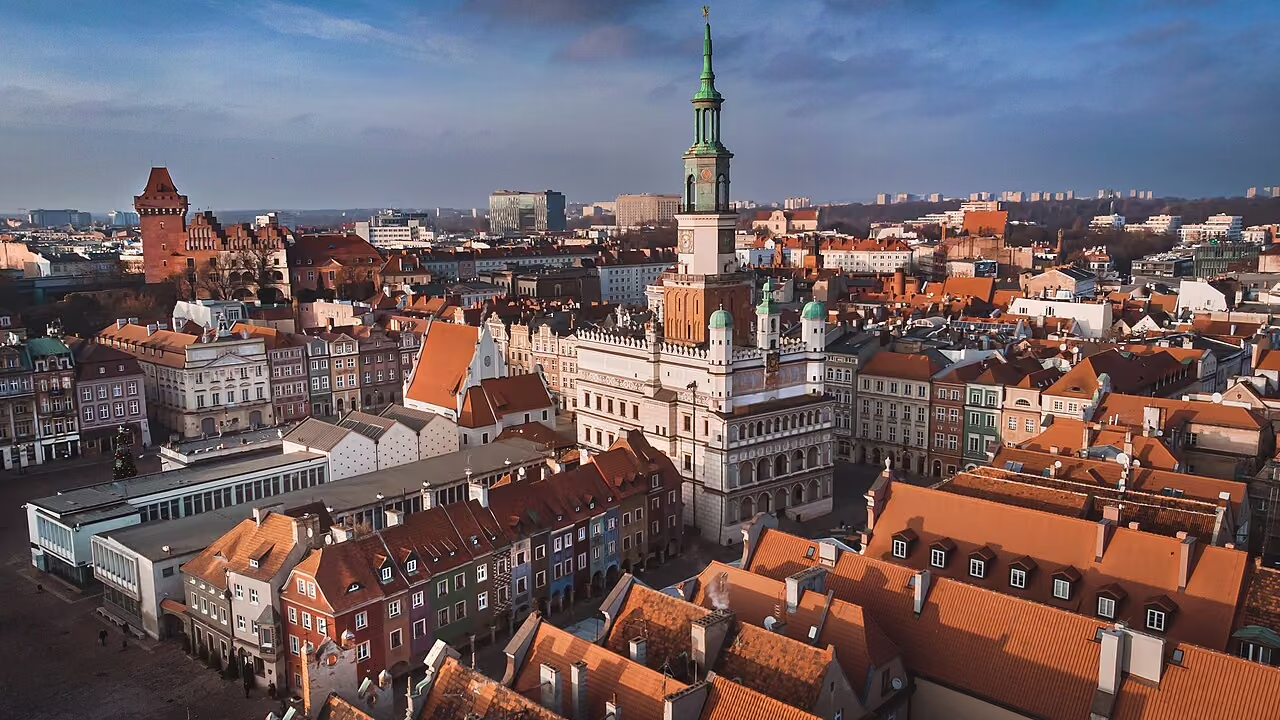 Guide live
Poznań
A Renaissance square, the cathedral island, early Polish history and creative neighbourhoods.
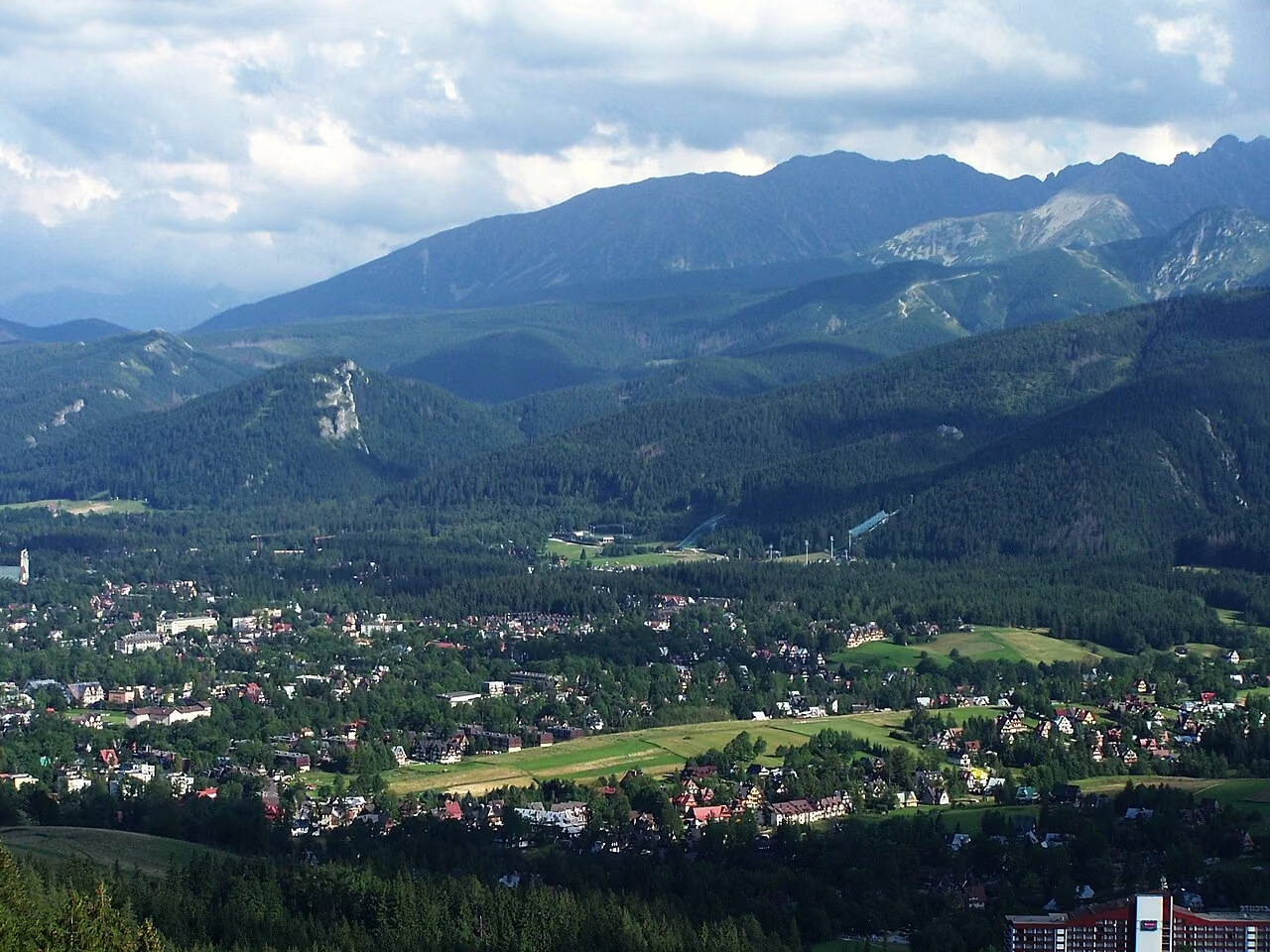 Guide live
Zakopane
Tatra hikes, skiing, wooden villas, Górale culture and mountain cuisine.
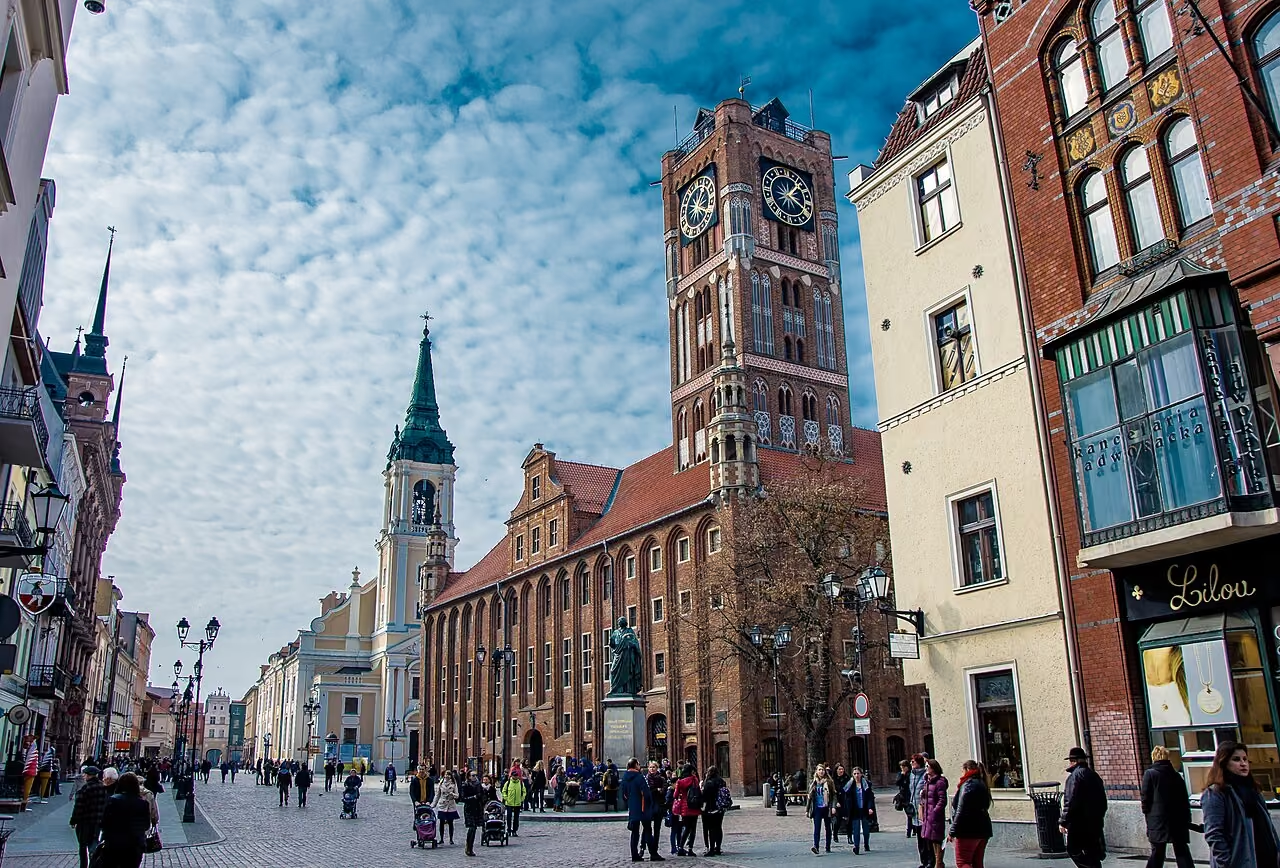 Guide live
Toruń
A UNESCO brick-Gothic centre, the legacy of Copernicus and a living piernik gingerbread tradition.
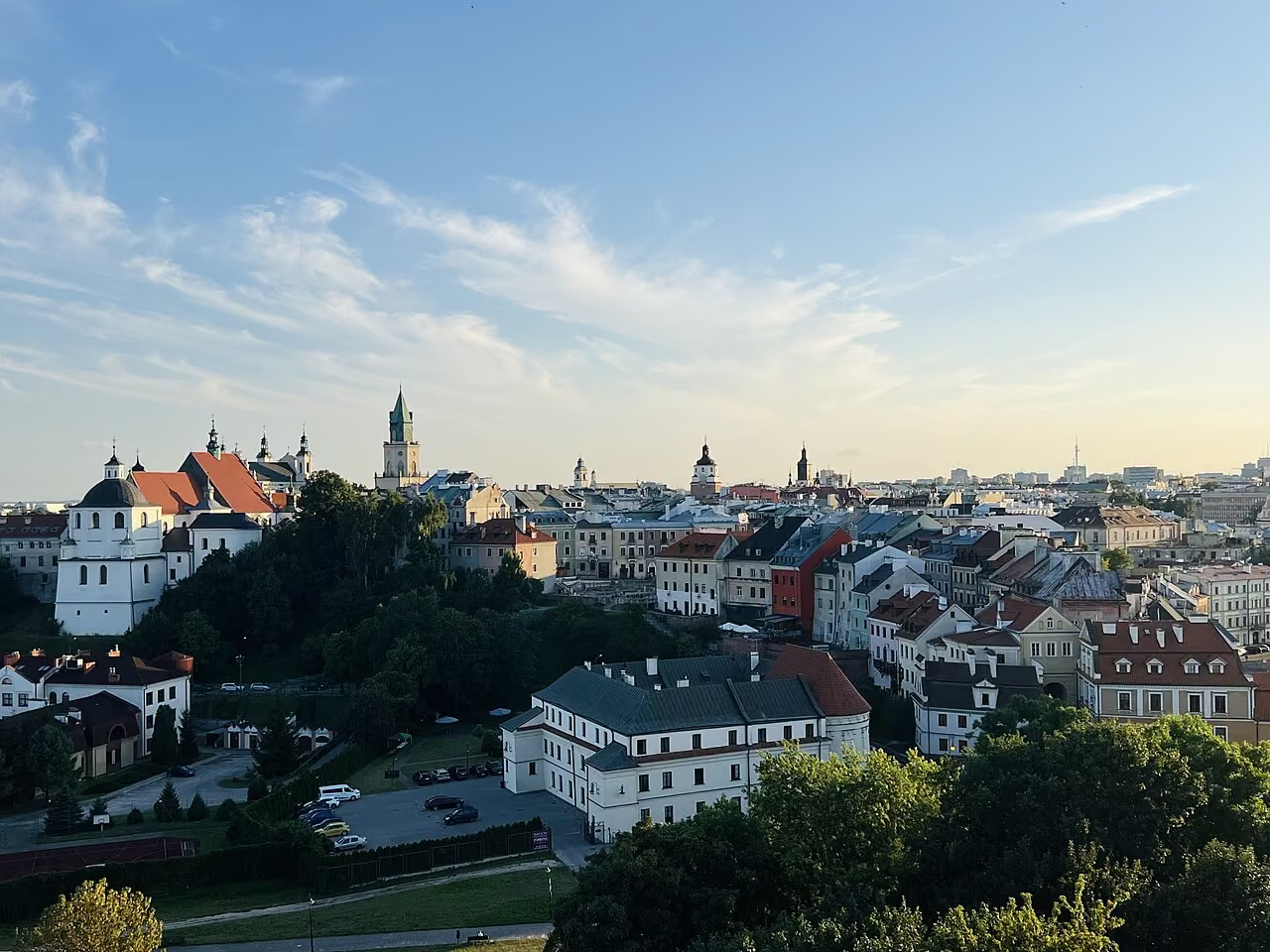 Guide live
Lublin
Eastern Poland's old town, its multicultural heritage and powerful places of memory.
Image credits
- Emptywords · source · CC BY-SA 4.0
- Andrzej Otrębski · source · CC BY-SA 4.0
- Diego Delso · source · CC BY-SA 3.0
- Jar.ciurus · source · CC BY-SA 3.0 pl
- Aneta Pawska · source · CC BY-SA 4.0
- Jerzy Opioła · source · CC BY-SA 4.0
- Domun · source · CC BY 3.0