🇫🇷 Country guide
France Travel Guide
Romance, haute cuisine and art worked into every cobblestone.
Gateway
Paris · CDG
Capital
Paris
Best time
May–June · September–October
Budget
High
Don't miss
The last light falling on the Seine from the Pont des Arts
How to plan a route through France
Don't plan France as a few quick stops tacked onto Paris. Paris is a journey in its own right for its great museums and neighbourhoods; Lyon opens up gastronomy and Roman heritage, Marseille the multicultural port identity of the Mediterranean, Nice the shores of the Côte d'Azur, Bordeaux wine country and Strasbourg the French–German layers of Alsace. Climate, cuisine and city rhythm change markedly within the same country.
The TGV network links Paris quickly to Lyon, Marseille, Bordeaux and Strasbourg; Nice is a longer south-eastern leg. Remember that not every line leaves from the same station in Paris and that OUIGO and TGV INOUI can have different luggage and change conditions. In 8–10 days Paris plus one region is balanced; in 12–14 days, Paris and two main bases. Match cities not by how close they are on the map but by train time and the experience you want.
What to know before travelling to France
Confirm visas and the border system through official channels
Whether you need a Schengen visa for a short tourist trip depends on your nationality; check the result for your passport type and personal situation with the France-Visas visa assistant. EES electronically records the entries and exits of short-stay visitors at the Schengen external borders. ETIAS is not yet operating as of August 2026; follow only the official European Union page for the start date and don't pay sites claiming to sell early applications.
TGV, OUIGO and TER don't work with the same ticket logic
TGV INOUI and OUIGO are tied to a specific train and seat; luggage, station, change and refund conditions can vary by fare. TER regional trains mostly have no seat reservations and the rules can differ by region. An SNCF Connect e-ticket doesn't need separate validation on the platform; download it for offline use, carry the same ID as the passenger named on the ticket and check the right station before departure.
Don't apply Paris's transport rules to the whole of France
Using a contactless bank card varies from city to city: it's common on Lyon's TCL network, but in summer 2026 it is not a general gate payment method on the Paris metro; in Strasbourg the open payment system is not yet fully in place. Nice, Marseille and Bordeaux have their own card, app and validation rules. Validate your ticket on first boarding and, where required, at every transfer; don't assume the same bank card counts as a group ticket.
Tax and service are included in restaurant prices
In France the menu price includes tax and service, as the phrase "prix service compris" explains. Tipping isn't mandatory; a little cash or rounding up for service you liked is your choice. With a meal you can ask for tap water with "une carafe d'eau, s'il vous plaît"; asking for a free carafe of water is not ordering bottled water. Book dinner at popular small restaurants and check Sunday–Monday closures.
For a car, think about your licence, ZFE and Crit'Air together
For a short visit a non-EU licence must be valid and, if it isn't in French, backed up by an official translation or an international driving permit; an IDP does not replace the original licence. Low-emission zones apply different rules city by city, and foreign-registered vehicles may also need a Crit'Air sticker. Get the sticker in advance only via certificat-air.gouv.fr; before driving a rental car into a centre, confirm the plate and sticker status in writing with the company.
Watch out for pay-later traps on motorways and in car parks
Some French motorways have a barrier-free "flux libre" toll system: your plate is read and payment is made online or at an authorised point within a set period. Don't assume the rental company will sort this out automatically; an administration fee may be added. In town, read the roadside parking rules on the signs, as they vary by zone, time and environmental sticker. In the centres of the six guide cities a car is usually a burden rather than an advantage.
Tourist tax may appear separately from the booking total
The accommodation tax varies by municipality, property class, person and night; some platforms collect it at payment, others at the property. Don't copy the amount from Paris or Nice to another city, and don't trust a fixed figure from an old blog. Confirm the "taxe de séjour" line in the booking breakdown, age exemptions and the payment method directly with the property.
A non-EU phone line may not roam like at home
A non-EU mobile line is not automatically covered by the EU's "roam like at home"; check your operator's France package. A data eSIM runs maps and ticket apps but most don't give you a French phone number. Before changing your app store country, look at the web or mobile wallet options of SNCF Connect, the city transport app and museum websites.
Read strike and maintenance notices just before you travel
National rail, city transport and air traffic strikes, as well as planned engineering works, can change connections. Check SNCF Connect and the local operator's traffic page the day before, and again on the morning you head to the airport. Leave a wide margin between separately ticketed trains and flights; don't plan a distant day trip that connects to your last international flight on the same day.
9–11 days
A first trip to France
Five nights in Paris, two to three in Lyon, three in Nice. Travel from north to south by TGV; keep Côte d'Azur day trips within the Nice leg.
8–10 days
The Mediterranean and the Rhône line
A logical train route from gastronomy to port culture and the shores of the Riviera. Keep calanque and beach days flexible according to weather and sea conditions.
7–9 days
Wine and the Atlantic
Four to five nights in Paris, three to four in Bordeaux. Add a vineyard trip to Saint-Émilion or the Médoc as a booked full day from Bordeaux.
6–8 days
Two cultures in the north-east
Move from the Paris museums to Alsace by TGV. Combine Strasbourg with Colmar or the wine route; during the Christmas market season book accommodation very early.
Cities to visit in France and city guides
The cities to visit in France are not just Paris. Paris, with its museums and neighbourhoods, is the classic starting point; Lyon adds gastronomy, Marseille port culture, Nice the Mediterranean coast, Bordeaux wine country and Strasbourg Alsatian architecture as different layers of the journey. The high-speed rail network makes it easy to combine cities, but on a short trip adding a single region to Paris is more enjoyable than constantly moving on.
Original guides are live for all 6 cities
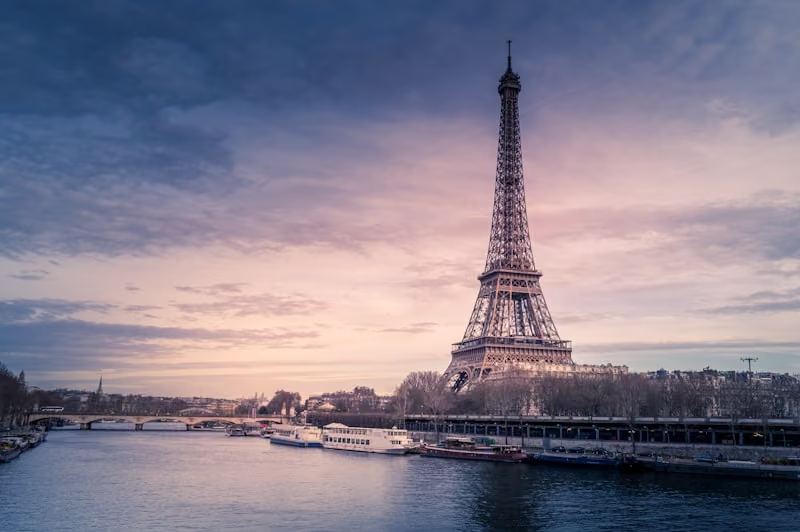 Guide live
Paris
The City of Light — the Eiffel Tower, the Louvre and café culture.
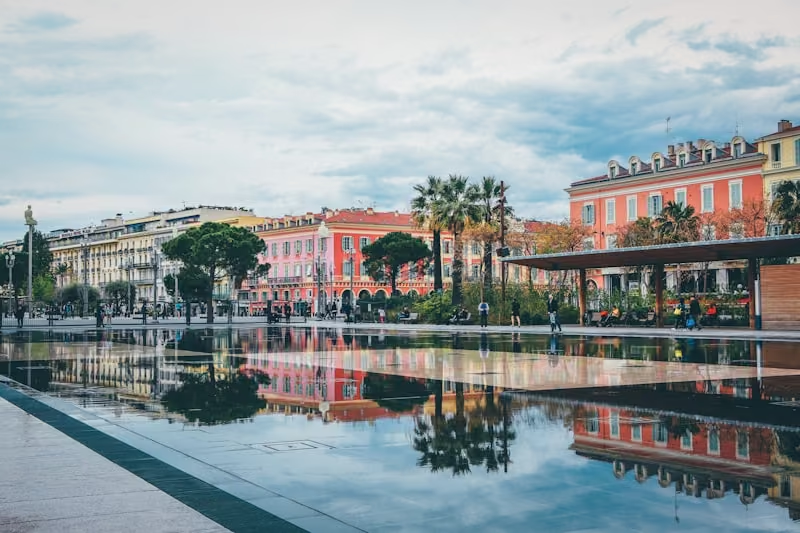 Guide live
Nice
An azure coastline, Provençal elegance and sunshine all year round.
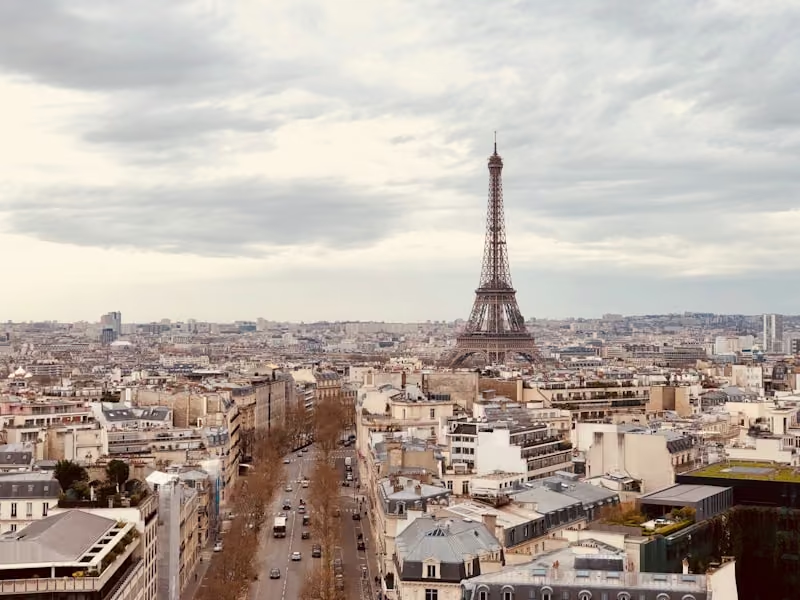 Guide live
Lyon
France's gastronomic capital, steeped in silk and history.
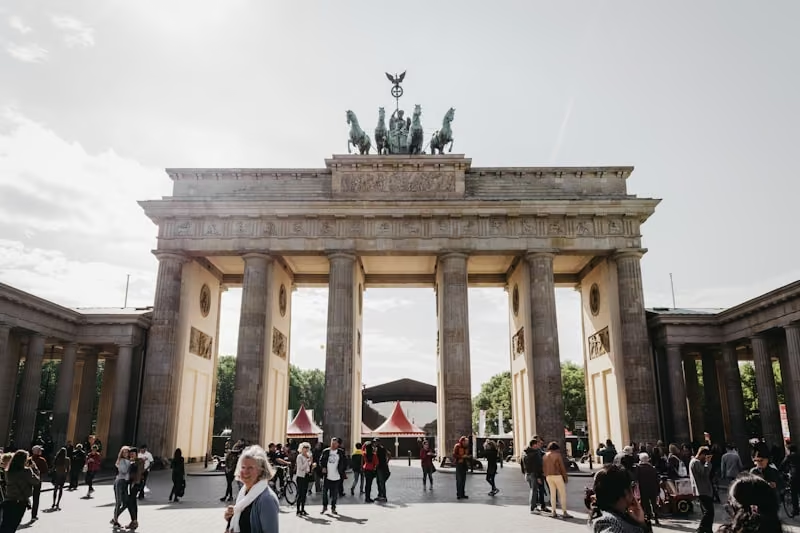 Guide live
Marseille
A gritty port city with stunning calanques and bouillabaisse.
 Guide live
Bordeaux
World-class wine, neoclassical elegance and the Garonne river.
 Guide live
Strasbourg
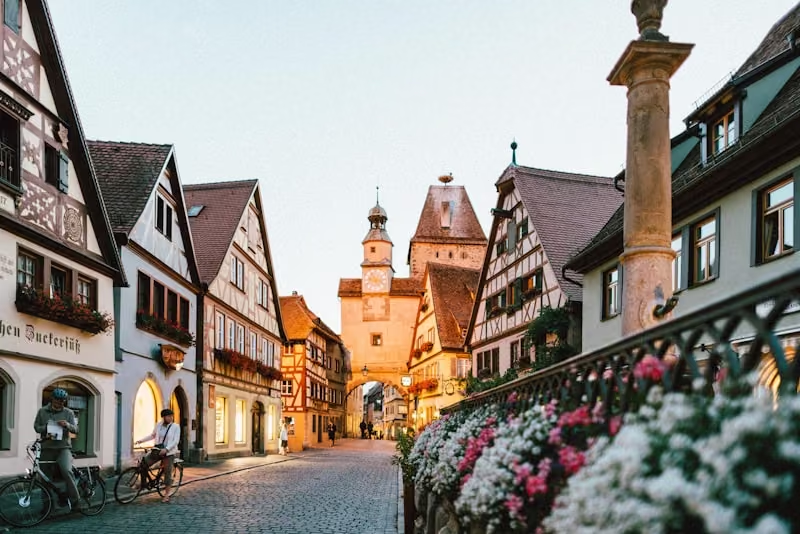
Half-timbered charm at the crossroads of France and Germany.