🇰🇷 Country guide
South Korea Travel Guide
K-culture, ancient palaces and street food that has conquered the world.
Gateway
Seoul · ICN
Capital
Seoul
Best time
April–June · September–November
Budget
Moderate
Don't miss
Midnight tteokbokki at Gwangjang Market
How to plan a route through South Korea
Don't plan South Korea as just Seoul's palaces and K-pop shopping. Seoul opens up a great metropolis and Joseon history; Gyeongju Silla heritage; Busan beaches and port food; Sokcho the nature of Seoraksan; Jeju volcanic island culture; and Incheon a city beyond the airport, with modern port history.
The Seoul–Gyeongju–Busan line is a logical overland backbone by KTX. Sokcho is reached by intercity bus and Jeju by plane. Incheon Airport, central Incheon and Songdo are not the same place. On a first trip, 10–12 days is balanced for Seoul, Gyeongju and Busan; when you add Jeju or Sokcho, getting closer to 14 days turns transfers into part of the trip.
What to know before travelling to South Korea
Check the K-ETA requirement for your passport
Depending on your nationality, you may need a K-ETA before travel or a visa for South Korea; check the official guidance for your passport, and don't apply general news about exempt-country lists to yourself without checking. Use only the k-eta.go.kr domain and enter your passport details exactly.
The e-Arrival Card and K-ETA are not the same procedure
The electronic arrival card is free and can be submitted on the official e-arrivalcard.go.kr domain within the three days before arrival. Holders of a valid K-ETA may be exempt from the e-Arrival Card; check your personal status on the official guide. Don't upload your passport to look-alike domains that ask for a fee.
Carry backup cash for T-money
The T-money or EZL card is used on the metro, buses and some other transport services. Most points for buying the card and topping up require cash. Don't assume you can use a foreign contactless bank card at every metro gate; tapping again when you get off the bus matters for the transfer calculation.
Naver Map, Papago and Kakao T are the three essential tools
Naver Map or KakaoMap are usually more detailed on exits, bus stops and walking directions; save the Korean name of your address. Papago is useful for translating menus and conversations, Kakao T for calling official taxis. Also keep your hotel address, the last train and emergency information offline.
Buy KTX tickets through KORAIL's official channel
Use KORAIL's official website or app instead of look-alike or commission-taking sites that rank for city names. The Seoul–Busan backbone is easy; Gyeongju KTX Station is outside the historic centre. Add seat, station, luggage and the transfers at both ends to the total travel time.
Cards are widespread, cash still works
Cards are widely used in hotels, shops and restaurants; carry won for markets, small businesses and topping up transport cards. If a terminal offers you your home currency or another currency, read the cost of dynamic currency conversion; in most cases paying in the local currency is more transparent. Tipping is not generally expected.
Read the restaurant's service rhythm
Banchan side dishes are part of the meal in most places; refills may be possible, but don't waste them. Water, cutlery and payment can be self-service; ordering via a table tablet or prepaying at the counter is common. For barbecue or set menus, ask before ordering about the per-person minimum, portion weight and the rule that one table orders a single menu.
An eSIM doesn't always give you a Korean phone number
A data eSIM may be enough for maps and messaging, but restaurant queue systems, delivery or some verifications may ask for a Korean number. Check whether the product includes voice/SMS and a local number; don't treat an ID-registered tourist SIM and a data-only eSIM as the same thing.
Watch the monsoon, typhoons and air quality on the day
Summer is hot, humid and wet; the south coast and Jeju can be affected by typhoons. Fine dust and air quality in spring, and ice and mountain snow in winter, change the programme. Follow official weather warnings and keep backup days for ferries, Hallasan and Seoraksan.
In lived-in neighbourhoods, privacy comes before tourism
Bukchon, Gamcheon and hanok villages are homes, not décor. Don't enter private gates or roofs, don't talk loudly and don't photograph people close up without permission. Follow temple and palace signs, keep quiet on the metro and respect the rules of places where you take your shoes off.
10–12 days
A first trip to South Korea
Five nights in Seoul, two to three in Gyeongju, three to four in Busan. Use the KTX backbone and plan station-to-centre transfers separately.
10–13 days
Culture and island nature
Go from Busan's port to the Silla capital, then fly to Jeju's volcanic coast. Plan two separate weather backups for Hallasan and Udo.
7–9 days
The capital and Seoraksan
Five days for Seoul, two to three for Sokcho. Choose the right intercity bus terminal and don't squeeze the mountain day into your arrival or departure day.
2–3 days
Incheon beyond the airport
Give one day to Chinatown and the Open Port, one to Songdo. If you add Ganghwa, you need a third full day and a separate transport plan.
Cities to visit in South Korea and island guides
The cities to visit in South Korea bring modern culture, history, coast and nature together over short distances. Seoul stands out for its palaces and contemporary neighbourhoods, Busan for its beaches and seafood, Gyeongju for the heritage of an ancient kingdom. Incheon is a practical stop for a first or last night, Sokcho the gateway to Seoraksan hikes and Jeju Island a separate holiday route with volcanic landscapes. Using high-speed trains and domestic flights together makes for a balanced trip.
Original guides are live for all 6 cities
 Guide live
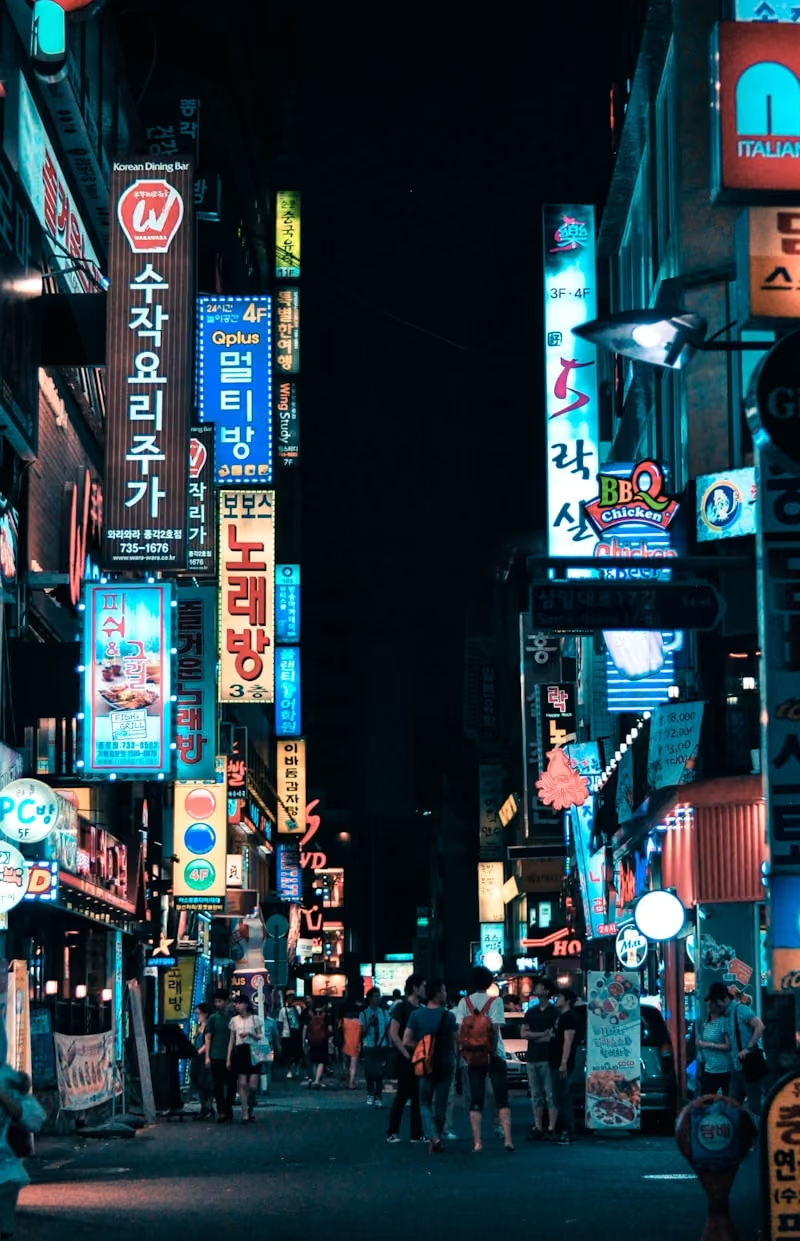
Seoul
Palaces and pop culture collide in Asia's coolest capital.
 Guide live
Busan
Seafood markets, colourful villages and striking coastal temples.
 Guide live
Jeju Island
Volcanic landscapes, tangerine orchards and haenyeo divers.
 Guide live
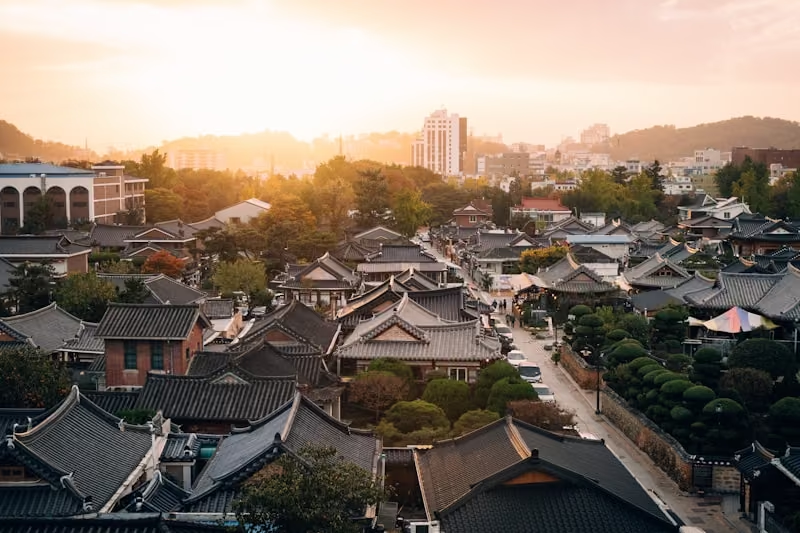
Gyeongju
A museum without walls — tombs, temples and timeless beauty.
 Guide live
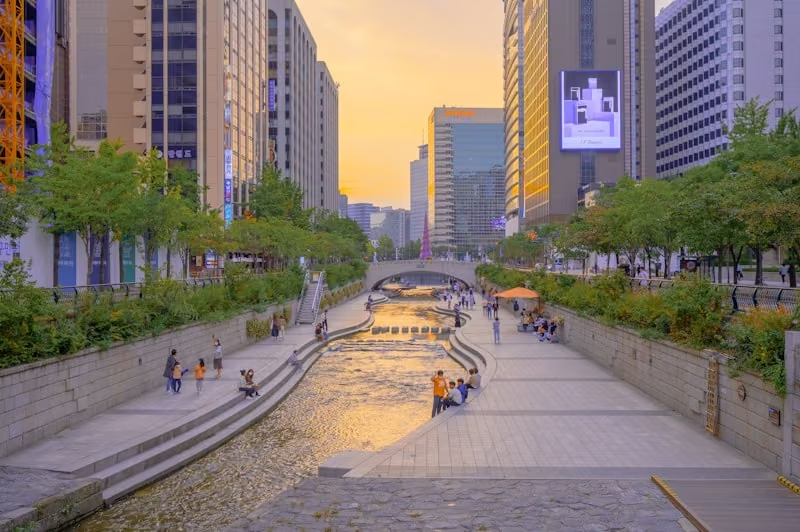
Incheon
A gateway city with Chinatown charm and island tours.
 Guide live
Sokcho
Mountain trails and fresh seafood on the shores of the East Sea.