Contents
How to plan a trip to Seoul? Build the city in belts
Crossing Seoul north–south every day wastes time. Split the Gyeongbokgung–Bukchon–Insadong; Changdeokgung–Ikseondong–Jongmyo; Myeongdong–Namsan; Hongdae–Yeonnam; Seongsu–Gangnam; and Itaewon–Yongsan clusters across separate days. For a first visit, four full days is the minimum and five days is more balanced.
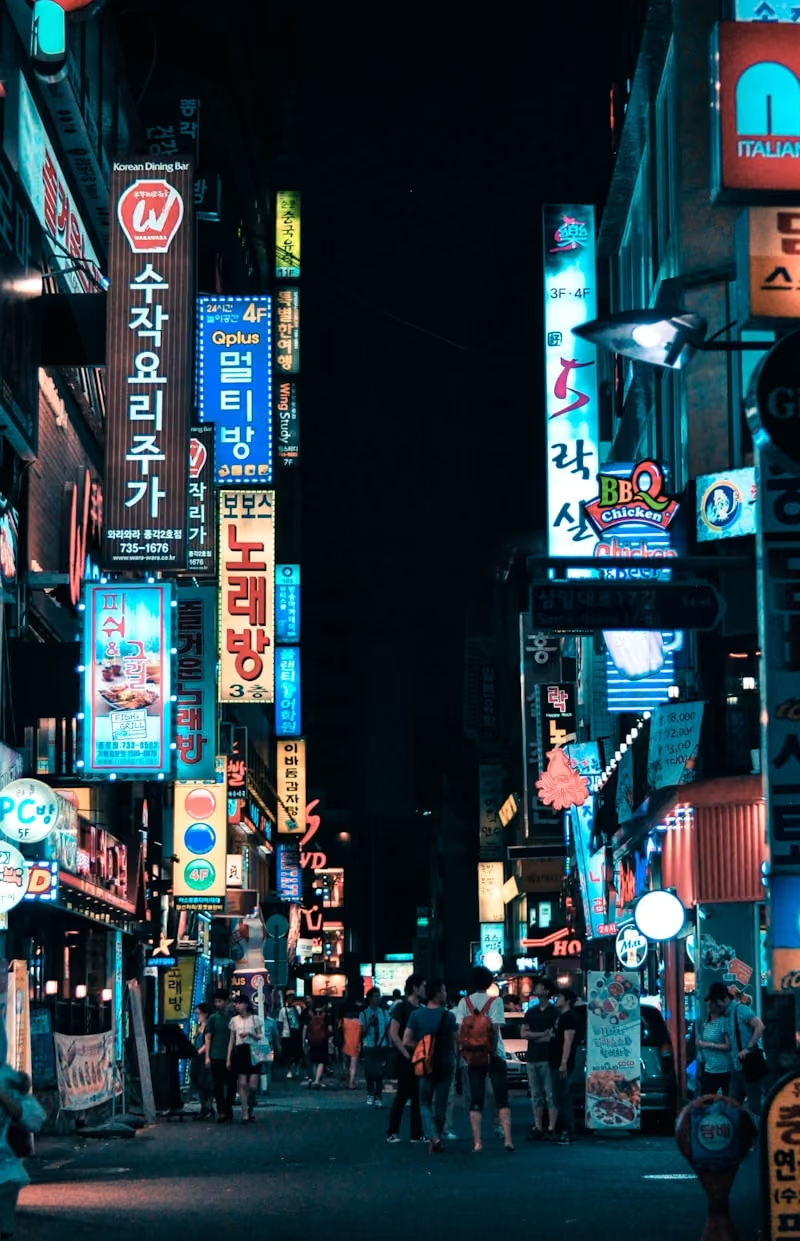
Put at most one palace complex and one major neighbourhood into a day. Hanok streets make most sense in the morning, markets at lunchtime, river parks at sunset, and night-time neighbourhoods such as Hongdae and Euljiro in the evening. Keep the National Museum of Korea, Leeum or an indoor market as a rainy-day alternative.
A DMZ tour is not an extension of city sightseeing but a separate, conditional day. Passport requirements, the tour operator, meeting time and which stops are open that day can change; book accepting that the route may be cut short at the last minute for border security reasons.
How to get to Seoul: AREX, bus and taxi from Incheon Airport
AREX's Express Train has limited stops between the terminals and Seoul Station; the All Stop Train calls at intermediate stops such as Hongdae and can be used with a normal transport card. If your hotel is in Hongdae, the seemingly faster express train may require a transfer back from Seoul Station. Check your terminal number and the last train time on the official AREX page.
Airport limousine buses are comfortable with luggage for Myeongdong, Gangnam and major hotels; traffic makes journey times unpredictable. Use the official taxi queue and ask staff about the type of vehicle and the approximate fare structure. On a night arrival, don't accept offers from illegal vehicles.
Gimpo Airport is closer to the centre and has AREX, metro and bus connections. If you're transferring between ICN and GMP, don't look only at the distance on the map; leave plenty of time for terminal walks, luggage and peak-hour crowds.
The Seoul metro, T-money and the right navigation apps
Buy a T-money card from suitable convenience stores or machines; tap it on entry and exit on the metro and buses. Topping up requires cash at most points. Don't assume you can travel by tapping a foreign bank card at every metro gate. Tapping your card again when getting off a bus is important for the transfer discount.
Naver Map or KakaoMap are more useful than Google Maps for exit numbers, bus stops and walking routes. Papago helps with menu and conversation translation, and Kakao T with calling official taxis. If you can't find an address in Latin letters, copy its Korean name.
Short-term Climate Card options may offer unlimited city travel for a set number of days; however, airport and line coverage differ. As the product and ticket-machine arrangements changed in 2026, read the current coverage on the official Seoul page before working out costs. For just a few journeys, T-money is usually simpler.
Things to do in Seoul: the right order for the palaces, Bukchon and historic Seoul
Visit Gyeongbokgung close to opening time; allow at least two hours for the main courtyard, Geunjeongjeon and the rear garden. The palace is closed on Tuesdays; check public-holiday exceptions and the guard-changing schedule on the day. If there is a free-entry rule for visitors wearing hanbok, confirm the appropriate clothing and event conditions on the official page.
Changdeokgung's Secret Garden has its own timed tours and capacity arrangements; don't assume automatic access with the main palace ticket. Pairing Changdeokgung with Ikseondong or Jongmyo, and Gyeongbokgung with the National Folk Museum, Seochon and Insadong, means less backtracking.
Bukchon is a living neighbourhood. In the red zone around Bukchon-ro 11-gil, tourist visits are limited to 10.00–17.00; access is restricted between 17.00 and 10.00, and violations may be penalised. Speak in a whisper, don't enter private property to photograph doors/courtyards, and check the local rest-day practices that fall on Sundays.
Where to stay in Seoul? Choosing a neighbourhood for a first visit
Jongno–Insadong is the most balanced first base for walking to the palaces and traditional atmosphere; nightlife is limited. Myeongdong is practical with its airport bus and line connections, but shopping-focused and crowded. The Euljiro area offers more local food and bar options.
Hongdae–Yeonnam is strong for the AREX connection, young nightlife and cafés; you'll need the metro to the palaces every day. Gangnam makes sense for a business, clinic, shopping or COEX-focused programme; it's far from the historic centre in the north. Itaewon–Hannam is good for international restaurants and nightlife, but the hilly streets and distance to the station matter.
Seongsu is exciting for design shops and coffee, but it's not a centre that makes all the transport for a first visit easy. When choosing a hotel, check the actual walk from the station exit, lifts and the night-time line home rather than just the neighbourhood name.
What to eat in Seoul? Markets, eateries and the barbecue routine
Gomtang and seolleongtang offer a simple broth for breakfast/lunch; kalguksu noodles and mandu make a quick meal; naengmyeon becomes a cold, sharp finale. At Korean barbecue, pricing is often per person/portion and there may be a minimum order; if staff are cooking the meat, don't disrupt the tongs routine.
At Gwangjang Market, share bindaetteok, mayak gimbap and yukhoe rather than over-ordering at a single stall. Myeongdong street food is handy, but not every item is traditional or good value. Before ordering, ask how many people a set on the menu is for and whether extras are charged.
Banchan are small side dishes; in most places they can be refilled, but don't waste them. Tipping isn't expected at the table. It's normal to pour your own water, order on a tablet at the table or pay in advance at the counter. Check recent reviews and break times on Naver Map.
Shopping, nightlife and urban nature in Seoul
Seongsu pop-up stores change quickly; don't rely on a single social-media list. Hongdae suits live performances and clubs, Euljiro small bars, and Hannam quieter design and restaurants. ID and dress policies at clubs can vary by venue; a secure copy of your passport may not be accepted everywhere.
Cycling, picnics and sunsets in the Han River parks balance the city's fast pace. Watch out for the pedestrian lane on cycle paths; don't go down to the riverbank during summer storms and flood warnings. See the Namsan walk and the cable car as alternatives within the same plan.
Bukhansan is a real mountain day: don't set out in city shoes, with a late start and a single small bottle of water. Check park warnings, the weather, route duration and the last public transport connection. For shorter nature, Inwangsan or sections of the Seoul City Wall may be more accessible.
Where to eat: selected places
These aren't places to tick off one by one — they're the stops that best capture how the city eats. Opening hours and prices change, so check before you go.
Gwangjang Market
BudgetJongno · Bindaetteok, gimbap and market stalls
For comparing Seoul street food under one roof; don't get stuck in a single aisle, and explore the side halls too.
Stalls have different opening days; carry cash and see the prices before sitting down.
Myeongdong Kyoja
BudgetMyeongdong · Kalguksu and mandu
A short menu, fast service and one of the city's most accessible classic meals.
At peak times the queue moves quickly; confirm the branch and opening hours through the official channel.
Hadongkwan
Mid-rangeMyeongdong · Gomtang
A long-established address that shows how a simple-looking broth gains depth through ingredient and cooking quality.
It may close early and service may end when it sells out; don't leave it until noon.
Woo Lae Oak
UpscaleJung-gu · Pyongyang naengmyeon and bulgogi
For a more refined Korean meal with a light broth and buckwheat noodles.
Check reservation and waiting policies in advance.
Tosokchon Samgyetang
Mid-rangeSeochon · Ginseng chicken soup
A hearty classic that's easy to add to a Gyeongbokgung day and can be eaten without sharing.
Go before or after the lunchtime queue; don't mistake the side dishes for something you ordered.
Mongtan
UpscaleYongsan · Charcoal-grilled galbi
For experiencing modern Seoul barbecue culture with strong produce and a well-paced service.
The waiting system may change; check same-day registration and ID requirements.
Dietary preferences
Vegan and halal restaurants in Seoul
For Seoul we picked one plant-based place and one aimed at Muslim travellers. Halal labels don't all mean the same thing: certification, the restaurant's own declaration and "some halal options" are shown separately on each card.
Vegan Pick
Fully veganPlant Cafe & Kitchen
Itaewon · Vegan world cuisine
A long-running restaurant preparing bowls, burgers, pasta and desserts entirely vegan.
Why we picked it: For a wide menu, clear English communication and reliable plant-based options in Seoul's international neighbourhood.
Verification note
The venue's plant-based coverage was checked in the directory; reconfirm the menu and opening days before booking.
Source: HappyCow's current vegan restaurant directory ↗Halal Pick
Certified halalEID Halal Korean Food
Itaewon · Halal Korean
A Korean restaurant serving bulgogi, bibimbap and chicken dishes under a halal certification framework.
Why we picked it: One of the best-known places where Muslim travellers can try Korean home cooking with a clear halal classification.
Verification note
It's in KTO's halal-certified category; check the current validity of its KMF certificate on the day of your visit.
Source: Korea Tourism Organization Muslim-Friendly Restaurants ↗Menus, suppliers and certifications change. If you keep strict halal, confirm the current certificate, alcohol, sauce ingredients and shared-kitchen risk directly with the restaurant.
Day-by-day itinerary
- 01
Day 1 — Gyeongbokgung, Seochon and Insadong
- Morning
- Explore Gyeongbokgung at opening time and choose either the National Folk Museum or the area around the palace.
- Afternoon
- The streets of Seochon, a short lunch and Insadong's art/tea houses.
- Evening
- A walk along Cheonggyecheon and an early dinner in Euljiro.
- 02
Day 2 — Changdeokgung and the eastern centre
- Morning
- The Secret Garden if you've booked; then the main courtyards of Changdeokgung.
- Afternoon
- Jongmyo or Ikseondong; shared tastings at Gwangjang Market.
- Evening
- The area around Dongdaemun Design Plaza or a walk along the Naksan city wall.
- 03
Day 3 — Namsan, Myeongdong and Yongsan
- Morning
- Walk/take the bus up Namsan; consider the tower if the sky is clear.
- Afternoon
- Myeongdong and Namdaemun; a single big shopping block.
- Evening
- Depending on the National Museum of Korea's opening days, dinner in Yongsan or Itaewon.
- 04
Day 4 — Hongdae, Yeonnam and the Han River
- Morning
- The streets of Yeonnam-dong and the Gyeongui Line Forest Park.
- Afternoon
- A selection of Hongdae's independent shops/cafés; two targets rather than an endless list.
- Evening
- A Han River sunset if the weather allows, followed by live music in Hongdae.
- 05
Day 5 — Seongsu and Gangnam, or the DMZ
- Morning
- If you're in the city, Seoul Forest and Seongsu; if you chose the DMZ, an early meeting with your passport.
- Afternoon
- COEX, Bongeunsa and Gangnam; on a DMZ tour, the programme depends on the operator.
- Evening
- Final shopping and a booked Korean barbecue in your accommodation neighbourhood.
Before you go
Critical tips that save time and show respect in Seoul
Don't treat Bukchon as a night-time shortcut
Tourist visits in the red zone are limited to 10.00–17.00. Be quiet, and don't enter private doorways and courtyards.
Carry cash for T-money top-ups
Many card purchase and top-up points require cash; a bank card isn't an open-payment ticket at every gate.
Match palace closing days
Gyeongbokgung is closed on Tuesdays; other palaces may close on different days. Read the separate tour conditions for the Secret Garden.
Note the exit number
At huge stations, the right exit saves a ten-minute detour above ground. Check the exit and bus stop on Naver Map.
Don't set off for the DMZ without your passport
ID checks, the route and access depend on the security situation. Plan for a tour cancellation as a chance for a free day in the city.
Track the last connection, not just the last train
One line running doesn't mean you'll get home; check the last connection time and night buses together.
Continue your South Korea route
This city works well on its own; if you have time, the stops below add a different region and city to the same trip.
Seoul to Incheon: the port beyond the airport
See Chinatown, the Open Port and Songdo as a real city day; be clear about the difference between the airport terminal and central Incheon.
Read the guide →Seoul to Sokcho: Seoraksan and the East Sea
By intercity bus, turn mountain hiking, the fish market and the beach into a three-day nature break.
Read the guide →Seoul to Gyeongju: into the Silla heritage
With the right connection from the KTX station, combine the tumuli, Bulguksa and the palace grounds lit up at night.
Read the guide →Seoul to Busan: to the coast by high-speed train
Head south on the KTX and explore Haeundae and the old port areas on separate days.
Read the guide →Seoul to Jeju: the volcanic island leg
Keep the flight day light and split the island into eastern, western, southern and Hallasan sections.
Read the guide →Frequently asked questions
How many days do you need for Seoul?+
For a first trip, 4 full days is the minimum and 5 days is comfortable. If you're adding the DMZ or Bukhansan, set aside another day.
Which neighbourhood should you stay in in Seoul?+
Jongno/Insadong suit the palaces, Myeongdong easy transport, and Hongdae the airport and nightlife. Gangnam is far from the historic centre in the north.
What's the easiest way to get from Incheon Airport to the centre?+
The AREX Express is practical for Seoul Station, the All Stop Train for Hongdae and intermediate stops. With a lot of luggage, compare a limousine bus to your hotel.
Can you use a bank card on the Seoul metro?+
As a general rule, use T-money rather than tapping a foreign bank card at the gate. Check the short-term coverage of the Climate Card on the current official page.
When should you visit Bukchon Hanok Village?+
The red tourism zone in the residential area should be visited between 10.00 and 17.00; access is restricted early in the morning and in the evening.
Can you go to the DMZ from Seoul on your own?+
Tourist access mostly runs through authorised tours with passport checks. As the open stops change with the security situation, confirm the operator's current programme.
How do you get to Seoul?+
AREX's Express Train has limited stops between the terminals and Seoul Station; the All Stop Train calls at intermediate stops such as Hongdae and can be used with a normal transport card. If your hotel is in Hongdae, the seemingly faster express train may require a transfer back from Seoul Station. Check your terminal number and the last train time on the official AREX page.
Note: Palace programmes, Secret Garden tickets, Bukchon rules, DMZ access, Climate Card coverage and restaurant waiting systems can change. Check official sources on the day you travel. Last updated: .
Official sources and latest check
Visa, transport, entry and visiting rules change — re-check them with these official sources before you travel.
- Seoul Metropolitan Government — Bukchon visiting restrictions ↗
- Visit Seoul — Gyeongbokgung ↗
- Visit Seoul — Changdeokgung ↗
- Seoul — Climate Card ↗
- Incheon International Airport ↗
- Airport Railroad AREX ↗
- VISITKOREA — transport cards ↗
- Michelin Guide — Hadongkwan ↗
- Visit Seoul — Hadongkwan current business information ↗