Contents
How to plan a trip to Gyeongju? Three layers of history
Make separate clusters of the Daereungwon–Cheomseongdae–Gyochon–Woljeonggyo walk in the centre; Bulguksa–Seokguram in the east; and the museum–Donggung and Wolji–Bomun area. Two days show the main heritage; three days leave breathing room for the museum and Namsan.
Gyeongju is as much a night-time city as a daytime one. Leave the illuminated Woljeonggyo and Donggung and Wolji until after sunset; finish the main tombs and museum interiors before closing. On cherry-blossom and autumn weekends, walking/cycling may be more reliable given traffic in the centre.
Although Bulguksa and Seokguram are on the same mountain line, there's no short walkable city distance between them. Bus connections can be infrequent; check current services on the way there and the last vehicle back. Namsan is a separate half or full day that requires its own trail and safety plan.
Gyeongju KTX Station, bus terminals and getting around the city
The current name of the station used by high-speed trains is Gyeongju KTX Station, and it is outside the historic centre. Don't trust blogs with information about the old central station; transfer from the KTX by city bus or taxi to the Hwangnidan-gil/terminals area.
Intercity buses from Busan and Daegu may arrive at terminals closer to the centre. Compare not just the train time but the transfers at both ends. A Gyeongju–Busan day trip is possible, but at least one night works better so you don't miss the night illuminations and a calm morning.
The No. 10 Golden Line offers a useful backbone from the centre towards Bomun and Bulguksa; the route/times may change. Check which side of the road your stop is on via the official city bus system or Naver Map. T-money is generally accepted; keep a taxi as a backup for rural return journeys.
Daereungwon, Cheomseongdae and a central history walk
The grassy tumuli at Daereungwon are burial grounds, not park decor; don't climb the mounds. The tomb and exhibition open to visitors may change. Put Hwangnidan-gil not into a morning photo queue but into a café/meal break after your history walk.
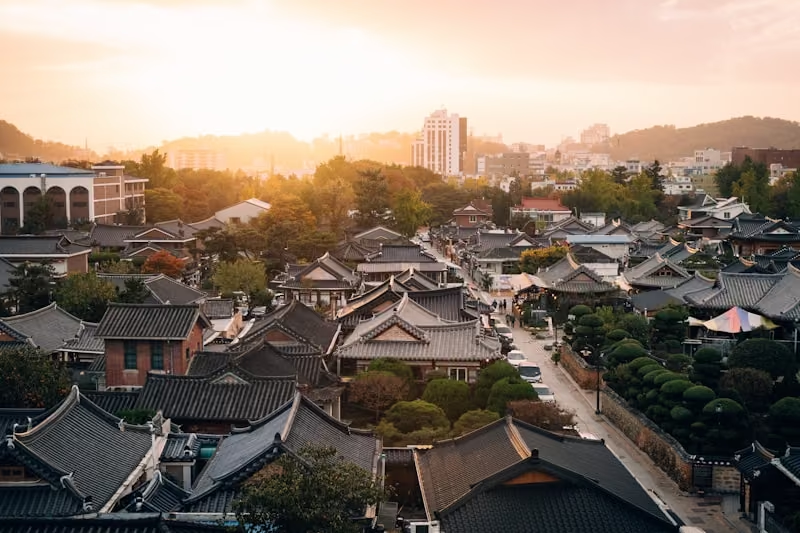
Build an open-air route from around Cheomseongdae to Gyochon Hanok Village and Woljeonggyo. Flower fields are seasonal; don't reduce the city's value to a single pink muhly photo. Give the Gyeongju National Museum at least two hours to understand Silla history.
Donggung and Wolji get crowded at sunset. Check tickets and last entry in advance; don't set up a tripod by the pond so that it blocks the footpath. When adding Woljeonggyo to the same evening walk, factor in the actual distance between the two points.
The right approach to Bulguksa, Seokguram and Namsan
Don't rush the stone bridges, courtyards and halls at the UNESCO site of Bulguksa. Seokguram's delicate Buddha statue is seen behind glass with restricted photography; the view may be misty. Be aware that the two entrances may have separate conditions and fees.
The temples are living places of worship. Respect the shoe and photography signs at hall thresholds and the space of those praying. During the autumn leaf season, road traffic and bus queues grow; the first morning connections are valuable.
Namsan holds rock-carved Buddhas and pagodas scattered across valleys and ridges; don't mistake it for a single signposted city park. You need a plan for the route, descent point, water and daylight. For a first-timer with two days, the museum + Bulguksa come before Namsan.
Where to stay in Gyeongju?
Hwangnidan-gil and the centre is the best first base for walking to the tumuli and the evening sites; noise and prices can rise at weekends. The area around the intercity bus terminals is practical for connections and budgets, and still close to the centre.
Bomun Lake suits resorts, families and quiet properties; you'll need a bus/taxi to the historic centre every day. The KTX station area is only practical for early trains and is isolated as a sightseeing base. For hanok stays, read the rules on floor mattresses, shared bathrooms, shoes and quiet before booking.
Two nights are ideal for seeing the illuminated sites without rushing. If you only have one night, stay in the centre; leave your luggage at the hotel and head back to the KTX station early.
What to eat in Gyeongju? From the Silla table to Hwangnam-ppang
Ssambap is a hearty set where rice, meat/fish and lots of banchan are wrapped in leaves. Ask about the per-person minimum on the menu and the rule that a table orders the same set. Gyeongju hanwoo and sundubu are smaller meal alternatives.
Hwangnam-ppang is the city's sweet dating back to 1939: red bean paste in a thin pastry. Ask about the fresh product's shelf life; don't carry a gift box at room temperature for days. Not every shop using the name Gyeongju-ppang is the same producer.
Gyo-dong beopju is a rice liquor; don't taste it if you'll be driving or cycling. The viral cafés on Hwangnidan-gil aren't the whole of the city's cuisine; add gukbap and traditional eateries outside the centre to your plan.
Where to eat: selected places
These aren't places to tick off one by one — they're the stops that best capture how the city eats. Opening hours and prices change, so check before you go.
Hwangnam Bread
BudgetHwangnam-dong · Hwangnam-ppang
For trying the city's long-established red bean sweet from its original maker.
Ask about freshness and shelf life; confirm the branch's hours.
Gyodong Ssambap street
Mid-rangeGyochon · Ssambap sets
For a full Korean meal with seasonal greens and a variety of banchan.
Check the per-person minimum and set contents before sitting down.
Hamyangjip
Mid-rangeBomun / Bukgun-dong · Hanwoo mulhoe and traditional dishes
For tasting Gyeongju's meat culture beyond the usual barbecue.
Confirm the branch, queue and rest day from a current source.
Yoseokgung 1779
UpscaleGyochon · Korean palace-inspired tasting menu
For a long, ceremonial dinner experience in a historic house.
Advance booking and menu/allergy confirmation are required.
Goyu Hanwoo Gukbap
BudgetMerkez · Hanwoo soup
For a quick, hot, local meat-focused meal between busy sightseeing.
Save the Korean address on your map; there may be similar names.
Hwangnam Milmyeon
BudgetHwangnidan-gil · Cold noodles and mandu
For a light break after a tumuli walk in the summer heat.
Check break times and the waiting system.
Dietary preferences
Vegan and halal restaurants in Gyeongju
For Gyeongju we picked one plant-based place and one aimed at Muslim travellers. Halal labels don't all mean the same thing: certification, the restaurant's own declaration and "some halal options" are shown separately on each card.
Vegan Pick
Vegan optionsSugyeongsa
Hwangnidan-gil · Korean fusion
A restaurant whose kitchen also serves meat but prepares a separate vegan set menu, lotus rice and perilla noodles.
Why we picked it: It offers a full vegan set focused on local flavours, confirmed by current reviews in 2026.
Verification note
The venue's plant-based coverage was checked in the directory; reconfirm the menu and opening days before booking.
Source: HappyCow's current vegan restaurant directory ↗Halal Pick
Muslim-friendlyTaj Mahal in Korea
Central Gyeongju · Indian
A curry and tandoor restaurant on KTO's current list of Muslim-friendly restaurants.
Why we picked it: It offers a clearly classified hot-meal option after the palace and tumuli route.
Verification note
It's listed as Muslim-friendly by KTO; that doesn't mean certified. Ask about halal meat, the shared kitchen and alcohol.
Source: Korea Tourism Organization Muslim-Friendly Restaurants ↗Menus, suppliers and certifications change. If you keep strict halal, confirm the current certificate, alcohol, sauce ingredients and shared-kitchen risk directly with the restaurant.
Day-by-day itinerary
- 01
Day 1 — From the tumuli to Woljeonggyo
- Morning
- Daereungwon and the tomb open to visitors; then Cheomseongdae.
- Afternoon
- Gyochon, the National Museum and a rest.
- Evening
- Donggung and Wolji and the Woljeonggyo illuminations.
- 02
Day 2 — Bulguksa and Seokguram
- Morning
- An early bus/taxi to Bulguksa; plenty of time for the courtyards.
- Afternoon
- Seokguram with the current connection; check for fog/the last bus.
- Evening
- Ssambap or hanwoo on Hwangnidan-gil, a quiet walk around the centre.
- 03
Day 3 — Museum depth or Namsan
- Morning
- The National Museum if you skipped it on day one; if you're an experienced hiker, a planned Namsan route.
- Afternoon
- Bomun Lake or a small museum/hanok in the centre.
- Evening
- Hwangnam-ppang before the KTX/bus; head to the station early with your luggage.
Before you go
Small distinctions that make your Gyeongju route easier
Don't mistake the KTX station for the centre
Gyeongju KTX Station is outside the city; add the bus/taxi transfer to the total journey time.
Don't climb the tumuli
The grassy mounds are tombs and protected heritage. Use only the marked paths and the interiors open to visitors.
Don't rely on a daytime ticket for the night sites
Last entry, illumination and maintenance can change; check the official programme on the same day.
Plan your Bulguksa return from the start
The Seokguram connection may be infrequent; note the last bus and taxi access before you go.
Don't drink and cycle
The centre looks flat, but pedestrian crowds grow in the evening; leave the bike after drinking.
Read the hanok rules
Floor mattresses, shoes, quiet and bathroom arrangements may differ from a hotel.
Continue your South Korea route
This city works well on its own; if you have time, the stops below add a different region and city to the same trip.
Gyeongju to Busan: a coast and market route
Explore Haeundae, Gwangalli and Jagalchi on regional days by KTX or bus.
Read the guide →Gyeongju to Seoul: from Silla to Joseon
After the KTX, spread the palaces and hanok neighbourhoods of the capital over at least four days.
Read the guide →Gyeongju to Jeju: from history to volcanic nature
Plan the flight via Busan and set up Hallasan and the coasts as separate days.
Read the guide →Gyeongju to Sokcho: mountains after culture
Factor in the long transfer and leave a full day and a weather backup for Seoraksan.
Read the guide →Gyeongju to Incheon: completing the port history
With a KTX/metro connection, create a separate stop for the Open Port, Chinatown and Songdo.
Read the guide →Frequently asked questions
How many days do you need for Gyeongju?+
2 days are enough for the centre and Bulguksa; 3 days are ideal to add the National Museum, Namsan or Bomun.
Can you visit Gyeongju as a day trip from Busan?+
Yes, but because of the KTX station transfer and the night illuminations, staying at least one night gives a better experience.
Is Gyeongju KTX Station in the centre?+
No. The high-speed train station is outside the historic centre; you need to transfer by city bus or taxi.
Can you visit Bulguksa and Seokguram on the same day?+
Yes. Plan the current bus/taxi connection between them and the last return; the two sites have separate entry arrangements.
Where to stay in Gyeongju?+
For a first visit, the area around Hwangnidan-gil or the bus terminals is the most walkable option. Bomun is quieter but far from the centre.
What to eat in Gyeongju?+
Ssambap, hanwoo, sundubu and Hwangnam-ppang stand out. If you'll be tasting Gyo-dong beopju, don't drive.
Note: Temple/museum hours, night illuminations, bus timetables and restorations can change. Re-check the KTX station name and connections with official sources. Last updated: .
Official sources and latest check
Visa, transport, entry and visiting rules change — re-check them with these official sources before you travel.