Contents
How to plan a trip to Sokcho? Protect your mountain day
In Sokcho, set aside one full Seoraksan day and one market–Abai Village–beach day; the third day is for Yeongnangho, a museum or a weather backup. Rather than arriving from Seoul in the morning and doing a long summit trail the same day, stay the night before.
The mountain forecast can differ from the coastal centre. Rain, strong wind, fire risk or seasonal conservation closures shut trails. Check KNPS notices the evening before and in the morning; don't pass a closed barrier.
At the peak of the autumn foliage, city roads, park entrances and buses get extraordinarily crowded. Go on a weekday, aim for the first bus and choose a trail that fits your time rather than a single viewpoint.
Getting from Seoul to Sokcho and city buses
There is no passenger train to Sokcho; depending on the service, buses depart from Dong Seoul Bus Terminal or the Express Bus Terminal in Seoul. When buying your ticket, check the departure terminal and the arrival terminal in Sokcho; in both cities the terminal names are not interchangeable.
Lines 7 and 7-1 serve the Sokcho entrance of Seoraksan; the route, frequency and crowding vary. See live arrivals on Sokcho BIS, and don't wait for the last vehicle on the way back. In autumn, taxis are affected by traffic too.
Central Sokcho has walkable sections, but the beach, Yeongnangho and Seoraksan are in different directions. T-money works on buses; tap when getting off. A bike is lovely for the lake/beach but no substitute for mountain transport.
Seoraksan trails and the reality of the cable car
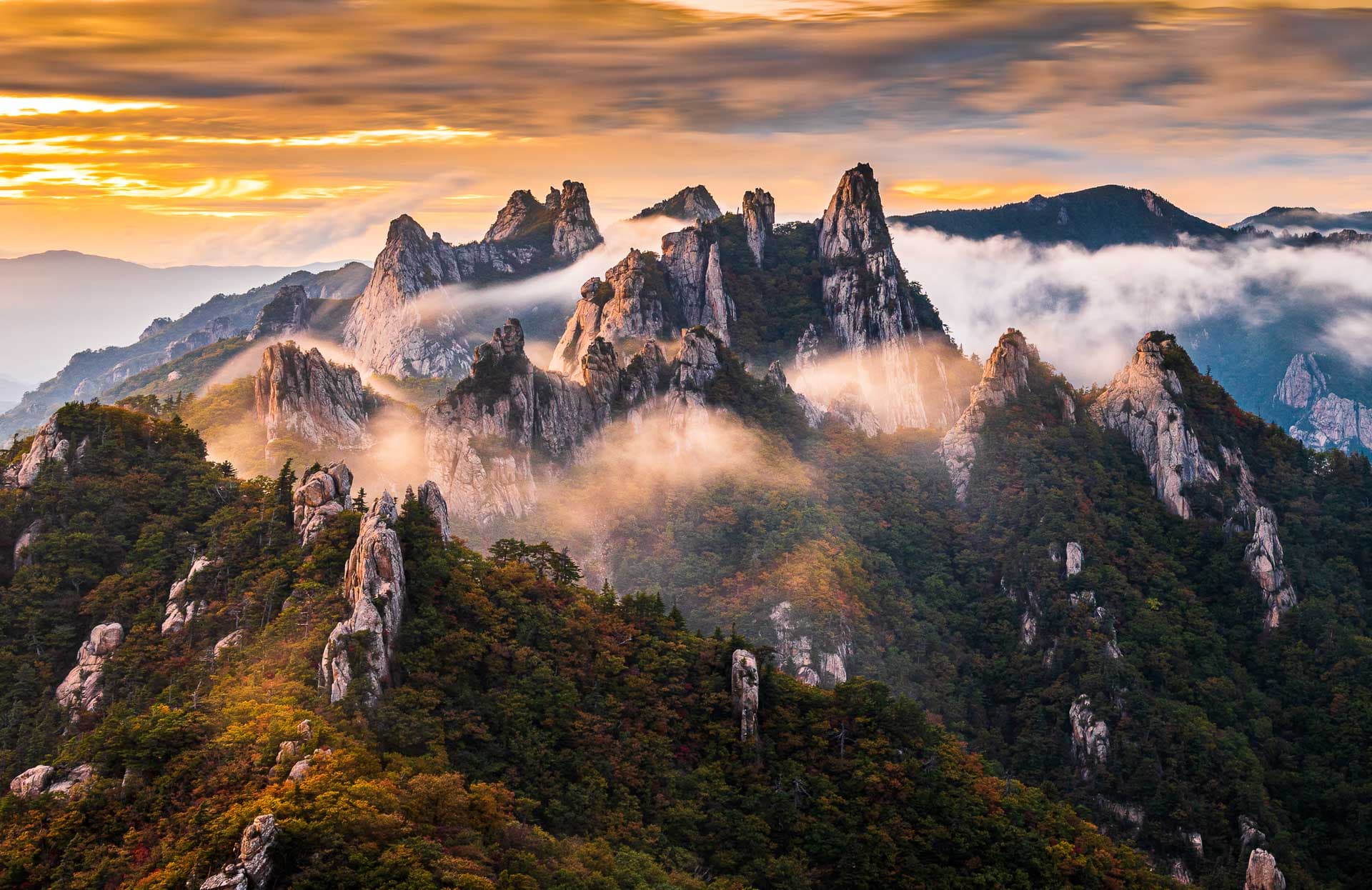
For first-timers, Biryong Falls, Biseondae or Heundeulbawi are more realistic routes in terms of time and difficulty. Ulsanbawi is long with steep stairs and worthwhile when the weather is clear; Daecheongbong is a serious full-day mountain plan. Don't use the map's time without allowing for photos, breaks and the descent.
The Seorak Cable Car does not accept online advance bookings; tickets are sold on the same day at the on-site ticket office, depending on the weather and operating conditions. The cable car doesn't take you up to Ulsanbawi or the main summit. If the queue is long, switch to a valley trail rather than waiting all day.
Park entry may be free, but temple structures, the cable car, parking or services may be charged separately. In 2026 some campsites/facilities have renovation closures; read KNPS notices rather than assuming accommodation or camping is available.
Abai Village, the market and the East Sea coast
Abai Village carries the history of displaced communities who came from the north during the Korean War. The gaetbae, a small hand-pulled ferry crossing, is more than an entertainment prop; read the history panels and don't block the crossing when it's busy.
Sokcho Tourist & Fishery Market has dakgangjeong, seafood and dried fish stalls. Share products rather than queuing for one famous box; be aware that closing the lid on hot chicken straight away will soften its texture.
Sokcho Beach may be open for walks outside the swimming season; that doesn't mean swimming is safe. Yeongnangho offers a calmer lake route. Don't approach breakwaters and rocks in stormy seas for photos.
Where to stay in Sokcho?
The Express Bus Terminal and Sokcho Beach are practical for the Seoul connection, the beach and evenings. Jungang Market/the centre is good for food and Abai Village; check the Seoraksan bus stop. Seorak-dong is close to the first trail, but evening restaurant and city options may be limited.
In autumn, room prices and minimum stays at the mountain entrance change. Weigh the traffic advantage of being close to the park against the food/shopping disadvantage. If you're staying in the city for an early bus, check the correct direction of the stop the day before.
At a sea-view hotel, confirm the balcony and facade, and seasonal operation for the spa/pool. During foliage season, don't leave your return ticket to Seoul until the last minute.
What to eat in Sokcho? Abai sundae, squid and cold noodles
Ojingeo sundae is a squid body stuffed with noodles/vegetables; Abai sundae is a northern-origin version with large intestine and a denser filling. A mixed platter is a good start for comparing the two.
Mulhoe is raw seafood in an icy, spicy-sour sauce; ask which fish is used and about allergies. Hamheung naengmyeon continues the tradition of raw-fish/spicy noodles that came to the city with displaced communities. Taste before mixing in all the spicy sauce.
Dakgangjeong is a travel snack, but a large box is heavy. Around Seoraksan, sundubu and makguksu make a more balanced meal after a hike. Tipping isn't expected; carry cash for the market.
Where to eat: selected places
These aren't places to tick off one by one — they're the stops that best capture how the city eats. Opening hours and prices change, so check before you go.
Sokcho Tourist & Fishery Market
BudgetJungang-dong · Dakgangjeong, fish and market food
For comparing the city's seafood and street food in a single walk.
Don't waste time in a single queue; share portions.
Danchon Sikdang
Mid-rangeAbai Village · Abai sundae and ojingeo sundae
For tasting the two stuffed traditions side by side in their historic neighbourhood.
Check portions and break times.
Cheongchosu Mulhoe
Mid-rangeCheongchoho · Mulhoe
For trying a cold, spicy-sour seafood bowl with a sea view.
Mention raw-food and shellfish allergies in advance.
Hamheung Naengmyeonok
BudgetMerkez · Hamheung-style naengmyeon
For understanding the noodle tradition brought from the north in the context of Sokcho.
Add the spicy sauce gradually; confirm opening days.
Bongpo Meoguri Jip
Mid-rangeCheongchoho · Mulhoe and seafood
For a shared group meal from a wide selection of seafood.
Check the branch and waiting system.
Mansuk Dakgangjeong
BudgetJungang Market · Dakgangjeong
For trying Sokcho's classic fried chicken for the road in a small portion.
Don't keep the box closed for long while it's hot; confirm the branch.
Dietary preferences
Vegan and halal restaurants in Sokcho
For Sokcho we picked one plant-based place and one aimed at Muslim travellers. Halal labels don't all mean the same thing: certification, the restaurant's own declaration and "some halal options" are shown separately on each card.
Vegan Pick
Vegan optionsCho Jejene Sigtag
Joyang · Korean home cooking
In a kitchen that also serves meat, a vegan plate of spicy tofu, rice and side dishes, clearly marked on the menu.
Why we picked it: A current, filling local option on Sokcho's very limited vegan scene, with reviews dated July 2026.
Verification note
The venue's plant-based coverage was checked in the directory; reconfirm the menu and opening days before booking.
Source: HappyCow's current vegan restaurant directory ↗Halal Pick
Halal optionsMiga
Seoraksan · Korean
A restaurant serving dried pollack sets, classified by KTO as having a halal menu and as pork-free.
Why we picked it: One of the rare options around the Seoraksan hiking area with a clear classification in an official tourism source.
Verification note
Some halal dishes are served and alcohol may be sold; the kitchen is not fully halal. Confirm your order, the sauces and the preparation area.
Source: Korea Tourism Organization Muslim-Friendly Restaurants ↗Menus, suppliers and certifications change. If you keep strict halal, confirm the current certificate, alcohol, sauce ingredients and shared-kitchen risk directly with the restaurant.
Day-by-day itinerary
- 01
Day 1 — The market and Abai Village
- Morning
- Bus from Seoul, drop your luggage and a light lake walk.
- Afternoon
- Abai Village, the gaetbae and stops that tell the story of displacement.
- Evening
- Small portions at Jungang Market, sunset on Sokcho Beach.
- 02
Day 2 — Seoraksan
- Morning
- The first suitable bus; choose Biseondae, Biryong or Ulsanbawi according to the KNPS notice.
- Afternoon
- A safe descent on the same trail; the cable car only if the queue/weather allow.
- Evening
- Sundubu or makguksu, a hot shower and an early rest.
- 03
Day 3 — Yeongnangho and the coast
- Morning
- A Yeongnangho walk/bike ride; a museum if the weather is bad.
- Afternoon
- The lighthouse area or a quiet café; a generous buffer for the return bus.
- Evening
- Head to the terminal early; note the correct arrival terminal in Seoul.
Before you go
Tips that save your mountain day in Sokcho
Don't make the cable car your main plan
There are no advance bookings and it may stop in the wind. Choose an alternative valley trail in advance.
Read the Seoul terminal name
Dong Seoul and the Express Bus Terminal are different; match the departure and return terminals on your ticket.
Confirm the 7/7-1 on the same day
The frequency of the Seoraksan bus and the traffic time change; check in real time on BIS.
Don't enter a closed trail
Fire, rain or conservation closures are safety decisions; don't take risks for a photo beyond the barrier.
Aim for the first bus in autumn
During foliage season, road and ticket-office crowds can cost you hours.
Choose raw seafood mindfully
If you have allergies, are pregnant or have an immune risk, ask for a cooked alternative.
Continue your South Korea route
This city works well on its own; if you have time, the stops below add a different region and city to the same trip.
Sokcho to Seoul: from the mountains to the metropolis
Choose the right bus terminal and build a five-day capital route for the palaces and neighbourhoods.
Read the guide →Sokcho to Incheon: the right connection before your flight
Factor in the difference between the airport and the city centre via Seoul; don't plan a tight connection.
Read the guide →Sokcho to Busan: from the east coast to the south
Count the long transfer as a separate day and split Haeundae and Nampo across different days.
Read the guide →Sokcho to Gyeongju: from the mountains to the Silla heritage
Without underestimating the overland journey, leave three days for the tumuli, the museum and Bulguksa.
Read the guide →Sokcho to Jeju: two big nature legs
After the flight connection, add rest and a weather backup to your Hallasan day.
Read the guide →Frequently asked questions
How many days do you need for Sokcho?+
2 full days for one Seoraksan day and one city/beach day; 3 days is ideal for a weather backup and Yeongnangho.
How do you get from Seoul to Sokcho?+
Depending on the service, take an intercity bus from Dong Seoul or the Express Bus Terminal. Check the departure terminal on your ticket.
How do you get from Sokcho to Seoraksan?+
City bus 7 or 7-1 is the common connection; confirm the current stop, live times and the last return on Sokcho BIS.
Can you buy Seoraksan cable car tickets in advance?+
No; tickets are sold on the day at the ticket office, depending on the weather/operating conditions. The cable car doesn't go up to Ulsanbawi.
Where to stay in Sokcho?+
The Express Terminal area suits buses and the beach, the centre/market food, and Seorak-dong the first hike.
Is there an entry fee for Seoraksan?+
The main national park entrance may be free; the cable car, temple facilities, parking or other services are charged separately. Check the current situation.
Note: Mountain closures, cable car operation, and bus and campsite arrangements can change depending on weather/fire/renovations. Check KNPS and Sokcho BIS on the same day. Last updated: .
Official sources and latest check
Visa, transport, entry and visiting rules change — re-check them with these official sources before you travel.