🇹🇭 Country guide
Thailand Travel Guide
Golden temples, tropical islands and smiles that welcome the world.
Gateway
Bangkok · BKK
Capital
Bangkok
Best time
Varies by region · November–February in general
Budget
Budget
Don't miss
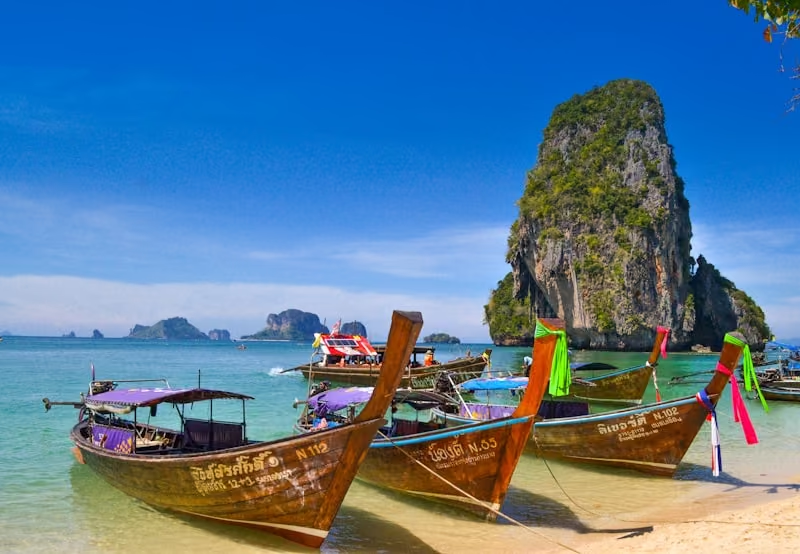
A longtail boat leaving Railay at first light
How to plan a route through Thailand
Don't plan Thailand as a package that adds a few temples to Bangkok, an elephant tour to the north and a one-size-fits-all beach holiday to the south. Bangkok is a huge metropolis best read through its river and rail systems together; Chiang Mai is northern culture surrounded by mountains; Phuket and Krabi are two separate bases tied to the Andaman Sea's season; and Koh Samui is an island in the Gulf of Thailand with a different rainfall calendar. Ayutthaya, too, is not just a photo stop but a stop in its own right telling the layers of the old capital between rivers.
Two or three regions are enough for a first trip. Make Bangkok your starting hub and fly or take the train north; for the sea leg, combine the Phuket–Krabi pair by land or boat. Putting Koh Samui next to Phuket just because it looks southern on the map wastes time: crossing between the two coasts needs land travel, a pier and a ferry or a separate flight. The monsoon calendar isn't the same either; choose the month first, then the right coast.
What to know before travelling to Thailand
Fill in the TDAC on the official site
Travellers who are not Thai citizens must register a Thailand Digital Arrival Card before entering the country. Don't trust paid intermediary sites whose domain is not tdac.immigration.go.th. Although a move to a new immigration app has been announced for 2026, follow the TDAC rule until the official transition is complete; confirm visa and passport conditions separately with Thailand's official missions.
A PromptPay logo doesn't mean foreign cards are accepted
QR codes at stalls are mostly linked to the local PromptPay network; a foreign banking app can't be expected to read them. Keep your card for larger businesses and small notes for markets, boats and songthaews. If there's an official tourist wallet service, check the registration conditions on the spot, but don't tie your whole budget to it. If an ATM or POS offers foreign currency conversion, choosing to be charged in THB is usually more transparent.
The right apps: Grab, Bolt, LINE and maps
Grab is one of the most common ride-hailing apps in cities and at airports; Bolt's coverage varies by region. For Bangkok public transport use the official BTS and MRT pages alongside Google Maps, and operator announcements on island and boat days. LINE is common for bookings and contacting businesses. Download the apps before you leave home; rather than changing your account country, use the web, phone or hotel reception as alternatives.
Renting a scooter doesn't replace a licence
Thai authorities require tourists to carry a driving licence valid in Thailand; an international driving permit under the 1949 Geneva Convention is accepted and the vehicle category must match. A car licence does not entitle you to ride a motorbike. Helmets, alcohol, damage records and whether your insurance covers motorbike use are real risks; a renter handing over the key doesn't prove that you're legal or insured.
There is no single "Thai monsoon"
In Bangkok, Chiang Mai and Ayutthaya heat and rain affect plans, and in the north there is also a haze risk in February–April. On the Andaman coast of Phuket and Krabi the sea can be more changeable from May to October. In Koh Samui's Gulf pattern, the wet and choppy period stands out especially from late October to December. Don't swim under a red flag; don't squeeze a boat day into the last hours of your trip.
The e-cigarette and recreational cannabis trap
Importing, selling and possessing e-cigarettes and vape products is banned in Thailand. Since June 2025, cannabis flower has been a controlled substance tied to medical prescription; seeing shops on a tourist street doesn't mean you can buy freely. Don't take the product across the border. The legal age for alcohol is 20; there are sales and consumption restrictions at temples, public transport areas and some public places.
Dress and body language matter at temples
Carry clothing that covers your shoulders and knees, take off your shoes when entering a sacred area and don't point the soles of your feet at a Buddha statue or at people. Don't touch anyone's head. Don't use images of the Buddha merely as decoration or props for inappropriate poses. Laws and social sensitivities around the monarchy and religion are serious; don't turn the subject into tourist entertainment.
Read the exclusions in your insurance policy
Travel insurance may exclude motorbikes, diving, rock climbing, alcohol and pre-existing conditions. Weather-related cancellations of island transfers and missed separately ticketed flights aren't covered by every policy either. Look not only at the cover amount but at the activity and vehicle category, and whether ferry and flight connections are on the same booking.
Tell bargaining apart from scams
Polite bargaining is normal at tourist markets; refusing the taxi meter, the "temple is closed today" excuse, a jeweller or tailor visit in exchange for a free city tour and vague boat packages are not. Show the price, route and waiting time in writing before you get in. Instead of leaving your passport as a scooter deposit, ask about a copy and a cash deposit; record any damage on video at handover.
10–12 days
A first trip to Thailand
Four nights in Bangkok, three in Chiang Mai and four in Krabi, based in Ao Nang or Railay. The big city, northern culture and the Andaman coast don't repeat one another.
8–10 days
The Andaman coast
Choose the right beach base in Phuket, then move on to Ao Nang or Railay in Krabi. Keep the ferry flexible according to weather and sea; don't buy the same island tour in both places.
8–11 days
Bangkok, history and the Gulf
Add Ayutthaya from Bangkok as a day trip or for one night, then fly to Koh Samui. Don't assume Samui's rainfall calendar is the same as Phuket's or Krabi's.
Places to visit in Thailand and city guides
The places to visit in Thailand range from a bustling capital to the ruins of an old kingdom, from northern mountains to tropical islands. Bangkok stands out for city life and street food, Chiang Mai for northern culture and Ayutthaya for its historic temples. Phuket and Krabi are good bases for exploring the Andaman coast, and Koh Samui the Gulf of Thailand. When choosing cities and islands, take into account not just distance but the regions' different rainy seasons.
Original guides are live for all 6 cities
 Guide live
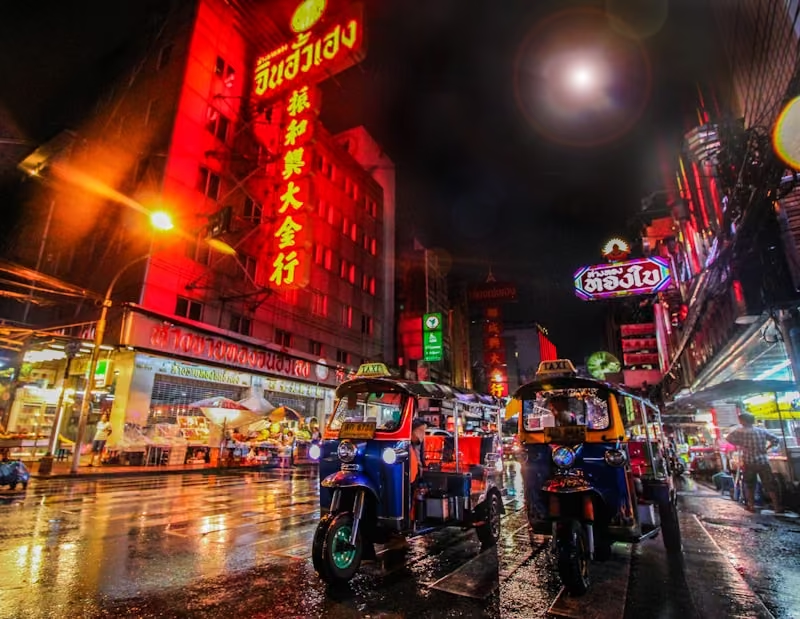
Bangkok
Glittering temples, rooftop bars and floating markets in harmony with the chaos.
 Guide live
Chiang Mai
Mountain temples, night markets and elephant sanctuaries.
 Guide live
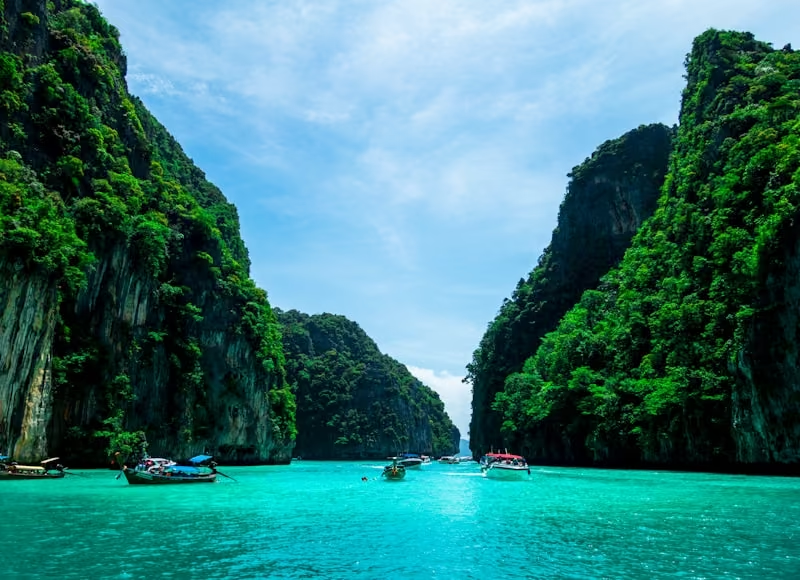
Phuket
Crystal-clear water, limestone cliffs and legendary beach parties.
 Guide live
Krabi
Emerald seas, hidden lagoons and a rock-climbing paradise.
 Guide live
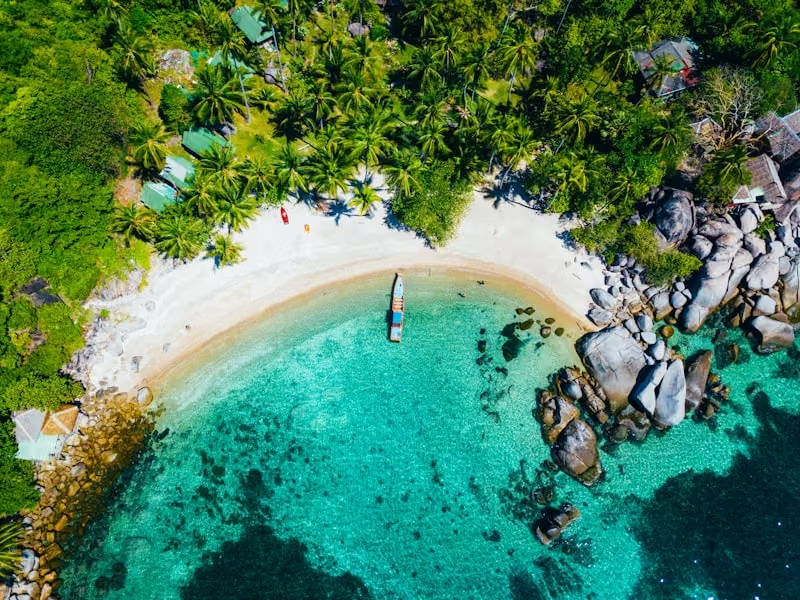
Koh Samui
Palm-fringed beaches and luxury resorts on a tropical island.
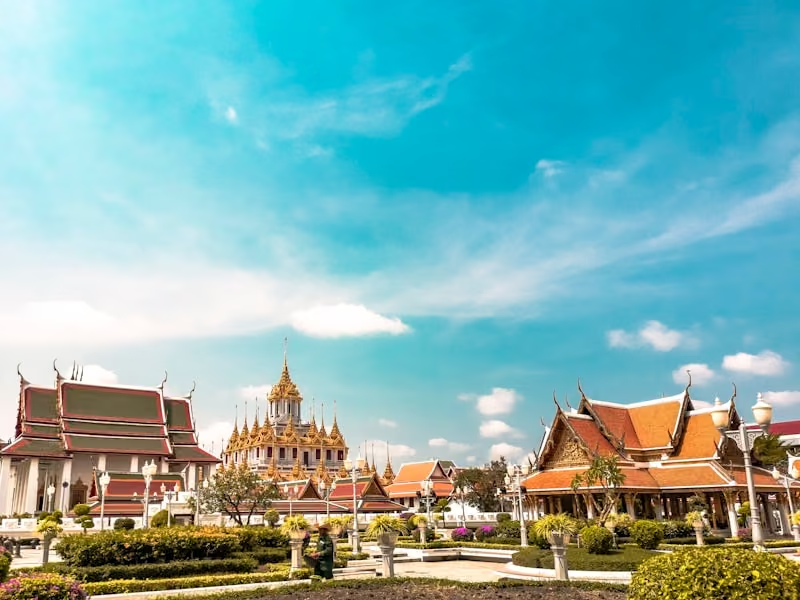 Guide live
Ayutthaya
The ruins of a once-mighty kingdom rising from the river plains.