Contents
The way to crack Bangkok: read the map as lines and the river
Bangkok has no single central square. The historic Rattanakosin island is on the banks of the Chao Phraya; skyscrapers, shopping and nightlife are along the Sukhumvit and Silom corridors; the big markets and bus terminals are in the outer rings. Even if two points look close on the map, the journey can take a long time if there's a canal, an expressway or no direct rail between them. That's why it matters to build the trip around the transport backbone before neighbourhood names.
Divide your days into three clusters: the river and old city, the Siam–Sukhumvit rail corridor and Silom–Chinatown–Talat Noi. Put a separate northern destination such as Chatuchak at the weekend or on your arrival day. This logic doesn't reduce the number of places to see; it reduces the time spent looking for stations in the heat and waiting in traffic.
In the city, 500 metres isn't always a five-minute walk. The pavement may end, a junction may need a footbridge, and the midday heat slows your pace. Treat Google Maps times as a baseline; add margin for temple dress, water breaks and waiting for boats. In Bangkok, a good plan is a plan with gaps in it.
Things to see: clusters that really fit into one day
Bangkok's landmarks don't repeat one another, but seeing them all back to back doesn't make a good story either. The pairings below work in terms of geography and the rhythm of the day.
The Grand Palace, Wat Pho and Wat Arun — start early, cross the river
Put the Grand Palace and Wat Phra Kaew in the first hour of the day. At the entrance, look to the official ticket office and security staff, not to people who say "the palace is closed" and steer you to another tour. Don't leave the requirement to cover shoulders and knees to an expensive/unsuitable fix at the gate; carry thin long trousers or a skirt and a top that covers your shoulders.
Walk from the Grand Palace to Wat Pho. Then reaching Wat Arun by the short river crossing around Tha Tien makes more sense than going back the same way in traffic. If you want to see Wat Arun at sunset from the opposite bank, finish the temple visit by day and reposition on the riverbank in the evening. Read sacred sites not just as photo backdrops but as active places of worship.
Chinatown, Song Wat and Talat Noi — from afternoon into night
Wat Mangkon MRT station is a good entry point to Chinatown. By day, walk Yaowarat's goldsmiths and herbal shops, Song Wat's old warehouse façades and new cafés, and Talat Noi's narrow lanes. As you'll share the street with motorbikes, don't block the way for a photo.
Yaowarat turns into another place at dinner time. Rather than assuming the longest queue is automatically the best address, plan a main dish, a snack and a dessert. A Michelin sign may not mean a business has a star; Bib Gourmand, Selected and stars are different categories. Jay Fai keeps its one star in the 2026 selection, but the queue/reservation arrangements may change.
Siam, Jim Thompson and contemporary Bangkok
Siam looks like nothing more than Bangkok's air-conditioned malls; it's actually a hub of urban transfers and youth culture. Jim Thompson House neatly shows traditional wooden houses and the silk story; the Bangkok Art and Culture Centre is a close, low-effort counterweight for contemporary exhibitions. Put both into the same half day with the Siam area.
If you want a rooftop bar, don't look only at the view photo. Check the dress code, minimum spend, rain policy and whether the building really has a public terrace through the official channel. For a free view, mall terraces or riverside walks are enough for most travellers.
Chatuchak — put the weekend market on the right day
Chatuchak's full weekend market runs on Saturday and Sunday daytime; the plant or wholesale sections on weekdays aren't the same experience. BTS Mo Chit or MRT Kamphaeng Phet give access. Inside you quickly lose your sense of direction; note the section and soi number of any small shop you like on the spot — "I'll come back later" rarely happens.
Don't leave the market to the midday heat. Going in the morning and leaving after an hour or two is more productive than spending the whole day at the same kind of stalls. For big purchases, think about your suitcase and flight baggage allowance; when buying antiques or Buddha images, think about export/permit rules.
Where to stay? Choosing a neighbourhood in Bangkok
Asok–Phrom Phong is one of the easiest bases for first-timers thanks to the BTS–MRT interchange. There are plenty of restaurants and shops, but Sukhumvit's night traffic and adult entertainment zones vary from street to street. Don't go by a hotel just saying "Sukhumvit"; look at the nearest station and its exit.
Siam–Chit Lom is fast by rail and shopping-focused, with many hotels from luxury to mid-range. There's no direct metro to the old city from every point, but a taxi/boat combination works. Silom–Sathorn offers MRT and BTS access, good food and a more balanced night-time pace; the business district can quieten down at weekends.
The riverside is strong for views and boat access. But if your hotel is far from a main pier, the last run of the free hotel boat shapes your day. The old city–Khao San is close to the temples and sociable; rail access isn't easy from every street, and night noise can be serious. Chinatown is perfect for food and character, more limited for big hotels/resort facilities.
When choosing a hotel, test "8 minutes to the station" in street view. If the route includes a footbridge, a dark side street or a stretch without pavement, it feels different with luggage. In Bangkok, a good location gives you more daily energy than square metres of room.
BKK and DMK: how to get to the city from each airport
Suvarnabhumi (BKK) is the main gateway for international flights. The Airport Rail Link runs from the basement station towards Phaya Thai and Makkasan; at Phaya Thai consider the BTS, and at the Makkasan/Phetchaburi connection the MRT. If you have a lot of luggage, factor in tight transfers and stairs. The official taxi queue is on level 1 of the terminal around gates 4–7; the meter, airport surcharge and expressway tolls may be separate items. For Grab, follow the designated pickup point in the app.
Don Mueang (DMK) is used especially for low-cost and regional flights. The SRT Red Line rail connection is useful towards Bang Sue/Krung Thep Aphiwat; AOT buses such as the A1/A2 connect to northern rail hubs, but you need to allow for traffic. At taxi and app pickup points, choose the right terminal number.
BKK and DMK aren't two terminals of the same airport. You have to cross between them by road, and because of Bangkok traffic a short connection is risky. AOT's free shuttle is only for passengers with proof of a same-day onward flight; don't plan it as a public city service. On separate tickets, leave a wide margin for immigration, luggage, the transfer and security again.
On an arrival close to midnight, don't assume the train is running; check the official current hours on your flight day. Keeping your hotel's name ready in Thai together with a map pin avoids confusion between branches with the same name.
BTS, MRT, boats and taxis: no single card, but the right vehicle
The BTS Skytrain and the MRT aren't one operator. For the BTS, single-journey tickets, day passes or the Rabbit card are used; the MRT has its own ticket system. As of June 2026, acceptance of EMV contactless bank cards was expanded on four MRTA lines. Tap the same physical card on entry and exit; don't enter with a phone and exit with a card. On the BTS side, don't assume a foreign bank card will work at the gate; use the ticket machine or a Rabbit card.
The Chao Phraya Express Boat links the old city and the riverside without traffic. Board by flag and pier name rather than by colour; the tourist boat and local express services have different stops and fare structures. The operator published a route update in 2026; check the official map, not the pier list in an old blog. Telling the pier attendant your destination avoids boarding in the wrong direction.
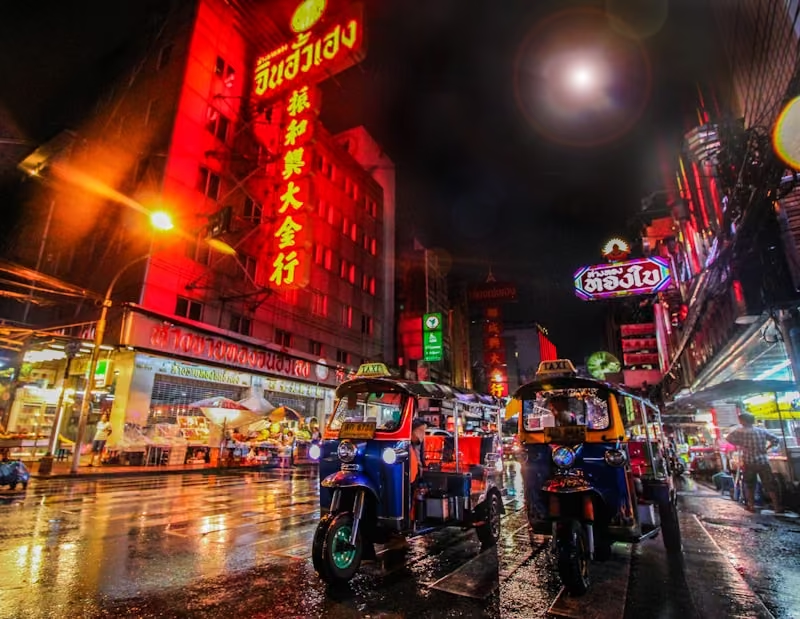
Metered taxis are valuable for short and medium distances, but at rush hour they can be much slower than rail. If a driver refuses to use the meter, call another car without escalating the argument. Grab/Bolt show the price in advance; read on screen whether tolls, waiting and airport surcharges are included in the app price. A tuk-tuk is an experience, not cheap public transport: agree the destination and total price before getting in, and don't accept a "cheap tour" with stops at jewellers/tailors.
What to eat in Bangkok? The logic of neighbourhood and time of day
Don't reduce Bangkok food to the pad thai, mango sticky rice and night market trio. Kuay teow noodle soups, khao man gai, Chinese-Thai duck and pork dishes, Isan-style som tam and grilled chicken, southern Thai curries and royal/central cuisine all live side by side in the same city. Asking for spice level "medium" on a menu doesn't give a universal measure; for a little spice say *pet nit noi*, for none *mai pet*, but accept that the sauce may have been made in advance.
At a street stall, fast turnover, visible cooking, hot serving and clean water/ice handling matter. A queue can indicate local customers and fast turnover; a social-media queue is no guarantee of quality. If you have an allergy, carry a card written in Thai: fish sauce, shrimp paste and peanuts aren't only in dishes whose names show them.
Read Michelin status correctly. In the 2026 Thailand guide, stars, Bib Gourmand and Selected are separate marks; a business on the list one year may not have the same status the next. On the restaurant cards we've only stated a status we could verify in the current official selection, and haven't marketed others as "former Michelin".
Money, PromptPay and your phone: small decisions
Card use is widespread in hotels, malls and contemporary restaurants; you need THB cash for markets, boat tickets, small eateries and some taxis. The abundance of PromptPay QR codes doesn't mean a cashless tourist experience: the system needs a local bank account or a compatible wallet. Even if you can register for a tourist wallet, passport verification and coverage may change; don't plan to land in Bangkok without cash and pay every stall by phone.
At an ATM, think about the machine fee and your own bank's exchange rate separately. Rather than accepting a conversion to your home currency on screen, choosing a THB withdrawal leaves the conversion to your card's bank; don't proceed without reading the confirmation screen. Break large notes in a convenience store or at the hotel rather than at a small stall with its first customer of the morning.
Install Grab, a public transport map and a weather app before you arrive; LINE is the booking/contact channel for some restaurants. A local SIM/eSIM is useful for drivers finding you and for calling about reservations. If an app doesn't appear in your country's app store, don't hastily change your account region; web booking and hotel help are usually less risky.
When to go? Heat, rain and air quality
November–February is the most comfortable period for walking, with lower humidity and less chance of rain; it's also when prices and crowds go up. March–May is very hot. Do temple days in the morning, museum/shopping breaks at midday, and river and street walks in the evening. Drinking water alone isn't enough; sun, salt loss and switching between air-conditioned interiors and hot streets are tiring.
In the rainy season, May–October, it doesn't necessarily rain non-stop all day; you get short but heavy downpours, standing water and sudden slowdowns in traffic. Don't put your last activity at the far end of the city on your flight day. A light rain jacket can be more useful than an umbrella; watch out for wet floors inside temples.
In the dry season, PM2.5 can rise in Bangkok. Check Thailand's official air quality readings before your trip; if you're sensitive, move outdoor exercise and long riverside walks to better times. A "sunny weather" image doesn't show that particulate levels are good.
Common mistakes, scams and etiquette
The best-known scenario starts with "the Grand Palace is closed today" and ends with a cheap tuk-tuk tour and commission-paying shops. Check the palace's status only at the official entrance. When booking a canal tour, get in writing the total duration, whether it's private or shared, which pier it ends at and whether admissions are included.
Covering shoulders and knees in temples isn't just for women. Take off your shoes where indicated, don't point your feet at a Buddha image, and don't step in front of monks and worshippers for a photo. Know that disrespectful behaviour concerning the royal family and sacred images won't be seen merely as a "cultural difference".
Importing and possessing vapes/e-cigarettes is prohibited. Visible cannabis shops don't mean recreational use is legal; a 2025 regulation made the flower subject to a prescription from an authorised health professional in Thailand. Don't buy it or take it across a border. In nightlife, see the open tab, bottle prices and any service charge before ordering.
Where to eat: selected places
These aren't places to tick off one by one — they're the stops that best capture how the city eats. Opening hours and prices change, so check before you go.
Jay Fai
UpscaleSamran Rat · Wok fire, crab omelette · one Michelin star 2026
Although it has become an international symbol of Bangkok street food, the real value is in seafood dishes cooked one by one over a fierce flame. For those who can accept the queue as part of the meal because of its fame.
The 2026 Michelin status has been verified; check reservations, the queue and opening days through the current official channel.
Thipsamai
Mid-rangeSamran Rat · Characterful charcoal-fired pad thai
A classic stop for seeing how pad thai can become a technical wok dish rather than a tourist cliché. The egg-wrapped version and the balance of ingredients are more instructive than a randomly chosen street plate.
Don't confuse a branch with the main address; if you don't want to spend time in the evening queue, try outside peak hours.
Polo Fried Chicken
BudgetLumphini · Garlic fried chicken and Isan sides
Sharing crisp, garlic-crusted gai tod with som tam and sticky rice accessibly shows the northeastern Thai thread in Bangkok. It combines easily with a Lumphini day.
Don't order only the chicken; state the som tam's spice level clearly and balance it with sticky rice.
Nai Ek Roll Noodle
BudgetYaowarat · Peppery kuay chap and crispy pork
Wide rice noodles, an intensely peppery broth and a choice of offal/crispy pork tell Chinatown's Thai-Chinese food heritage in a single bowl. It's a strong main meal rather than a late-night snack.
The peppery broth can be sharper than expected; say when ordering if you don't want offal.
Krua Apsorn
Mid-rangeDinso / several branches · Central Thai home cooking and crab
A good answer for moving from one-plate street food to a shared Thai table. With the crab omelette, yellow curry and vegetable dishes you can put different textures together.
Save the official branch on the map so as not to confuse addresses with the same name; order several dishes and share.
Or Tor Kor Market
Mid-rangeChatuchak · Fruit, ready-made food and quality market stalls
After the Chatuchak crowds, it offers a chance to compare Thai fruit, curry stalls and packaged local products in a more orderly setting. Not a single restaurant but a tasting route.
Check hotel and airline rules before carrying durian; don't leave cut fruit in the heat for long.
Dietary preferences
Vegan and halal restaurants in Bangkok
For Bangkok we picked one plant-based place and one aimed at Muslim travellers. Halal labels don't all mean the same thing: certification, the restaurant's own declaration and "some halal options" are shown separately on each card.
Vegan Pick
Fully veganVeganerie Concept
Phrom Phong · Vegan Thai and world cuisine
A fully vegan restaurant serving Thai classics, bowls, burgers and an extensive dessert selection.
Why we picked it: For first-timers trying vegan Thai food: a clear menu, a central location and long opening hours.
Verification note
The venue's plant-based coverage was checked in the directory; reconfirm the menu and opening days before booking.
Source: HappyCow's current vegan restaurant directory ↗Halal Pick
Restaurant-declaredAl-Rahaman
Bang Rak · Indian and Thai Muslim cuisine
A Muslim-run business near Haroon Mosque known for biryani, curry and tandoor dishes.
Why we picked it: For a characterful, unpretentious and well-spiced meal in Bangkok's historic Muslim quarter.
Verification note
The Muslim ownership and halal declaration appear in current directories; still check its CICOT record and alcohol policy.
Source: Thailand Halal Route / CICOT resources ↗Menus, suppliers and certifications change. If you keep strict halal, confirm the current certificate, alcohol, sauce ingredients and shared-kitchen risk directly with the restaurant.
Day-by-day itinerary
- 01
Day 1 — The river and the old city
- Morning
- Enter the Grand Palace in the first hours; walk to Wat Pho. Keep your temple clothing ready in your bag.
- Afternoon
- Cross the river from Tha Tien and see Wat Arun. Take a break in a museum or café in the heat; use the express boat route on the way back.
- Evening
- Sunset on the riverbank with a view of Wat Arun, then the Pak Khlong Talat flower market or dinner in the old city.
- 02
Day 2 — From Chinatown to Silom
- Morning
- Take the MRT to Wat Mangkon; walk Chinatown's temples and Song Wat as the shops open.
- Afternoon
- The streets and riverside of Talat Noi. Then take the MRT to Lumphini and rest around the park until the cooler hours.
- Evening
- Go back to Yaowarat for a food route with three small stops rather than one queue; use the MRT on the way back.
- 03
Day 3 — Siam, art and Sukhumvit
- Morning
- Jim Thompson House and the Bangkok Art and Culture Centre. Check the exhibition programme before visiting.
- Afternoon
- The Siam–Chit Lom shopping walkways; make use of the midday heat indoors. A short, respectful stop around the Erawan Shrine.
- Evening
- A neighbourhood dinner in Thong Lo or Phrom Phong; if you've chosen a rooftop bar, confirm the dress code and reservation rules in advance.
- 04
Day 4 — The market or your own Bangkok
- Morning
- If it's a weekend, go to Chatuchak close to opening and note section numbers. On a weekday, choose Khlong Bang Luang or Ari.
- Afternoon
- Fruit and lunch at Or Tor Kor; then back to your hotel for a pool/air-conditioning break. Pack your shopping into your suitcase.
- Evening
- Go back to your favourite neighbourhood from the first three days. If your flight is the next day, don't make evening plans at the far end of the city.
Before you go
Small details that save the plan in Bangkok
Enter and exit the MRT with the same card
At an EMV gate, a physical card, a phone and a watch may count as different identities. Use on exit whatever you used on entry; check foreign transaction fees with your bank.
Don't mistake the BTS and MRT for one system
Although the lines have interchanges, the ticket and card systems are separate. Don't assume a Rabbit card will work on the MRT, or that the MRT's bank-card acceptance will automatically work at BTS gates.
On the boat, ask about the flag and direction
The flag on the pier board determines the boat's stopping pattern. Look at the official operator's route, not just a seller saying "tourist boat".
A Thai address and pin for taxis
Save not just the hotel or restaurant's name in Latin letters but a screen with the Thai address and a map pin. Hotels/branches with the same name are often confused.
Don't break large notes at the market
20/50/100 THB notes make small purchases easier. Break larger notes in a convenience store or at the hotel before going into the market.
Keep the midday hours for indoors
March–May is especially tiring. Do temples in the morning, museums/shopping at midday, and markets and river walks in the evening.
The AOT shuttle isn't open to everyone
The free BKK–DMK service requires proof of an onward flight. If you're changing airports, don't make the connection short, and budget for alternative road transport.
Don't fall for the "temple is closed" line
Check the status at the official gate or on the website. A cheap tuk-tuk combined with tailor and jewellery stops is the classic commission route.
Continue your Thailand route
This city works well on its own; if you have time, the stops below add a different region and city to the same trip.
From Bangkok to Ayutthaya: see the old capital without rushing
On this historic island reached by train, spread the main temples, the outer ring and riverside food over a full day or a night.
Read the guide →From Bangkok to Chiang Mai: the north's slower rhythm
Head north by plane or night train; Lanna temples, markets and the mountain climate don't repeat Bangkok.
Read the guide →From the city to the sea: choosing the right base in Krabi
Ao Nang, Railay and Krabi Town don't offer the same holiday. Read up on the season and boat logistics before you fly.
Read the guide →Frequently asked questions
How many days do you need for Bangkok?+
4 full days is balanced for a first visit. In three days you can see the old city, Chinatown and the modern centre, but Chatuchak or a slow neighbourhood day gets left out. Don't count an Ayutthaya day trip as one of your Bangkok days.
Where should you stay in Bangkok?+
For a first-timer who'll be moving around a lot, Asok, Siam or Silom provide rail access. With temples and the river as priorities, consider the Riverside/Old Town; with food as the priority, Chinatown. Check the real walking route from the hotel to the station exit.
Does one card work on both the BTS and MRT?+
No, there's no single universal transport card. The BTS uses single tickets/Rabbit, the MRT its own tickets and, as of 2026, EMV contactless card acceptance on MRTA lines. Each bank's foreign card fee is different.
From Suvarnabhumi: taxi or the Airport Rail Link?+
If you're close to the Phaya Thai/Makkasan connection and travelling light, the train beats the traffic. For several people, lots of luggage or a hotel far from rail, an official taxi/Grab can be easier. Check the night-time operating hours.
Can I pay with PromptPay in Bangkok?+
A PromptPay QR code at a stall usually requires a Thai bank account or a compatible wallet; don't assume your home banking app will work. Carry cash and a card as backup.
Is Bangkok safe, and which scams should you watch for?+
Tourist areas can be explored with basic personal precautions. The most typical problems are the "temple is closed" pretext, refusing to use the meter, commission tuk-tuk tours and vague canal tours. Agree the price and route in writing before getting in.
Is street food safe in Bangkok?+
There's no zero risk. Fast customer turnover, visibly fresh cooking, hot serving and a clean work area are good signs. With a sensitive stomach or a serious allergy, carry an explanation card in Thai; fish sauce and shrimp paste can be hidden.
How do you get to Bangkok?+
Suvarnabhumi (BKK) is the main gateway for international flights. The Airport Rail Link runs from the basement station towards Phaya Thai and Makkasan; at Phaya Thai consider the BTS, and at the Makkasan/Phetchaburi connection the MRT. If you have a lot of luggage, factor in tight transfers and stairs. The official taxi queue is on level 1 of the terminal around gates 4–7; the meter, airport surcharge and expressway tolls may be separate items. For Grab, follow the designated pickup point in the app.
Note: Rail/boat hours, temple rules, market days, restaurant status and airport pickup points can change. Recheck official channels on your flight and visit days. Last updated: .
Official sources and latest check
Visa, transport, entry and visiting rules change — re-check them with these official sources before you travel.
- Suvarnabhumi Airport — official transport information ↗
- Don Mueang Airport — transport ↗
- AOT — BKK–DMK shuttle conditions ↗
- BTS — ticket systems ↗
- MRTA — EMV contactless payment announcement ↗
- Chao Phraya Express Boat — current route ↗
- TAT — Chatuchak Weekend Market ↗
- Michelin Guide Thailand 2026 — starred restaurants ↗
- Thipsamai — official site ↗
- Polo Fried Chicken — official site ↗