Contents
Understanding Phuket: a big island with very different coasts
Phuket's airport is in the north, Phuket Old Town in the south-east, and most of the popular beaches on the west coast. Patong to Kata looks short but involves a hill, bends and traffic; going down from the airport to Rawai means crossing almost the whole island. Build your daily plan not as "in Phuket" but as north-west, central west, south and Old Town.
Taking a taxi to a different beach every day on the same holiday isn't freedom; it's a transport budget and lost time. Choose one priority — swimming, nightlife, a holiday with children, local food or boat trips — and set your base accordingly. Staying in the Old Town and going to the beach every day, or staying in Mai Khao and going down to Patong every evening, are two examples of the wrong extremes.
Phuket's coastal photos don't exist independently of weather and tides. The Andaman Sea can be rougher and more changeable from May to October. A beach being swimmable in the morning doesn't mean the currents will stay safe in the afternoon; lifeguard flags and announcements are more current than map reviews.
Where to stay? A guide to choosing a Phuket beach
Patong has the busiest nightlife, shopping, tour sellers and transport options. Practical for travellers without a car; it can be noisy and commercial for anyone looking for a quiet beach holiday. Someone who wants to be near Bangla Road and a family who wants to sleep shouldn't choose the same Patong hotel; read reviews about the street and noise.
Kata is strong for a beach–restaurant balance in swimming season and a mid-sized holiday. Karon feels like a longer, more open beach; a hotel "opposite" the beach sometimes means crossing a busy road. The two areas are close, but hilly connecting roads don't make walking easy everywhere.
Bang Tao–Cherngtalay–Laguna offers a long beach and an ecosystem of beach clubs, villas and resorts. It's closer to the airport in the north than Patong/Kata, and far from the Old Town and southern piers. The car/app budget is high and people stay inside their properties a lot. Nightlife isn't Patong but a more scattered line of restaurants and clubs.
Kamala can be a middle way, calmer than Patong and more compact than Bang Tao. Not every end of the beach is equally walkable. Surin is beach-focused and smaller; big shopping/nightlife options are limited.
Rawai–Nai Harn in the south of the island has a more residential atmosphere suited to long stays and seafood/boat days. Rawai's shore isn't a classic swimming beach; Nai Harn is a separate destination for swimming. Access to Chalong and tours leaving from the south is good; the HKT transfer is long.
Phuket Old Town is the most characterful centre for Sino-Portuguese façades, cafés, markets and local food; there's no beach on the doorstep. It's excellent as a two-night food/culture leg, the wrong expectation for a pure beach holiday. Mai Khao–Nai Yang is close to the airport, for long quiet beaches and resorts, and far from the main tourist south. Don't breach the safety strip for plane photos.
Things to see: Phuket beyond the beaches
If you time Old Phuket Town for a Sunday, Lard Yai/the Sunday Walking Street usually sets up around Thalang Road from late afternoon into the night. Check event times and road closures in TAT/local official announcements. Walking the façades, Chinese-Thai temples and small museums in the morning, before the market crowds, is more relaxed.
Wat Chalong is an active sacred site; don't go in in beachwear. Access to the Big Buddha area may change because of safety or landslides; don't head straight there on the basis of an old travel article — check the official local announcement. At hilltop spots, planning for the road and parking traffic matters as much as the view.
You can combine Karon Viewpoint, Promthep Cape and the southern viewpoints in one car route. Promthep can be very crowded at sunset; watching the same light from a less crowded southern beach is sometimes a better experience. Add a viewpoint when you're already heading that way, not to split up the whole day.
The Phuket Mining Museum, Peranakan heritage and Old Town food make a rainy-day alternative; there's no need to surrender a whole bad-weather day to the shopping mall. As business and museum days can change, confirm before setting off.
Getting from HKT airport to the beaches
Phuket International Airport (HKT) is in the north of the island. Official/licensed taxis, pre-arranged hotel transfers and app cars are the door-to-door options. Grab has official airport directions for HKT; follow your flight and the designated pickup point in the app. Use a counter/app booking, not a random vehicle in the arrivals hall.
The Phuket Smart Bus runs from the airport along the west coast via Bang Tao, Surin, Kamala, Patong, Karon and Kata towards Rawai. In 2026 an official announcement was made about a contactless Tap & Go system. It's a cheap, scenic but frequently stopping backbone; it isn't a door-to-door solution for heavy luggage, a night arrival or a hotel down a side street. Check real-time information and the last service on the official app/site.
The Airport Bus/local lines may run separately towards the Old Town; don't assume the Smart Bus goes to the Old Town. As terminals, stops and payment methods can change, use the current pages of HKT and the operator. For a group of four, compare the total for a transfer and the bus, not just by ticket price but including the last kilometre from the bus to the hotel.
On the way back, allow more time for the beach–airport journey than the map's estimate at the moment. Rain, accidents and the Patong/Kata hills can suddenly jam traffic. If you're leaving from the south on the morning of an international flight, moving your last night to the airport isn't essential, but fixing a private transfer in advance gives peace of mind.
Getting around the island: the Smart Bus, taxis, cars and scooters
Phuket has no metro or comprehensive, frequent municipal network. The Smart Bus is good on the west-coast backbone; the local blue/yellow buses and songthaew lines between the Old Town and the beaches are slower, daytime-focused and don't connect every pair of beaches. Confirm the stop nearest your hotel on the operator's map.
Grab/Bolt show prices in advance, but vehicle supply changes by area and time. At the airport, piers and tourist taxi zones, go only to the official pickup point the app shows. With a street taxi, agree the total price, waiting and the return in writing before getting in. If you're doing a full-day southern tour, compare the cost of a licensed car with driver rather than calling cars one by one.
A hire car can work for families or a scattered route; driving on the left, narrow/winding roads, heavy motorbike traffic, hotel parking and returns after drinking at night are all part of the decision. Scooters look cheap, but accidents are among the most serious risks of a Phuket holiday. Don't ride without a licence for the right motorcycle class plus an international driving permit, a proper helmet and policy coverage. A rental shop not asking for documents isn't legal approval.
When collecting the vehicle, record the tyres, brakes, lights and whole body in one video; ask about a deposit/copy option instead of your passport. Getting off the beach wet and sandy and driving straight away, taking a winding road at sunset and carrying on in a tropical downpour are unnecessary risks.
Boat tours and ferries: don't buy a ticket without knowing the pier name
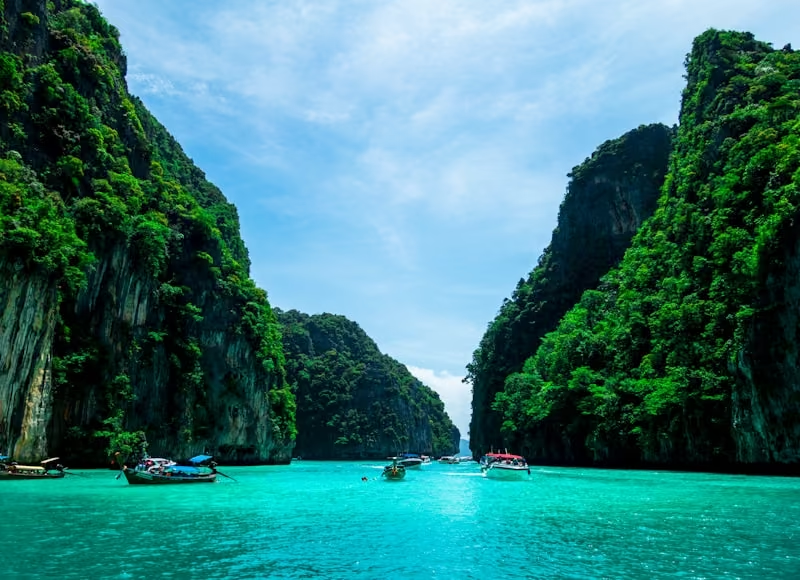
Tours from Phuket are sold to Phi Phi, Phang Nga Bay/James Bond Island, the Similans and Racha; they aren't the same sea day. Phi Phi is open sea and beaches/snorkelling; Phang Nga a sheltered bay of caves/kayaks and karst scenery; the Similans a longer, seasonal national park trip. Choose one main tour according to your interests, and avoid packages that squeeze every headline into one day.
Rassada Pier is the main pier used frequently by big ferries towards Phi Phi/Krabi. Chalong Pier in the south is used for diving and island tours; Ao Po in the north-east may be used for Phang Nga routes. Marina and private boat departures vary too. Read the exact pier, meeting time, hotel transfer and return point on the voucher; "Phuket pier" isn't enough information.
A speedboat is faster but bumpy in rough seas; a big ferry is slower and may still be cancelled depending on the weather. Tell the operator honestly about pregnancy, back/neck problems, small children or motion sickness. Ask about life jackets, passenger capacity, licences and insurance. Choose a verifiable operator rather than the vague boat name of the cheapest street agent.
Don't return from a far-off island on the same day as an international flight on a separate ticket. A weather delay/cancellation may not be covered by your policy as a missed flight. National park closures and protection periods change every year; don't assume places such as the Similans/Maya Bay are open based on an old calendar.
Sea safety and seasons: the red flag isn't decoration
On the Andaman coast, November–April usually stands out for calmer seas and less rain; during the south-west monsoon from May to October, waves, rip currents and boat cancellations can increase. That doesn't mean rain every day; even on a beautiful-looking day, coastal currents can be strong.
If there's a red flag, don't swim. If a lifeguard corridor is marked with red-and-yellow flags, stay within it. In a rip current, the basic principle is to swim out parallel to the shore and signal for help rather than fighting straight towards the shore; best of all is not entering a prohibited area. Don't go into the sea at night or after drinking.
In 2026 official warnings were issued about the Portuguese man-of-war on Phuket's west coast. Don't touch the blue/purple-looking creature or a detached tentacle with your hands; follow the beach officer's instructions. Don't base jellyfish/contact first aid on hearsay rules about vinegar or fresh water; the species and the official local protocol matter.
Read the weather forecast not just by rain percentage but by TMD marine warnings, wind and operator decisions. Putting your boat day in the middle of the holiday leaves room to swap it with a beach day if it's cancelled.
What to eat in Phuket? Peranakan, southern Thai and the sea
Phuket's food carries the trading history of Thai, Hokkien Chinese, Malay and Muslim communities. Moo hong is slow-cooked pork with pepper and soy; mee Hokkien thick noodles in a dark sauce; gaeng pu bai cha plu a coconut curry with crab and betel leaves; o-aew a cool, jelly-like dessert; roti and massaman show the Muslim breakfast thread.
Southern Thai curries can be hotter and sharper than central cuisine. "Medium spicy" isn't an exact measure; state your spice tolerance clearly and balance with rice, omelette or mild moo hong. For seafood, see the per-kilo/per-piece price, the cooking charge and the fish's weight before ordering. A live tank on its own is no guarantee of quality or sustainability.
The 2026 Michelin Guide Phuket selection includes Bib Gourmand and Selected businesses; PRU keeps its one star while many well-loved places aren't starred. In this guide we've only used a status for places we've verified on the current Michelin page. Raya may be a historic and valuable address, but as its 2026 Michelin status couldn't be verified, we haven't stuck an old label on it.
Money, nightlife, markets and common mistakes
Phuket is one of the country's more expensive tourist areas; island transport, beach clubs, taxis and boat tours in particular upset the Bangkok perception. Check whether the hotel rate includes an airport transfer, beach chairs, a kids' club or compulsory meals. Cards are widespread in big businesses; you need cash for markets, local buses, small eateries and some pier payments. A PromptPay QR doesn't mean a foreign card will work.
In Patong nightlife, ask about menu prices, service charges, entry/table requirements and the open-tab procedure before ordering. Don't leave your drink unattended. The drinking age in Thailand is 20, and sale/consumption is subject to certain time/place/special-day restrictions; seeing an open bar doesn't mean every sale is legal.
Vapes/e-cigarettes are banned; since 2025 the cannabis flower has been a controlled product in Thailand requiring a medical prescription. Don't mistake visible shops for permission. Flying a drone on the beach isn't a matter of "empty sky" either: there may be airport, national park, registration and insurance rules; don't fly without sorting out official permits.
The most common planning mistakes are thinking the Old Town is on the coast, treating the Smart Bus as a fast door-to-door transfer, going to a different coast every day and relying on a ferry from Phi Phi on the morning of your flight home. In Phuket, choosing fewer places means more holiday.
Where to eat: selected places
These aren't places to tick off one by one — they're the stops that best capture how the city eats. Opening hours and prices change, so check before you go.
One Chun
Mid-rangePhuket Old Town · Phuket home cooking · Michelin 2026 Bib Gourmand
Sharing moo hong, hot and sour southern dishes and family recipes in a historic building gives one of the most understandable introductions to Phuket food.
The 2026 Bib Gourmand status has been verified; there may be a queue at busy times. If there are two of you, balance spicy and mild dishes.
Go Benz
BudgetPhuket Old Town · Peppery pork broth, crispy pork · Michelin 2026 Bib Gourmand
In this simple late-night shop, rice noodles, offal and crispy pork show Phuket's Hokkien-Thai thread in a powerful bowl.
Some dishes may sell out; say if you don't want offal. Check current opening days and late-night arrangements.
Mor Mu Dong
Mid-rangeChalong / Pa Lai · Seafood in the mangroves · Michelin 2026 Bib Gourmand
Shared southern Thai dishes in canal-side huts that change with the tide give a sense of local geography, different from a beach-resort restaurant.
It's far from the centre; plan your transport there and back. Ask about seafood prices and portion sizes before ordering.
Roti Chaofa
BudgetTalat Nuea · Roti, massaman and a Muslim breakfast · Michelin Bib Gourmand
Through the pairing of crisp roti with spiced curry, it shows that Phuket's food story isn't just seafood and pork.
It's morning/lunch-focused; don't leave it late. Try both sweet and savoury roti in small orders.
Chuan Chim
Mid-rangeTalat Yai · Wok seafood · Michelin 2026 Bib Gourmand
A long-established, second-generation Old Town option for fresh seafood over a fierce flame and a garlic–chilli balance. You build a few shared plates rather than a big tourist menu.
There may be a break between lunch and dinner service; check current hours. For seafood, ask about the day's selection.
Raya
UpscalePhuket Old Town · Classic Phuket dishes in a historic house
A long-lived address for experiencing island classics such as moo hong and crab curry with betel leaves in a characterful old house.
Check reservations and opening days on its official site; we make no claim about a 2026 Michelin status.
Dietary preferences
Vegan and halal restaurants in Phuket
For Phuket we picked one plant-based place and one aimed at Muslim travellers. Halal labels don't all mean the same thing: certification, the restaurant's own declaration and "some halal options" are shown separately on each card.
Vegan Pick
Fully veganVegan Table
Phuket Old Town · Vegan Thai and international
A friendly city restaurant preparing curries, noodles, burgers and desserts entirely plant-based.
Why we picked it: For trying local spices with clear vegan labels during an Old Town walk.
Verification note
The venue's plant-based coverage was checked in the directory; reconfirm the menu and opening days before booking.
Source: HappyCow's current vegan restaurant directory ↗Halal Pick
Restaurant-declaredKusuma Seafood
Patong · Southern Thai seafood
A restaurant known as Muslim-run, serving seafood and Thai-style wok dishes.
Why we picked it: For its wide seafood selection that can be ordered for a group in Patong, and its clear halal identity.
Verification note
Listed as Muslim-run in halal guides; ask for up-to-date information on its CICOT certificate, sauces and alcohol policy.
Source: Thailand Halal Route / CICOT resources ↗Menus, suppliers and certifications change. If you keep strict halal, confirm the current certificate, alcohol, sauce ingredients and shared-kitchen risk directly with the restaurant.
Day-by-day itinerary
- 01
Day 1 — A slow start on your chosen coast
- Morning
- Get to know the area around your hotel and your main beach on foot; find the lifeguard flags, a convenience store and the real Smart Bus stop.
- Afternoon
- Spend the heat of the day with a pool/shade break. If there's a nearby second cove, make that the day's one short transfer; don't cross the island.
- Evening
- A beachside dinner in Kata/Karon, a neighbourhood/resort choice in Bang Tao, or a night plan in Patong whose rules you know.
- 02
Day 2 — The Old Town and Phuket food
- Morning
- Old Town façades, Chinese-Thai temples and a local breakfast. Before midday the streets are more photogenic and cooler.
- Afternoon
- A museum/shophouse visit and a shared Phuket lunch. If it's a Sunday, arrange your transport back around the road closures.
- Evening
- The Lard Yai Sunday Walking Street if the day falls right; if not, Go Benz or another neighbourhood dinner in the Old Town.
- 03
Day 3 — A single sea route
- Morning
- If the weather allows, take one of the Phi Phi, Phang Nga or Racha tours according to your interests. Confirm the pier and pickup time the night before.
- Afternoon
- Swimming/kayaking/snorkelling on the same tour. Follow life jacket and park rules; don't step on coral or feed the fish.
- Evening
- Keep the evening you get back close to your hotel. Don't plan a long taxi ride and a nightclub after a speedboat.
- 04
Day 4 — Southern Phuket
- Morning
- Wat Chalong; if official access is open, the Big Buddha area under current conditions. Prepare suitable clothing and sun protection.
- Afternoon
- The Rawai–Nai Harn line and a local lunch in Chalong/Pa Lai. Don't mistake Rawai for a swimming beach.
- Evening
- Sunset on a southern beach of your choice instead of the Promthep crowds; a safe return in a car with driver.
- 05
Day 5 — A weather buffer and your own island
- Morning
- Leave room for a cancelled boat day; if the weather is good, swim at your own beach. With a red flag, choose the pool/spa.
- Afternoon
- If it's rainy, an Old Town museum or a cooking class; if it's clear, viewpoints and a short neighbourhood route. Don't go to a far-off island on the last day.
- Evening
- Sort out your luggage and HKT transfer; depending on your flight time, confirm the Smart Bus's last service or a private car booking.
Before you go
Details that really make a Phuket holiday easier
Choose the beach before the hotel name
Patong, Kata, Bang Tao, Rawai and the Old Town aren't alternatives to one another. Choosing the area closest to your main daily purpose cuts the taxi and traffic burden.
The Smart Bus isn't a fast express
It stops a lot along the HKT–Rawai west-coast backbone. It's cheap, but heavy luggage, late nights and side-street hotels need a last-kilometre solution.
Read the pier on the voucher
Rassada, Chalong, Ao Po and the marinas are in different directions. "Departing from Phuket" isn't enough for a transfer plan.
The red flag isn't up for negotiation
Even if the sea looks calm, there may be a rip current. Don't swim when the lifeguards warn against it, and don't go into the sea after drinking or at night.
Don't put your boat day on the last day
The monsoon, wind or a national park decision can cause cancellations. Planning it in the middle of the holiday leaves time for changes and refunds.
Read scooter insurance line by line
Without a motorcycle licence/IDP, the policy may not pay out. Don't use the island's hills as a place to learn without a helmet and experience.
Rawai isn't a swimming beach
Rawai's shore is focused on boats and seafood; for swimming you need to go to a separate beach such as Nai Harn.
Don't touch a Portuguese man-of-war
Even one washed ashore or a detached tentacle can sting. Official 2026 warnings confirmed sightings on the west coast; follow the officers' instructions.
Continue your Thailand route
This city works well on its own; if you have time, the stops below add a different region and city to the same trip.
From Phuket to Krabi: not a second beach but a different geography
Move to the karst scenery with bases in Ao Nang, Railay and Krabi Town; compare the ferry and road transfer according to the season.
Read the guide →From Phuket to Bangkok: from the coast to the metropolis
Fly from HKT to the capital; plan with transport and neighbourhood clusters without assuming the same Thai budget.
Read the guide →Phuket or Koh Samui? Let the season and the island layout decide
Samui is on a different coast with a different rainfall calendar; read the transfer chain without assuming the two islands are close neighbours.
Read the guide →Frequently asked questions
How many days do you need for Phuket?+
5 days is comfortable for a beach base, the Old Town, a boat day and a southern island route. It can be done in four; in the monsoon season the buffer for cancellations shrinks. Two or three days only suit your chosen coast or a transit stop.
Which area should I stay in, in Phuket?+
Patong for nightlife and convenience; Kata/Karon for a balanced beach; Bang Tao for resorts and a long beach; Rawai–Nai Harn for a quiet south/long stays; the Old Town for food and culture. Mai Khao/Nai Yang can be considered for proximity to the airport.
How do you get from Phuket airport to Patong, Kata or Rawai?+
An official taxi/hotel transfer/Grab is door to door; the Phuket Smart Bus is the economical option along the west coast. The bus stops a lot and may not reach your hotel's door; check the current stop and last service with the official operator.
Do you need a car or scooter in Phuket?+
Not if you stay in one area and do one or two tours. On a scattered island route, a car/driver can be useful. A scooter should only be considered with a motorcycle licence and IDP, experience, a helmet and insurance cover.
Which month should you go to Phuket?+
November–April usually brings calmer seas; in the May–October monsoon, waves, rip currents and boat cancellations can increase. The weather varies from year to year; TMD marine warnings and beach flags are decisive.
From Phuket to Phi Phi: a day trip or an overnight stay?+
With limited time, a licensed tour is easy; staying overnight on Phi Phi for an island feel outside the crowded hours is a different experience. Leave room for ferry/boat cancellations and don't tie your return to the same day as an international flight.
Is Phuket Old Town close to the beach?+
No. The Old Town is inland in the south-east of the island, and you can't walk to a swimming beach. Plan it as a food/culture base or a one-day route; you need transport for beach days.
Note: Beach flags, boat and national park access, Smart Bus hours/payment systems, piers, temple/viewpoint access and restaurant statuses can change. Follow official daily warnings. Last updated: .
Official sources and latest check
Visa, transport, entry and visiting rules change — re-check them with these official sources before you travel.
- TAT — Phuket destination and beach safety ↗
- TAT — Phuket OneMap and public transport ↗
- Thailand.go.th — Phuket Smart Bus Tap & Go ↗
- Phuket Smart Bus — official operator ↗
- Phuket Airport — Smart Bus route ↗
- Grab — Phuket Airport ↗
- TAT — the Old Town and Lard Yai route ↗
- Thailand PRD — 2026 Portuguese man-of-war warning ↗
- Michelin — One Chun ↗
- Michelin — Go Benz ↗
- Michelin — Mor Mu Dong ↗
- Raya — official site ↗