Contents
Why is Osaka Japan's most relaxed city?
People who know Japan from Tokyo notice something odd when they reach Osaka: people talk to strangers. The shopkeeper jokes, the man at the next table asks what you're eating, the counter staff hand you a little extra. Osaka was historically a merchant city; instead of court and temple culture, a culture of bargaining, banter and filling food developed.
The practical result: Osaka's to-do list is short, but time spent in the city is enjoyable. In Tokyo you go museum by museum, in Kyoto temple by temple; in Osaka you stop in a street, eat three things and talk to someone. It's the Japanese city where you least need a plan.
The city splits in two. Kita (north), i.e. Umeda: skyscrapers, department stores, the business district. Minami (south), i.e. Namba and Dotonbori: neon, food and drink, nightlife. They're fifteen minutes apart by metro, and their characters really are different.
What to eat? Osaka's real sight is its food
In this guide the food section is placed near the start, not at the end, because in Osaka sightseeing plans are built around food.
Takoyaki — batter balls with pieces of octopus. Crisp outside, almost runny inside, they'll burn your mouth on the first bite; eat them knowing that. The recipe changes from stall to stall, so don't decide before trying two.
Okonomiyaki — a thick, cabbage-heavy kind of pancake cooked on a griddle. In the Osaka style the ingredients are mixed into the batter (in the Hiroshima style they're layered — they're two different things). In many places you cook it on the griddle at your own table.
Kushikatsu — breadcrumbed, deep-fried skewers. There's a separate section below, because it comes with a rule.
Kitsune udon, negiyaki and horumon (grilled offal) are also city classics. You don't need to look for expensive restaurants in Osaka; the best food usually comes from six-seat, smoky, noisy places.
The kushikatsu rule: an old slogan, new ways of serving
Kushikatsu culture's famous slogan is no double-dipping in the sauce. The reason was the hygiene of the sauce pot shared at the table in the past: a bitten skewer was never put back in the pot. Since the pandemic, however, many businesses have switched to squeeze bottles, individual dishes or other ways of serving. Don't assume every table will have a shared pot and a cabbage "scoop".
Today the right rule is simple: follow the way the business serves; if there's a shared pot, dip a clean skewer only once. If you're using the sauce bottle or individual dish the staff give you, don't try to imitate the historic ritual.
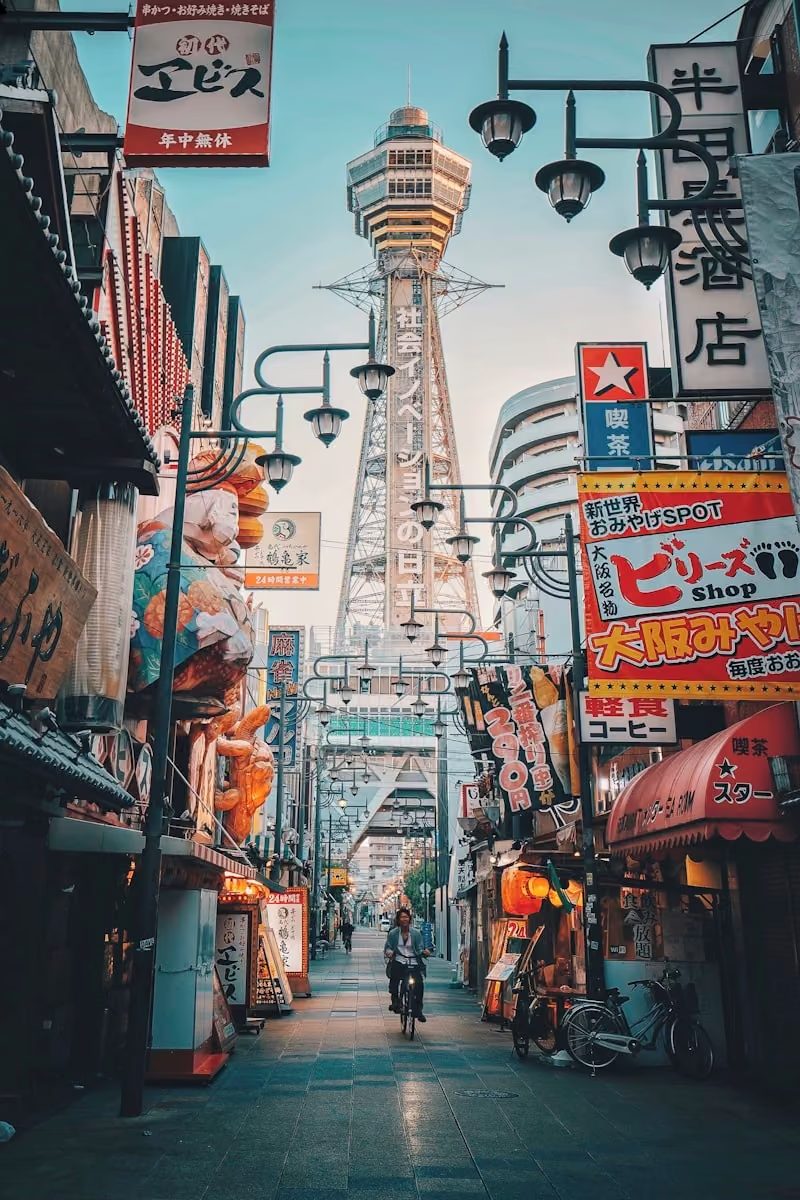
The heart of the tradition is the Shinsekai district; Kushikatsu Daruma, one of the best-known names, was born here and operates several branches in the city. Shinsekai itself is worth seeing: designed in the early 20th century as a "neighbourhood of the future", then frozen in time — a little faded, but extremely friendly.
Dotonbori and Kuromon: two different eating experiences
Dotonbori is the area along the canal with giant neon signs and moving crab sculptures. Is it touristy? Very. You still go, because it shows better than anywhere how Osaka sees itself: over the top, loud, brash. Go in the evening, walk along the canal, pick up something from two or three stalls, and plan it as a walk rather than as dinner.
Kuromon Ichiba is the covered market considered the city's "kitchen". There are stalls selling seafood, fruit, meat and food to eat standing up; many shops will cook what you buy on the spot. Kuromon is livelier in the morning and calms down in the afternoon. Less showy than Dotonbori, but more satisfying as food.
An honest note: Kuromon has become noticeably more touristy in recent years, and prices have risen above market standards. It's still worthwhile, but don't go expecting "the market where locals shop".
Things to see: what is there besides food?
Osaka's list of monuments is short, and that's not a flaw but the city's character.
Osaka Castle and its surroundings
The castle has been destroyed and rebuilt several times; today's main keep is a modern reconstruction with a museum inside. Visiting the interior may not appeal to everyone, but the large park, moats and stone walls around it are genuinely impressive. It's the city's best park for cherry blossom in spring and colour in autumn.
Shinsekai and Tsutenkaku
Retro signs, kushikatsu shops, old arcades. Tsutenkaku tower is the symbol of the district. It has more character at night; if you come in the day it can look a little faded.
Umeda and the modern side
The open-air observation deck linking the two towers of the Umeda Sky Building is one of the most original viewpoints in Japan. The north of the city is also the hub for shopping and underground malls — Umeda's underground labyrinth is an experience in itself.
Universal Studios Japan — a separate decision
Universal Studios Japan isn't a two-hour stop to squeeze into a city trip; if you want to go, give it a full day. Since 5 January 2026, the in-park Area Timed Entry Ticket/Standby Entry Ticket process for Super Nintendo World has been done through the official USJ app. On some days and at some times the area may open without a ticket; don't count on it. Install the app before you arrive, add your park ticket and follow current instructions at the entrance.
If you've given Osaka only two days on a first visit, you'll have to choose: a full park day leaves out one of the Namba–Shinsekai and castle/Umeda routes. If a theme park isn't your priority, the city itself deserves the two days.
Osaka as a base for Kansai
One of Osaka's greatest strengths is its location: Kyoto is half an hour away, Nara forty minutes, Kobe half an hour, Himeji an hour. If you're touring the region, staying in Osaka and fanning out on day trips is both a cheap and practical strategy.
Where to stay? Umeda or Namba?
This is the only important decision you'll make in Osaka.
Namba / Shinsaibashi (south) — You're in the middle of the eating, drinking and nightlife. Dotonbori, Kuromon and Shinsekai are within walking distance or a few stops away. If you're coming to Osaka for the food, stay here. The trade-off: it's noisy.
Umeda (north) — Tidier, more corporate, very strong for transport. Close to Shin-Osaka (Shinkansen) and the airport connections. It makes sense if you'll be touring Kansai on day trips.
Shin-Osaka — Only for the Shinkansen connection; not interesting as a neighbourhood. Fine if you're staying one night to catch an early train.
General advice: if it's your first visit, the Namba area. Osaka's energy is there, and something is still open when you head back to the hotel in the evening.
The airport and getting around the city
Kansai (KIX) is the main gateway for international flights and sits on an artificial island. The fastest Nankai trains to Namba take about 34 minutes, slower services over 40 minutes; JR to the Osaka/Umeda side takes about an hour. Itami (ITM) is closer to the city but is mainly a domestic airport.
Within the city, the metro is more than enough. The Midosuji line (red) will be the most important line for you: it links Shin-Osaka, Umeda, Shinsaibashi and Namba on a single line. Having your hotel close to this line makes things much easier.
Your IC card (Suica, Pasmo, ICOCA — all mutually valid) works here too. The private railway companies running to Kyoto, Nara and Kobe are separate from JR; if you have a JR Pass, check which lines are covered, because in Kansai the fastest route isn't always JR.
How many days is enough?
2 full days is enough for Osaka itself; the city is compact and the list of sights is short. Giving the third day to Nara or Kobe is a good idea.
A common setup for a Kansai tour that works: stay 3 nights in Osaka, take day trips from here to Nara and Kobe, and for Kyoto stay a separate 2–3 nights in Kyoto. Visiting Kyoto as a day trip from Osaka is possible, but it makes you miss Kyoto's best hours.
When to go?
Osaka is inland and humid; summer is truly oppressive. In July–August, sightseeing on foot in the daytime is hard, but because the city is full of underground malls and covered arcades it's more manageable than Kyoto.
Spring and autumn are the most balanced periods. Osaka Castle park becomes the most beautiful place in the city in cherry blossom season.
Winter is mild and snow is rare. Crowds thin out, prices drop, and hot street-food culture is much more enjoyable in winter. Osaka is one of the cities in Japan where a winter visit costs you the least.
Local tips and common mistakes
Follow the signs on escalators. The traditional habit in Osaka is to stand on the right and pass on the left; however, safety campaigns may ask you not to walk and to stand on both sides. Local signs take precedence over a memorised city rule.
Don't mistake Dotonbori for dinner. Snacking on three things there and having your real meal in the back streets works better.
Watch how the kushikatsu is served. If there's a shared sauce, don't dip a bitten skewer back in; if there's an individual dish or squeeze bottle, use that.
Don't make Osaka just a transit point. Many travellers stop one night in Osaka on the way to Kyoto and move on. The city deserves at least one full evening.
The Kansai dialect is different. The Japanese you learned from a book sounds a little different here; instead of "arigatou" you may hear "ookini". Don't worry, people will speak to you in standard Japanese.
Where to eat: selected places
These aren't places to tick off one by one — they're the stops that best capture how the city eats. Opening hours and prices change, so check before you go.
Endo Sushi
Mid-rangeOsaka Central Wholesale Market · Seasonal sushi sets served morning and midday
You go not for a showy city-centre sushi experience but for mixed sets made with the day's fish, in the rhythm of a working wholesale market. The "maze" sets make it easy to compare different pieces in one order.
It's morning/midday-focused, and market holidays can affect it. Confirm current opening days on the official site.
Kushikatsu Daruma (Shinsekai main shop)
BudgetShinsekai · One of the best-known names in the kushikatsu tradition
An accessible classic for trying kushikatsu in the atmosphere of the district where it was born. Ordering vegetable, meat and seafood skewers a few at a time means you eat the coating while it's hot.
How the sauce is served may vary by branch. If there's a shared pot, don't dip a bitten skewer back in; follow the current method at your table.
Ajinoya Honten
Mid-rangeNamba · Osaka-style okonomiyaki
You can try the Osaka style, where cabbage and batter are mixed, at a classic address where staff bring it to the right consistency on the griddle. If it's your first time, leaving the cooking to the staff is a good idea.
The queue at the popular main shop can get long; check the business's current reservation and queuing rules.
Takoyaki Wanaka Sennichimae
BudgetNamba · Takoyaki with a thin shell outside and a runny centre
A reliable specialist that shows takoyaki isn't meant to be completely solid like an oven-baked cake, but very hot and creamy inside. Compare sauce, salt or different toppings in small portions.
At the first bite, open it up and let it cool briefly; fresh takoyaki is much hotter than you expect.
Kuromon Ichiba
Mid-rangeNipponbashi · A market of seafood, fruit and ready-to-eat food
Not a restaurant but a route for comparing produce and small tastings. In the morning the stalls are livelier; it shows Osaka's identity as a trading city through food.
It's noticeably touristy. Don't order without seeing the price and portion; eat where the stall indicates, not while walking.
Dietary preferences
Vegan and halal restaurants in Osaka
For Osaka we picked one plant-based place and one aimed at Muslim travellers. Halal labels don't all mean the same thing: certification, the restaurant's own declaration and "some halal options" are shown separately on each card.
Vegan Pick
Fully veganMERCY Vegan Factory
Chuo · Japanese and world cuisine
A casual eatery with a wide, fully vegan menu covering curry, ramen, gyoza and desserts.
Why we picked it: Its menu is clear and comprehensive for first-time visitors who want to try local flavours in one place.
Verification note
The venue's plant-based coverage was checked in the directory; reconfirm the menu and opening days before booking.
Source: HappyCow's current vegan restaurant directory ↗Halal Pick
Restaurant-declaredHalal Restaurant Matsuri
Fukushima · Japanese home cooking
A restaurant serving Osaka classics such as ramen, okonomiyaki and takoyaki in halal versions.
Why we picked it: You can try the city's street food in one kitchen, with a clear halal declaration.
Verification note
The restaurant declares itself halal-compliant; reconfirm the current certificate's scope and whether alcohol is served.
Source: JNTO resources for Muslim travellers ↗Menus, suppliers and certifications change. If you keep strict halal, confirm the current certificate, alcohol, sauce ingredients and shared-kitchen risk directly with the restaurant.
Day-by-day itinerary
- 01
Day 1 — South Osaka and food
- Morning
- Late breakfast at Kuromon Ichiba; move from stall to stall and don't fill up in one place.
- Afternoon
- A walk around Shinsekai and Tsutenkaku; explore the retro streets.
- Evening
- Kushikatsu in Shinsekai (follow the sauce arrangement offered), then a night walk in Dotonbori.
- 02
Day 2 — The castle and the north
- Morning
- Osaka Castle and the park around it; walk along the moats and walls.
- Afternoon
- Move on to Umeda: underground malls, shops, a coffee break.
- Evening
- Sunset from the open-air observation deck of the Umeda Sky Building, then dinner at an okonomiyaki place.
- 03
Day 3 — Branch out into Kansai
- Morning
- A day trip to Nara (about 40 min): Todai-ji and the deer park.
- Afternoon
- Or Kobe: the port, the old foreign-settlement district and its beef culture.
- Evening
- Back in Osaka, spend your last evening in the back streets of Namba.
Before you go
What to know before going to Osaka
Install the USJ app before going to the park
Since 5 January 2026, timed/standby entries for Super Nintendo World have been obtained through the official app. Add your ticket in advance; treat times when the area may open without a ticket as a bonus, not a plan.
Choose your KIX train according to your hotel
For most travellers, Nankai is the more natural route to the Namba area and JR to the Osaka/Umeda side. Choose the connection with the fewest transfers and the least walking with luggage, not the train that looks fastest.
Umeda, Osaka Station and Shin-Osaka aren't the same place
Umeda and JR Osaka Station are in the same central core; the Shinkansen stop, Shin-Osaka, is further north. Planning a route by typing only "Osaka" into the map can create unnecessary transfers.
Read the kushikatsu rule according to how it's served
If there's a shared sauce pot, don't dip a bitten skewer back in. Where you're given an individual dish or squeeze bottle, follow the business's method without turning the old "no double-dipping" story into a performance.
Follow the signs on escalators
Osaka's habit of standing on the right is well known; current safety campaigns may ask you to stand still on both sides. Don't push through the crowd, and go by the station signs.
Make Kuromon a one-meal tasting route
Check the displayed price and portion before ordering. Focusing on two or three items rather than buying from every stall avoids unnecessary spending at tourist prices.
Continue your Japan route
This city works well on its own; if you have time, the stops below add a different region and city to the same trip.
From Osaka to Kyoto: a three-day culture break
The train connection of around half an hour is easy; still, stay in Kyoto so you can experience the early and late hours.
Read the guide →From Osaka to Nara: the easiest day trip
With a direct Kintetsu connection from Namba, Todai-ji, the deer park and Naramachi fit into one day.
Read the guide →Frequently asked questions
How many days do you need for Osaka?+
2 full days is enough for the city itself. Giving a 3rd day to a day trip such as Nara or Kobe lets you use Kansai much more efficiently.
Is Osaka or Kyoto a better base?+
If you're touring Kansai on day trips, Osaka is more practical and usually more affordable. But Kyoto's temples are best seen early in the morning and late in the evening, so the ideal setup is to stay in both cities.
Why don't you double-dip in kushikatsu sauce?+
The rule is about hygiene in the traditional setup where the table shares a sauce pot. Today many businesses use individual dishes or squeeze bottles. If there's a shared pot, don't dip a bitten skewer back in; in all cases, follow the method the business offers.
Which neighbourhood should I stay in, in Osaka?+
If it's your first visit, Namba/Shinsaibashi: you're in the middle of the eating, drinking and nightlife. If transport and day trips are the priority, Umeda makes more sense. Either way, try to be close to the Midosuji metro line.
How do you get from Kansai Airport to the city?+
The train is the most practical option. Nankai's fastest service reaches Namba in about 34 minutes, and the JR connection reaches the Osaka/Umeda side in about an hour. Choose the company according to the neighbourhood you're heading to; Itami is closer but mainly serves domestic flights.
Which side do you stand on, on escalators in Osaka?+
The local habit is traditionally to stand on the right, but current safety campaigns may ask you not to walk on escalators and to stand on both sides. Follow the signs in the station and don't force your way past.
Note: Restaurant branches, opening hours and market prices can change. As many private railway companies operate in Kansai besides JR, confirm which lines your pass covers before you set off. Last updated: .
Official sources and latest check
Visa, transport, entry and visiting rules change — re-check them with these official sources before you travel.