Contents
The one rule for seeing Kyoto well: timing
In Kyoto, what time you see a temple matters more than which temple you see. Visiting Kinkaku-ji at eleven in the morning and at nine in the morning is like being in two different cities. Same garden, same gold leaf, a completely different experience.
In practice that means: start your day at half past seven, finish the two most popular places in the first hours of the morning, spend the middle of the day in quieter neighbourhoods or a museum, and go out again in the late afternoon. In Kyoto, 11:00–15:00 is a time to rest, not to sightsee.
The second rule: don't plan more than three temples a day. Distances between temples in Kyoto are long and city traffic is heavy. Taking in three temples properly is both more enjoyable and more memorable than racing through six.
Things to see: which temple, and why?
There's no such thing as "the best temple" in Kyoto; there are places offering completely different experiences. I've grouped those below by character so you can choose from the list.
Fushimi Inari — the best known, and the most often visited wrongly
The tunnel formed by thousands of orange torii gates is Kyoto's most recognisable image. Being able to reach the main approach and torii paths early or late in the day can transform your visit; offices and some facilities, however, aren't open all day.
Most visitors take photos in the busy first few hundred metres and turn back. Yet as the path continues upwards the crowd thins fast; after half an hour's climb you're almost alone. The round trip to the summit takes two to three hours, but even going halfway is enough to change the experience.
If you want a truly quiet visit, go at sunrise or after dark; the shrine doesn't close. A warning: eating and drinking are prohibited outside the marked rest areas, and that includes eating while walking. The nearest stop is Inari on the JR Nara line, just two stops from Kyoto Station.
Kinkaku-ji and Ginkaku-ji — gold and silver
Kinkaku-ji (the Golden Pavilion) is a pavilion standing on a pond and genuinely covered in gold leaf. The visit is short — a one-way path of about forty minutes. That makes it easy to arrive at opening time, and it's absolutely worth it.
Ginkaku-ji (the Silver Pavilion), despite its name, isn't silver, and its real beauty is in its garden: raked sand cones, a moss garden and a short path up the hill. Kinkaku-ji is showy, Ginkaku-ji contemplative. If you only have time for one, choose according to your mood.
The Philosopher's Path, starting from Ginkaku-ji, is a walk of about two kilometres along a canal. It's magnificent in cherry blossom season and in November; at other times it remains the city's most peaceful walk.
Arashiyama — more than a bamboo forest
The bamboo forest is much shorter than it looks in photos, and in the daytime you walk shoulder to shoulder. Arashiyama is still worth going to, because the real beauty isn't the forest itself but its surroundings: the garden of Tenryu-ji, the banks of the Katsura River, the monkey park on the hill and the quiet Sagano area stretching north.
Suggestion: enter the bamboo forest before eight in the morning, move to the garden when Tenryu-ji opens, and spend the afternoon by the river. If you plan Arashiyama as half a day you'll be rushing; give it a full day.
Lesser-known places
In autumn Tofuku-ji offers Kyoto's most striking maple view; in the valley seen from the bridge, thousands of trees turn red at once. The brick aqueduct behind Nanzen-ji carries a Roman influence you'd never expect in Kyoto and is usually empty.
Kurama and Kibune are mountain villages north of the city, reached by a small train. Between them is a forest walk of about two hours. If you have a spare day in Kyoto, go here rather than adding more temples.
Gion and the geiko districts: the new rules you need to know
In Gion, don't enter private property or side lanes marked as closed to entry. Signs may be in Japanese and English; some private lanes carry warnings of fines for unauthorised entry. Being on a public street also doesn't give you the right to photograph people up close without permission, follow them or block their way.
The restrictions don't close the whole of Gion. Hanamikoji is a public street also open to traffic; Yasaka Shrine and the public roads around it can be visited. The limit is the signposted private passages and residential entrances. If you're unsure of a road's status, stay on the main route.
The reason for this rule isn't hostility to tourism. For years, people who live and work here were photographed without permission, followed, and had their private property entered. Geiko aren't a tourist show; they're working people on their way to work. If you meet one in the street, don't block her way or stop her for a photo.
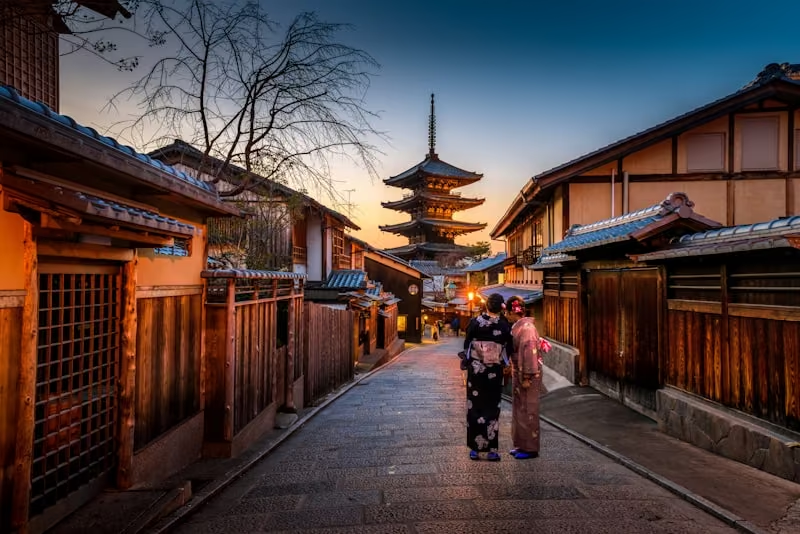
The best time to see Gion is late afternoon, as it starts to get dark. The lanterns come on, the restaurants open, and for a short while the street becomes cinematic. You don't need to break any rules for that.
What to eat? Why Kyoto food is different from Tokyo's
Kyoto is a city far from the sea and surrounded by mountains. Its cooking is built on that geography: centred not on seafood but on vegetables, tofu, pickles and dashi. After Tokyo's fast, filling food, Kyoto may seem light at first; after a few meals you realise how refined it is.
Kaiseki is the most formal form of Japanese cuisine: a multi-course menu arranged by season. It's expensive and needs a reservation. If your budget allows, Kyoto is the right city to try it.
Shojin ryori, meanwhile, is temple cuisine — entirely plant-based, a tradition that aims for simplicity. Vegetarians and vegans usually have a hard time in Japan; Kyoto is the easiest city in the country in this respect.
Things to try: yudofu (hot tofu, especially in winter), obanzai (home-style seasonal side dishes), yuba (tofu skin), matcha sweets and Kyoto's famous pickles, tsukemono. The Uji area is Japan's matcha centre, which is why the tea you drink in the city is of such high quality.
Nishiki Market: don't go without knowing one rule
This covered market, called "Kyoto's kitchen", is a narrow street running for five hundred metres. Everything from pickles to tofu, fresh seafood to kitchen knives is here.
The rule you need to know is this: eating while walking is not welcome. Market traders ask visitors to eat what they buy in front of or inside the shop they bought it from. The reason is both that dropped food makes the narrow street slippery and that skewers carried in hand bump into people in the crowd. The rule makes sense and is easy to follow: buy, step aside, eat there.
The market gets busy in the afternoon, and many shops start closing in the late afternoon. Going in the morning is more relaxed, but some stalls open late. The most balanced time is just before midday.
Where to stay? Choosing a neighbourhood
Around Kyoto Station — The most practical option for transport, with the Shinkansen, bus terminal and airport connection right at your feet. The trade-off: the area is soulless, not somewhere you'll take an evening stroll.
Gion / Higashiyama — The most atmospheric area: wooden houses, narrow streets, evening lanterns. Prices are high, but if you're coming to Kyoto once, staying here changes the experience.
Kawaramachi / Pontocho — The city's food and drink hub, with restaurants, bars and Nishiki within walking distance. Lively at night, central by day.
Arashiyama — Far from the city, quiet, close to nature. A good choice if you're in Kyoto for the second time or looking for peace; on a first visit it's too far from the centre.
A suggestion: if you can, stay a night in a machiya. These are narrow-fronted, long and deep traditional Kyoto houses; many have been restored and opened as accommodation. They tell you much more than a hotel room does.
Transport: balancing train, metro and bus
Kyoto's metro network has two lines, so buses play an important role on tourist routes. Buses towards Kinkaku-ji and Gion can fill up in peak season and get caught in traffic. Boarding with a big suitcase makes moving around harder for you and other passengers alike; consider station and hotel luggage services.
Practical strategy: wherever possible, choose the train and metro. Fushimi Inari, Arashiyama and Uji are reached by train. Use the bus only when there's no other option, and preferably early in the morning rather than in the middle of the day.
Kyoto is also an ideal city for cycling: largely flat and laid out on a grid. If you're staying centrally, renting a bike for a day is both faster and more enjoyable than waiting for buses.
Ticket and pass options have changed in recent years; if you're buying a one-day or multi-day pass, check its coverage and price with a current source before you go. Your IC card (including Suica/Pasmo) also works in Kyoto.
How long should you stay, and can you do it as a day trip from Osaka?
Give Kyoto at least 3 full days. Two days is enough to see the main sights, but you'll have rushed through the city. Four days comfortably fits a day trip to Nara or Uji as well.
The answer to "can I stay in Osaka and visit Kyoto as a day trip?" is technically yes — the train takes half an hour. But Kyoto's best hours are early morning and late evening; a day trip means missing exactly those two windows. Do it if your budget demands, but ideally stay in Kyoto.
When to go?
November is Kyoto's peak month. The maples turn red and the weather is cool and dry. In return the city has its most crowded time of year, and hotels fill up months in advance.
Early April is cherry blossom season; magnificent, but the date shifts from year to year and the window is a week. Buying tickets locked to this date is risky.
December–February is the most underrated but most rewarding period: the crowds disperse, temple gardens become misty and silent, and on the rare occasions it snows, the sight of Kinkaku-ji is unforgettable. Go prepared for the cold.
The June rainy season and August heat are the two hardest periods. If you're going in summer, spread your plans across morning and evening and spend midday indoors.
Local etiquette and common mistakes
Silence is expected in temple gardens. In Kyoto, temples aren't tourist sites but places where people still worship. Talking loudly gets noticed.
Obey no-photography signs. Photography is forbidden inside many temples; the rule is clearly posted.
Be respectful when renting a kimono. It's a common and welcome activity, but remember that where you wear it isn't a costume party.
Don't try to fit everything into one day. This is the most common mistake in Kyoto. Sitting and lingering at three temples is far better than visiting eight and remembering none.
Have cash on you. At small temples, admission and omamori sales are mostly cash.
Where to eat: selected places
These aren't places to tick off one by one — they're the stops that best capture how the city eats. Opening hours and prices change, so check before you go.
Omen Ginkaku-ji
Mid-rangeGinkaku-ji · Thick udon, seasonal vegetables and sesame sauce
After the Philosopher's Path or Ginkaku-ji, it offers a simple but distinctively Kyoto meal in which you finish the noodles in your own bowl with vegetables and seasonings. A good balance for a heavy temple day.
The Ginkaku-ji and Pontocho branches have different reservation arrangements; check the branch you'll visit on the official list.
Shigetsu
UpscaleTenryu-ji · Arashiyama · Shojin ryori run by the temple
In the same setting as the Tenryu-ji garden, it lets you experience multi-part Zen temple cuisine prepared without meat or fish. It's not a vegetarian fallback but a historic food tradition in its own right.
Booking ahead is strongly recommended; temple admission and a meal reservation are not the same transaction.
Honke Tagoto
Mid-rangeSanjo Teramachi · Kyoto-style soba and seasonal dishes since 1868
In the middle of a Nishiki and Teramachi walk, it lets you compare soba and seasonal sets on the same menu at a long-established Kyoto eatery. It's on the list not just for its history, but because it's a real alternative that is operating in 2026 and publishes its current menu.
Use the Sanjo Teramachi address; check the current closing day and last order time on the official site.
Izuu
UpscaleGion · Kyoto-style saba-zushi since 1781
It shows how, in Kyoto, far from the sea, mackerel preserved with salt and vinegar meets rice. The kelp wrap is part of how it's served; asking the staff how to eat it makes the experience easier.
It's a small, long-established business; confirm current service and waiting times in advance.
Nishiki Market
BudgetNakagyo · Pickles, tofu, yuba and kitchen goods
Not a single restaurant but a route for comparing Kyoto ingredients. Buy small portions from shops that specialise in one product; don't turn the market into a race to carry five different skewers in your hand.
Eat what you buy where the shop indicates, not while walking; dispose of packaging as the business directs.
Dietary preferences
Vegan and halal restaurants in Kyoto
For Kyoto we picked one plant-based place and one aimed at Muslim travellers. Halal labels don't all mean the same thing: certification, the restaurant's own declaration and "some halal options" are shown separately on each card.
Vegan Pick
Fully veganVegan Izakaya NIJIYA
Nakagyo · Japanese izakaya
A fully vegan izakaya with small plates, sake pairings and homemade desserts.
Why we picked it: It stands out for offering a Kyoto evening in classic izakaya style, without worries about cross-contamination.
Verification note
The venue's plant-based coverage was checked in the directory; reconfirm the menu and opening days before booking.
Source: HappyCow's current vegan restaurant directory ↗Halal Pick
Halal optionsYOSHIYA Arashiyama
Arashiyama · Japanese cuisine
A long-established Japanese restaurant preparing Muslim-friendly set menus along the Arashiyama sightseeing route.
Why we picked it: Practical for planning a local meal without leaving the Bamboo Forest and Togetsukyo route.
Verification note
The Muslim-friendly menu is part of Kyoto's official programme; confirm advance booking, kitchen separation and alcohol service.
Source: Kyoto Muslim Friendly Council ↗Menus, suppliers and certifications change. If you keep strict halal, confirm the current certificate, alcohol, sauce ingredients and shared-kitchen risk directly with the restaurant.
Day-by-day itinerary
- 01
Day 1 — Eastern Kyoto
- Morning
- Go to Fushimi Inari at sunrise, climb halfway and come back down. Then return to the centre by JR for a late breakfast.
- Afternoon
- The area around Kiyomizu-dera and the stone-paved slopes of Higashiyama. If the crowds get too much, turn into the back streets.
- Evening
- A late-afternoon walk in Gion (without entering private lanes), then dinner in Pontocho.
- 02
Day 2 — North and west
- Morning
- Kinkaku-ji at opening time. It takes forty minutes to see; going early changes everything.
- Afternoon
- Arashiyama: the bamboo forest, the Tenryu-ji garden and the banks of the Katsura River. Don't rush.
- Evening
- Back to the centre for a quiet dinner around Nishiki.
- 03
Day 3 — Slow Kyoto
- Morning
- Ginkaku-ji, then a walk along the Philosopher's Path.
- Afternoon
- Nanzen-ji and the aqueduct; if it's autumn, add Tofuku-ji to this half-day.
- Evening
- Finish with seasonal dishes in a machiya or a small eatery serving obanzai.
Before you go
What to know before going to Kyoto
Finish the two most famous stops before midday
Don't put two of Fushimi Inari, Kinkaku-ji and Arashiyama on the same morning; they're geographically apart. Take one at opening time/sunrise and keep midday for a quieter neighbourhood or a museum.
Gion isn't entirely off limits
You can walk on public roads such as Hanamikoji while following the signs. Don't enter private passages; don't stop, follow or photograph geiko and maiko up close without permission.
Don't eat while walking in Nishiki
Finish what you buy inside the shop or at the spot it indicates. Rather than carrying food and rubbish through the narrow passage, choose small portions at a few specialist stalls.
Don't take your suitcase onto tourist buses
A hotel or station luggage service is more comfortable than squeezing through crowded buses with a big suitcase. Use the train rather than the bus for Fushimi Inari, Arashiyama and Uji.
A temple meal and temple admission are separate
Shigetsu inside Tenryu-ji may require a reservation depending on the menu; a meal reservation doesn't include garden admission. Confirm the two transactions and their times separately.
Don't trust old restaurant lists
From 11 January 2026, Honke Owariya suspended its soba service for an extended period and ended confectionery sales. This guide recommends Honke Tagoto, which is operating, in its place.
Continue your Japan route
This city works well on its own; if you have time, the stops below add a different region and city to the same trip.
From Kyoto to Nara: a one-day old-capital route
Easy to reach by Kintetsu or JR; the deer, Todai-ji and Kasuga Taisha in the forest come together in one walk.
Read the guide →From Kyoto to Osaka: carry on into the evening in the city of food
With a short train connection, move from temple silence to the everyday energy of Namba and Shinsekai.
Read the guide →Frequently asked questions
How many days do you need for Kyoto?+
At least 3 full days are recommended. 2 days is enough for the main sights but feels rushed; 4 days also allows a day trip to Nara or Uji.
Is photography banned in Gion?+
There's no general photography ban across all of Gion. On public streets, follow the signs; don't enter private roads or property. Following geiko or maiko, blocking their way or photographing them up close without permission is not acceptable.
Is there an entry fee for Fushimi Inari, and when should you go?+
There's no entry fee for the main shrine area; the approach and torii paths are accessible early and late, but office and facility hours are separate. Sunrise is a good choice for avoiding the crowds. The nearest stop is Inari on the JR Nara line.
Should you use buses or trains in Kyoto?+
Trains and the metro wherever possible. Kyoto's tourist bus routes get very crowded in season and sit in traffic. Fushimi Inari, Arashiyama and Uji are reached by train anyway.
Can you eat while walking in Nishiki Market?+
The market management asks you not to eat while walking. Finish the food you buy in or at the spot indicated by the shop you bought it from; this keeps the narrow passage safe and clean.
Is it hard to find vegetarian food in Kyoto?+
It's the easiest city in Japan. The temple cuisine shojin ryori is entirely plant-based; yudofu, yuba and obanzai are also largely vegetable-based. Still, as dashi (fish stock) is widely used, it's worth asking if you're vegan.
Note: Temple admission fees, opening hours, bus/pass coverage and seasonal special openings change. In autumn and cherry blossom season some temples also hold special night visits. Confirm current information before you set off. Last updated: .
Official sources and latest check
Visa, transport, entry and visiting rules change — re-check them with these official sources before you travel.