Contents
How to visit the Peace Memorial Park
A large park in the centre of the city, set on the delta between two rivers. It isn't a tourist stop but a place of remembrance, and planning your visit accordingly is both more respectful and more meaningful.
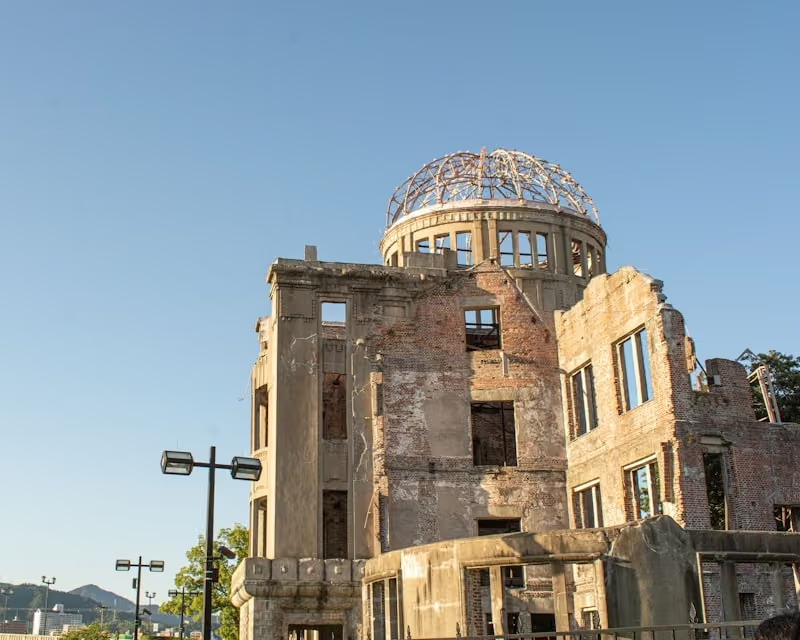
Suggested order: start with the A-Bomb Dome (Genbaku Dome). Despite being very close to the hypocentre, this building's skeleton remained standing, and it was deliberately left unrepaired. Then walk south through the park: the Children's Peace Monument, the Memorial Mound and the Peace Flame lead you naturally to the museum.
See the museum at the end of your walk through the park. Under the current official arrangement, the Peace Memorial Museum opens at 07:30; closing time varies by season. At some busy times or periods, online reservation in advance is required; at other times an online ticket reduces the risk of queuing. The museum's content is heavy: personal belongings, testimonies and photographs. Don't rush it; allow at least an hour and a half to two hours.
A note for families with children: some parts of the museum can be distressing for young children. The park itself and the Children's Peace Monument, with Sadako's story, offer a more suitable starting point.
Don't rush straight to the next stop after your visit. Sitting by the river for a while is a pause most visitors need.
Miyajima and the floating torii
Coming to Hiroshima and not going to Miyajima (officially Itsukushima) means skipping half the trip. The island is reached from the city by train and then a ferry ride of about ten minutes; two separate companies run the crossing.
There's a new arrangement you need to know about: a visitor tax of ¥100 now applies to the island, and it's added automatically to your ferry ticket. You don't need to pay it separately. The revenue goes to waste management and measures to ease the pressure of overtourism.
The secret of the floating torii is the tide. The famous image of the gate appearing to stand on the water only happens at high tide. At low tide you can walk right up to the gate — also a lovely experience, but not the photo you expect. Choose your visit time by the tide table; if you want to see both, stay on the island for a few hours.
Itsukushima Shrine has a separate admission fee. The shrine itself is built on piles over the sea; when the tide rises, it too looks as if it's floating.
The island also has Mount Misen: a ropeway takes you most of the way up, and the last part to the summit is a hike. On a clear day the view of the Inland Sea is extraordinary. If you have an extra half day, spend it here.
Wild deer roam the island. Unlike in Nara, feeding the deer here is not wanted; keep things like paper and maps in your bag too, as the deer try to eat them.
Can you fit both into one day?
Technically yes, but it'll be tight. The setup that works: be at the Peace Park close to the 07:30 opening, keep the morning for the park and museum, cross to Miyajima in the afternoon and stay on the island into the late afternoon. Check in advance which time slots require a reservation at the museum that day.
Honest advice: stay a night in Hiroshima. There are two reasons. First, leaving the Peace Park and running straight for the ferry is emotionally draining. Second, Miyajima becomes a completely different place after the day-trippers leave, in the late afternoon and early morning — quiet, empty and far more beautiful.
Staying on the island is also an option. Traditional inns on Miyajima are expensive, but they let you keep the island almost to yourself in the evening and morning.
What to eat? Hiroshima food
Hiroshima-style okonomiyaki isn't the same dish as Osaka's, and if you say so to locals you may start a serious argument. In Osaka the ingredients are mixed into the batter; in Hiroshima they're laid out layer by layer: a thin layer of batter, plenty of cabbage on top, then pork and — the distinctive part — a layer of yakisoba noodles, with egg on top. The result is a much taller and more filling dish.
The city even has multi-storey buildings devoted to it, with dozens of small counters working side by side. Sitting across the griddle and watching it cook is part of the experience.
Oysters (kaki) are the city's second signature. Hiroshima Bay is one of Japan's largest oyster producers. Winter — roughly November to March — is the season. You'll find them grilled, fried or raw; on Miyajima there are stalls selling grilled oysters in the island's streets.
The third classic is tsukemen: cold noodles eaten by dipping them in a spicy sauce. The Hiroshima style is distinctly spicy, and you can choose the heat level.
What is there to see in the city besides the Peace Park?
To avoid pinning Hiroshima's history to a single day, give time to the north and east of the park too. Shukkeien is a stroll garden created in 1620 as a daimyo garden, bringing together a pond, islets, bridges and little valleys in a miniature landscape. Its restoration after heavy destruction in 1945 quietly but powerfully tells the city's story of continuity. Being close to the station, it's easy to fit into your arrival or departure day; think of it not as a quick photo stop but as a calm walk of at least an hour.
Be careful with old guides on Hiroshima Castle. The reconstructed main keep closed to visitors on 22 March 2026 because of structural deterioration; it can be seen from outside, but you can't go up into the keep museum. The moats, stone walls, Gokoku Shrine and the rebuilt Ninomaru buildings around it can be visited. Don't go just for a panoramic view; add it if you're curious about how the city plan developed around the castle.
For a calmer half day, Mitaki-dera, reached by JR, offers three waterfalls, stone Buddha figures and a red pagoda in the forest. It's especially beautiful in autumn, but in any season it's a quick escape into nature from the centre. The paths are steep and can be slippery in rain; put it in the flexible part of your second day, not the same packed morning as the Peace Park.
If you're interested in art, the Hiroshima Prefectural Art Museum next to Shukkeien is an indoor bad-weather backup. As the exhibition programme changes, decide by checking the current exhibition rather than on the promise of a collection.
Getting around: the trams
Hiroshima is one of the few large cities in Japan to keep its tram network, and these trams are part of the city's character. Some vehicles are decades old; a few that survived the war are still in service.
Almost everywhere you need as a visitor is on the tram network. There are lines from Hiroshima Station to the Peace Park and to the Miyajima ferry pier. You usually pay when getting off, and IC cards are accepted.
The city is also bike-friendly — built on a delta, it's flat, with pleasant routes along the riverbanks.
Where to stay?
Around Hiroshima Station — The Shinkansen connection and the start of the tram lines. Practical but characterless.
Hondori / Kamiyacho — The city's central shopping and dining area, within walking distance of the Peace Park. The most balanced choice for first-timers.
Miyajima island — Expensive but special. For those who want to experience the island in silence after the day-trippers leave.
Hiroshima can generally be noticeably more affordable than Tokyo and Kyoto. However, since 1 April 2026 an accommodation tax of ¥200 per person per night has applied at eligible accommodation in Hiroshima Prefecture; some low-priced and exempt accommodation is outside its scope. Check whether it's included in your booking price.
When to go?
Autumn (October–November) is the most balanced period: the weather is cool, the maple valley on Miyajima changes colour and humidity drops.
Winter (November–March) is oyster season. The city is cold but not harsh like Hokkaido; if you're coming for the food, it's the right time.
6 August is the day of remembrance. A ceremony is held in the city and lanterns are floated on the river in the evening. It's very meaningful but very crowded; if you're coming on this date, book accommodation months in advance.
Summer is humid and hot; if you're planning a climb on Miyajima, set off early in the morning.
Visitor etiquette and practical notes
Behave with restraint in the Peace Park. You can take photos here, but walking quietly rather than posing in front of the memorials is appropriate. The Memorial Mound is a real burial site.
Leave time for the museum. The most common mistake is squeezing the museum into an hour. Allow two hours and don't schedule anything afterwards.
Check the tide table. Planning your Miyajima visit around it decides whether you get the torii photo.
Don't feed the deer on Miyajima. Unlike Nara, feeding isn't wanted here; keep your map and ticket safe too.
Don't see the city as just a stop. Hiroshima's riverbanks, coffee culture and evenings are very enjoyable; coming only for the museum and leaving the same day makes for an incomplete visit.
Where to eat: selected places
These aren't places to tick off one by one — they're the stops that best capture how the city eats. Opening hours and prices change, so check before you go.
Micchan Sohonten Hatchobori
Mid-rangeNaka-ku (centre) · Classic Hiroshima-style okonomiyaki
A strong start for seeing the city style — thin batter, plenty of cabbage, pork, noodles and egg in layers — at a long-established business. Sit near the griddle and you can clearly follow the order in which it's built.
Don't confuse the Hatchobori main shop with other branches; check the current queue and opening arrangements on the official site.
Okonomimura
BudgetShintenchi · Many okonomiyaki counters in one building
Not a single restaurant but a building bringing together the small griddle counters of different cooks. As it's walk-in, central and offers choice, it's handy on a first evening; sitting at whichever counter has a free seat is part of the discovery.
Floors and counters may have different hours. Say whether you want soba or udon noodles when ordering.
Anagomeshi Ueno
UpscaleMiyajimaguchi · Grilled conger eel and rice
You go before boarding the ferry or on the way back from the island for anago grilled with a sweet-savoury sauce and flavoured rice. It's one of the most characterful single-dish meals on the Miyajima route.
It's a very popular, small address; check the queue, takeaway and current service arrangements through the official channel.
Kakiya
Mid-rangeMiyajima Omotesando · An island restaurant specialising only in oysters
You go to compare Hiroshima oysters grilled, fried and cooked in other ways in one place. It offers a real meal focused on the texture of the product, rather than a single piece eaten standing at an island stall.
The product is seasonal and the menu may change. If eating raw products, consider your own health conditions.
Bakudan-ya
BudgetShintenchi / current branches · Cold noodles and spicy Hiroshima tsukemen sauce
Dipping cold noodles in a sauce of sesame, chilli oil and seafood-based dashi introduces the city's quick food beyond okonomiyaki. Cabbage and spring onion lighten the texture.
Choose a moderate heat level the first time; confirm the branch status on the current official/city tourism list.
Kanawa
UpscaleOtemachi / branches in the city · Hiroshima oysters and Seto Inland Sea cuisine
Suitable for anyone who wants a more complete oyster meal than a single-product street tasting. Menus comparing cooked and raw preparations show the culinary variety of the producing region.
It has more than one restaurant; the view, menu and reservation conditions vary by branch.
Dietary preferences
Vegan and halal restaurants in Hiroshima
For Hiroshima we picked one plant-based place and one aimed at Muslim travellers. Halal labels don't all mean the same thing: certification, the restaurant's own declaration and "some halal options" are shown separately on each card.
Vegan Pick
Fully veganVegan Peace Otemachi
Otemachi · Japanese and fusion
A fully vegan café-restaurant near the Peace Park preparing plant-based mains and desserts.
Why we picked it: It's a balanced, calm and easy-to-reach meal on a busy day of sightseeing around the memorials.
Verification note
The venue's plant-based coverage was checked in the directory; reconfirm the menu and opening days before booking.
Source: HappyCow's current vegan restaurant directory ↗Halal Pick
Restaurant-declaredOkonomiyaki & Teppanyaki Jirokichi
Naka · Hiroshima okonomiyaki
A teppanyaki spot whose entire menu is presented as halal in Hiroshima's official diversity guide.
Why we picked it: You can try the city's signature dish with clearer information about the meat and sauce ingredients.
Verification note
Hiroshima's official guide presents the entire menu as halal; confirm current practice with the business on the day of your visit.
Source: JNTO resources for Muslim travellers ↗Menus, suppliers and certifications change. If you keep strict halal, confirm the current certificate, alcohol, sauce ingredients and shared-kitchen risk directly with the restaurant.
Day-by-day itinerary
- 01
Day 1 — Peace Park and the city
- Morning
- Start at the A-Bomb Dome, walk south through the park, and enter the museum close to its 07:30 opening. Complete any required time-slot reservation in advance.
- Afternoon
- Take a break by the river, then explore the everyday side of the city in the Hondori arcade.
- Evening
- Hiroshima-style okonomiyaki at Okonomimura; if it's winter, add grilled oysters.
- 02
Day 2 — Miyajima
- Morning
- Take an early train to the ferry pier and cross to the island on one of the first ferries. If the tide is high, see the torii and Itsukushima Shrine first.
- Afternoon
- The ropeway and summit hike on Mount Misen; on a clear day, a view of the Inland Sea.
- Evening
- The island goes quiet after the day-trippers leave — if you can, leave your last ferry until late.
Before you go
What to know before going to Hiroshima
Choose a morning slot for the museum
The Peace Memorial Museum opens at 07:30; at some busy periods and times, online reservation is required. For 8–16 August 2026, visits are in principle by reservation; check the ticket page before you set off.
Build Miyajima around the tide times
At high water the torii looks as if it's floating on the sea; at low water you can walk up to the gate. Checking the official tide table before choosing your train changes the value of your few hours on the island.
The ¥100 visitor tax is collected with the ferry fare
The Miyajima visitor tax is added in the ferry ticketing process. Don't look for a separate ticket office; check the total on the ticket screen of the operator you use.
¥200 tax may be added to your hotel price
Since 1 April 2026, a Hiroshima Prefecture accommodation tax of ¥200 per person per night has applied at eligible accommodation. Confirm with the property whether the charge is included in the online price.
Don't choose Hiroshima Castle for a view from the keep
The main keep closed to visitors on 22 March 2026. The moat, stone walls and Ninomaru area can be visited; check current works with the official source.
Don't feed the Miyajima deer
Keep food, tickets and paper in a closed bag. Don't bring Nara's deer-cracker routine to Miyajima; feeding the animals on the island is not wanted.
Continue your Japan route
This city works well on its own; if you have time, the stops below add a different region and city to the same trip.
From Hiroshima to Osaka: a food comparison by bullet train
The two cities approach okonomiyaki differently; in Osaka, allow at least two days for Namba, Shinsekai and Umeda.
Read the guide →From Hiroshima to Kyoto: complete the western route
Move on to the temples and historic districts by Shinkansen; don't squeeze Kyoto into a day trip.
Read the guide →Frequently asked questions
How many days do you need for Hiroshima?+
1.5–2 days is ideal for the Peace Park and Miyajima. Squeezing both into one day is possible but tiring; staying a night both eases the schedule and lets you see Miyajima without the crowds.
Is there an entry fee for Miyajima?+
A ¥100 visitor tax applies to the island, and it's included in your ferry ticket; you don't need to pay separately. Itsukushima Shrine has its own separate admission fee.
When should you see the floating torii?+
The image of the gate appearing to stand on the water only happens at high tide. At low tide you can walk up to the gate. Choose your visit time by checking the tide table.
Is Hiroshima-style okonomiyaki different from Osaka's?+
Yes, noticeably. In Osaka the ingredients are mixed into the batter; in Hiroshima they're laid out layer by layer, with a layer of yakisoba noodles in between. It's a taller and more filling dish.
Is the Peace Memorial Museum suitable for children?+
Some parts of the museum can be distressing for young children. The park itself and the Children's Peace Monument offer a more suitable start; judge the museum visit according to your child's age.
Do you need a reservation for the Peace Memorial Museum?+
Online reservation may be compulsory for some busy time slots or special periods. At other times, buying a ticket in advance also reduces waiting. Under the current arrangement the museum opens at 07:30; closing time varies by season.
How do you get around the city?+
The tram network covers almost all the tourist sights; you usually pay when getting off, and IC cards are accepted. As the city is flat, cycling is also a good option.
Note: The museum's reservation-only times, shrine admissions, ferry timetables and ropeway operation can change. Check the Miyajima tides and all current conditions with official sources. Last updated: .
Official sources and latest check
Visa, transport, entry and visiting rules change — re-check them with these official sources before you travel.
- Hiroshima Peace Memorial Museum visitor guide ↗
- Hiroshima museum crowd and ticket guide ↗
- Official Miyajima access ↗
- Miyajima visitor tax ↗
- Micchan Sohonten ↗
- Anagomeshi Ueno ↗
- Kakiya ↗
- Hiroshima Castle current status ↗
- Shukkeien official tourism entry ↗
- Hiroshima accommodation tax ↗
- Peace Museum Obon 2026 reservations ↗