Contents
Nara as a day trip, or with an overnight stay?
As Nara's main monuments are close together, coming on a day trip from Kyoto or Osaka makes sense. Starting on foot from Kintetsu-Nara, you can see Kofuku-ji, Nara Park, Todai-ji and Kasuga Taisha in the same day. But that requires arriving early in the morning and building the route so it keeps moving forward; going back to the station and out to the park again wastes energy.
Staying a night changes the city's tone. When the day-trip groups leave, the park goes quiet, Naramachi's wooden façades stand out in the evening light, and the next morning you can enter a garden such as Isuien without rushing. If your Japan schedule is already very tight, one day is enough; if you like slow travel, don't treat Nara as merely an extension of Kyoto.
The most efficient order is: walk from Kintetsu-Nara to Kofuku-ji, cross the west of the park to Todai-ji, climb to Nigatsu-do, descend through the forest path to Kasuga Taisha and end the day in Naramachi. That way you never walk the same path twice.
Nara Park and how to interact properly with the deer
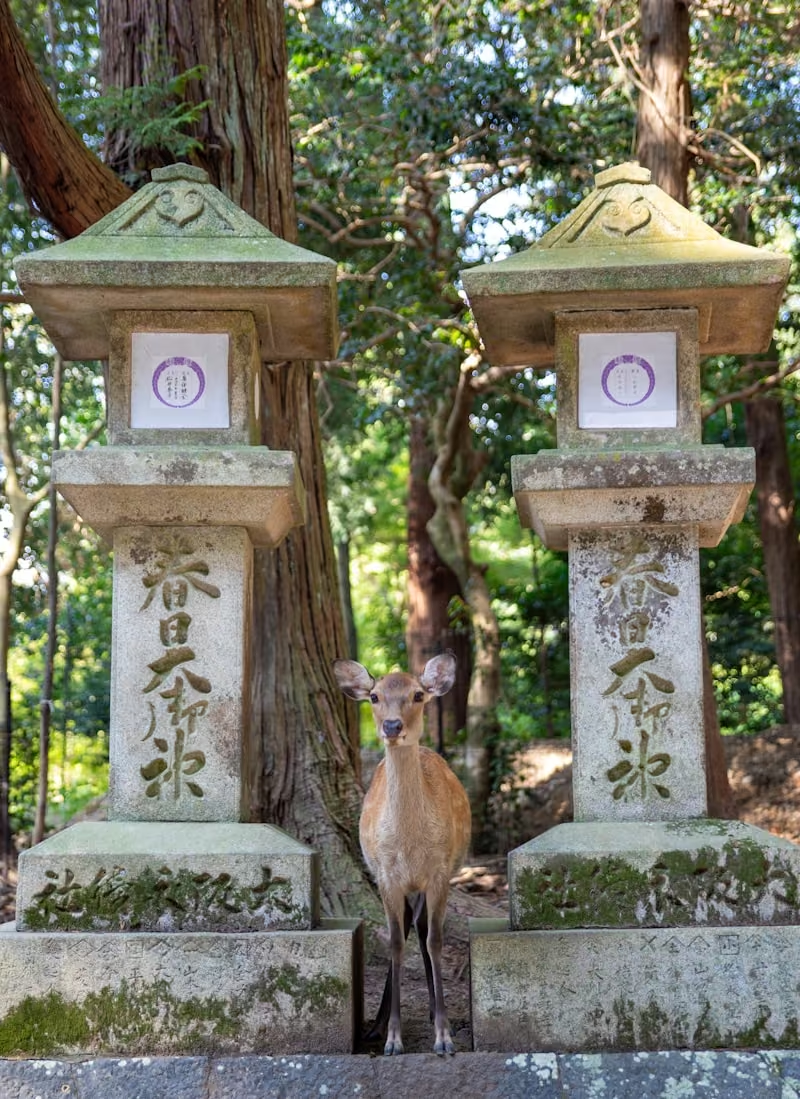
The deer in the park aren't pets but protected wild animals. Being used to people doesn't make their behaviour predictable. Feed them only with the deer crackers called shika senbei sold around the park; don't hold out paper, bags or your own food. Keeping food packaging in a closed bag protects both the animal and your belongings.
Showing a cracker and making the deer wait a long time can make it impatient. Give a little at a time, show both hands open when you've finished, and calmly walk away. Running, shouting, touching antlers or blocking an animal's path for a photo is not right. Males can be more defensive especially in autumn, and mothers during the fawning season. With small children, put an adult between them and the deer.
Don't look for deer only on the main flat area of the park. Encounters are often more relaxed on the quieter lawns between Todai-ji and Kasuga Taisha. Even so, let the animal decide the distance. There are few bins in the park; carry a small bag to take back any packaging you bring.
Things to see: beyond the great monuments
Nara's core is less a single grand monument than a set of connected sacred sites and walks. Seeing only the Great Buddha and heading back to the station misses the city's forest and neighbourhood scale.
Todai-ji and Nigatsu-do
Todai-ji's Daibutsuden hall is the monumental wooden structure housing the giant bronze Buddha. Aim for the first hours of the morning to get in before it gets crowded. Rather than only photographing the hall from the front, grasp its scale by walking along the side façade; how the building sits in its courtyard is as impressive as the statue inside.
After the main hall, at the point where most groups turn back, follow the signs for Nigatsu-do. The terrace above the stone steps opens onto the Nara basin; this is where the shift from the ceremonial air of the entrance axis to the silence of the forest becomes clear. Wear shoes with good soles, as the stones can get slippery in rain.
Kasuga Taisha and the lantern-lined forest path
Approach Kasuga Taisha not from the straight avenue but from the forest paths on the Todai-ji side. Stone lanterns, moss and cedars form a threshold that prepares you for the shrine itself. Walking around the outer areas and entering the inner sanctuary are different experiences; if you have time, see the inner part too, but check current admission and ceremony status on the official site.
The lanterns aren't lit every evening. The night photos online belong to special periods; don't build your plans around waiting for that image. By day, the rhythm of the stone lanterns in the forest is already the essence of the place.
Kofuku-ji, Isuien and Yoshikien
Kofuku-ji is the natural first stop on the way from the station to the park. The five-storey pagoda is under a long-term major restoration, and covering/scaffolding conditions can change; don't tie your visit only to a pagoda photo. The Central Golden Hall and the National Treasure Museum are strong reasons in their own right for understanding Nara's Buddhist sculpture.
Isuien, near Todai-ji, shows the garden ideas of two different periods in one walk; the borrowed-scenery technique that brings the mountains behind into the composition is especially beautiful. As access and admission at the neighbouring Yoshikien can change, check its current status. After a busy temple morning, choosing one of these two gardens balances the day.
Naramachi: the living city after the park
Naramachi is a neighbourhood of narrow streets that grew up around the former grounds of Gango-ji. The long, narrow merchant houses called machiya have today become small museums, cafés, shops and guesthouses. It's not a single "sight"; it's an area to walk slowly, noticing the courtyards and lattice-fronted wooden façades.
Gango-ji looks more modest than Nara's giant monuments but carries the city's early Buddhist history. Coming here after the park lets you feel the change in scale. If traditional house examples such as Naramachi Koshino Ie are open, a short visit shows how the façades you look at from outside are organised inside.
Most small businesses in the neighbourhood may close early in the day, and some take irregular days off. Rather than tying dinner to a single fragile address, explore in the afternoon and confirm your reserved restaurant in advance.
Getting to Nara and getting around
Nara has two main stations, and they aren't in the same place. Kintetsu-Nara is about eight minutes' walk from the park entrance; JR Nara is about twenty minutes away. If you're coming from Osaka-Namba or Kyoto on the Kintetsu line, Kintetsu-Nara is more convenient for most day-trip routes. JR Pass users may prefer the JR station; add the extra walk to your plan.
From Kyoto, the Kintetsu limited express is fast and comfortable but needs a supplement/seat ticket on top of the basic fare; slower trains may involve a change. The direct Kintetsu train from Osaka-Namba is a practical connection of about forty minutes. As minutes and train types vary by service, type the full station name into your route app.
The park core is walkable. Buses are useful if you're starting from JR Nara or are tired; otherwise they can make you miss the paths between the main monuments. IC cards are widely used on public transport. If you're coming on a day trip with luggage, bear in mind that station lockers can fill up on busy days.
What to eat? Nara's culture of preserving
The cuisine of this old capital far from the sea was shaped by preserving techniques. Kakinoha-zushi is made by wrapping vinegared rice and, usually, mackerel or salmon in a persimmon leaf. The leaf isn't eaten; you unwrap the parcel and take out the sushi. Because it travels well it's easy to buy to take away, but if you're tasting it for the first time, comparing different fish at a shop that serves seated is more meaningful.
Kamameshi is rice cooked to order in a small metal or clay pot. As it takes time to prepare it doesn't suit a quick lunch break; mixing in the crisp part from the bottom of the pot is part of the flavour. Miwa somen, the tea rice porridge called cha-gayu, narazuke pickles and Yamato vegetables are the city's quieter but local tastes.
Not all deer-shaped sweets are good quality. Choosing a specialist shop where you can see mochi being made, and an old business focused on a single dish for a meal, usually gives better results.
Where to stay?
For a single night, the Kintetsu-Nara area is the most practical base: you walk to the park in the morning and easily cross to Naramachi in the evening. There are also plenty of restaurants and shops. If you're leaving early by JR, the JR Nara area is functional but further from the main park area.
If you're looking for atmosphere, machiya guesthouses in Naramachi are the right choice. In old buildings, soundproofing, steep stairs and private bathroom arrangements may differ from a modern hotel; read the room details when booking. Traditional ryokan east of the park offer tranquillity and a dining experience, but getting back to the city centre in the evening is more of an effort.
Seasons and practical planning
Spring and autumn are the most comfortable periods for walking; cherry blossom and autumn leaves also bring the busiest days. Summer is hot and humid: move the long walk between Todai-ji and Kasuga to the morning, carry water and take an indoor lunch break. Winter is quieter and the air sharper; dress in layers, as the forest stays in shade.
Rain doesn't spoil Nara; the moss and lantern paths become even more striking. But the deer's behaviour, open garden paths and stone steps are affected by the weather. A light rain jacket that leaves your hands free is more comfortable for walking than an umbrella.
Temple halls, gardens and small museums don't all close at the same time. Rather than filling your main day hour by hour, choose two "must-sees" and flex the rest according to what's open along the route.
Common mistakes
Taking deer photos and leaving: the walk from Todai-ji to Nigatsu-do and Kasuga is the city's real memory.
Calculating times from the wrong station: the difference between Kintetsu-Nara and JR Nara looks small, but over a morning and evening it adds a serious amount of walking.
Provoking deer with food: hiding a cracker, holding it up in the air or approaching with a bag increases the risk of biting and shoving.
Leaving everything to one afternoon: the great halls and gardens don't close late like evening entertainment venues. Arriving in Nara after lunch needlessly squeezes the main route.
Assuming the pagoda is open: Kofuku-ji's five-storey pagoda is under long-term restoration; check its current visibility before your trip.
Where to eat: selected places
These aren't places to tick off one by one — they're the stops that best capture how the city eats. Opening hours and prices change, so check before you go.
Hiraso Nara
Mid-rangeAround Kintetsu-Nara · Kakinoha-zushi and seasonal Nara dishes
At this long-established specialist, you can taste persimmon-leaf-wrapped sushi seated rather than just buying it to take away. Comparing options such as mackerel and salmon is a good way to understand this preserving technique.
Confirm the branch and meal-service hours on the official site; takeaway sales and restaurant hours may differ.
Shizuka Nara Park
Mid-rangeNara Park · Kamameshi cooked to order
Rice, vegetables and your chosen ingredient cook together in a small pot; the crisp layer at the bottom is the best part. Despite its touristy location, its cook-each-pot method makes it a real local meal.
Allow for cooking and queuing time. Plan it as a rest stop, not a quick lunch.
Mizuyachaya
BudgetKasuga Taisha–Todai-ji path · Udon, soba and traditional sweets
This small thatched building in the forest offers a natural break on the walk between the great monuments. It's valuable more for its location and simple hot noodles than for its menu.
It's small and daytime-focused; don't leave it until late as your only meal option.
Nakatanidou
BudgetSanjo-dori · Fresh yomogi mochi
Green mugwort mochi with red bean filling and a coating of soybean flour, eaten warm and fresh. The high-speed pounding show is famous, but the real reason to go is tasting it while the texture is still soft.
The mochi-pounding show has no fixed time; don't build your plans around the promise of a show.
Awa Naramachi
UpscaleNaramachi · Set menus with Yamato vegetables and local produce
This address in the historic neighbourhood shows that Nara isn't just sushi and sweets. Serving local vegetables as small plates makes a good introduction to seasonal cooking.
It works mainly by reservation; confirm the format of your visit and the menu in advance.
Dietary preferences
Vegan and halal restaurants in Nara
For Nara we picked one plant-based place and one aimed at Muslim travellers. Halal labels don't all mean the same thing: certification, the restaurant's own declaration and "some halal options" are shown separately on each card.
Vegan Pick
Fully veganOnwa
Takabatake · Japanese home cooking
A small, fully vegan restaurant bringing vegetables, grains and fermented foods together in creative dishes.
Why we picked it: For an unhurried, carefully presented lunch near Nara Park.
Verification note
The venue's plant-based coverage was checked in the directory; reconfirm the menu and opening days before booking.
Source: HappyCow's current vegan restaurant directory ↗Halal Pick
Certified halalHonolu Premier Nara Sanjo
Sanjo-dori · Halal ramen and wagyu
A central restaurant, opened in March 2026, serving halal-certified ramen and Japanese dishes.
Why we picked it: It's one of the few clearly documented halal Japanese options in Nara.
Verification note
The business's 2026 opening announcement declares halal-certified ramen; check a current copy of the certificate on site.
Source: JNTO resources for Muslim travellers ↗Menus, suppliers and certifications change. If you keep strict halal, confirm the current certificate, alcohol, sauce ingredients and shared-kitchen risk directly with the restaurant.
Day-by-day itinerary
- 01
Day 1 — Nara's historic backbone
- Morning
- Walk from Kintetsu-Nara to Kofuku-ji; then enter Todai-ji's Daibutsuden before the crowds build and climb to the Nigatsu-do terrace.
- Afternoon
- Continue through the forest path to Kasuga Taisha. On the way back, choose Isuien or a tea break; don't squeeze in both.
- Evening
- Walk the streets of Naramachi and around Gango-ji. End the day with a reserved local dinner.
- 02
Day 2 — Gardens and the living neighbourhood
- Morning
- Visit Isuien close to opening; then, if Yoshikien's current access allows, move on to the neighbouring garden.
- Afternoon
- Explore traditional houses, craft shops and small museums in Naramachi without rushing.
- Evening
- If you're heading back to Kyoto or Osaka, buy kakinoha-zushi at the station; if you're staying, take a calm evening walk at the west end of the park.
Before you go
What to know before going to Nara
Kintetsu-Nara is closer to the park
The park entrance is about eight minutes' walk from Kintetsu-Nara and about twenty from JR Nara. Unless you have a ticket/pass advantage, type the full station name into your route app.
The deer are wild animals
Give only official shika senbei; don't hold out your own food, paper or bags. Showing and hiding a cracker, or holding it in the air, can provoke the animal.
When the crackers are gone, show your hands
Show your open palms and calmly walk away. Don't leave a child alone with crackers; keep a wider distance during the antler and mating seasons.
Don't count on a pagoda photo
Kofuku-ji's five-storey pagoda is under a long-term major restoration. The Central Golden Hall and the National Treasure Museum are more reliable reasons for an open route.
The great monuments don't wait for the evening
Do Todai-ji and the gardens in the morning; the closing times of small museums and halls vary. Leave Naramachi, as an open-air walk, for the end of the day.
Have a backup plan for luggage lockers
Station lockers can fill up on busy days. Using your Kyoto or Osaka hotel's luggage storage/forwarding option is easier than dragging a suitcase along the park's stone and forest paths.
Continue your Japan route
This city works well on its own; if you have time, the stops below add a different region and city to the same trip.
From Nara to Kyoto: deepen the temple route
An easy transfer by Kintetsu; Kyoto needs at least three full days and a neighbourhood-based plan.
Read the guide →From Nara to Osaka: end the day with street food
A direct train to Namba makes a practical switch from Nara's calm to Osaka's evening energy.
Read the guide →Frequently asked questions
Is one day enough for Nara?+
Yes. If you arrive early in the morning you can see Kofuku-ji, Todai-ji, Nigatsu-do, Kasuga Taisha and Naramachi in one day. Adding a night for gardens, museums and a quiet evening noticeably improves the experience.
Is it easier to get to Nara from Kyoto or from Osaka?+
It's easy from both. Kintetsu lines connect Kyoto and Osaka-Namba to Kintetsu-Nara; that station is closer to the park entrance than JR Nara. As changes and supplements vary by train type, check your day-trip route on the morning of travel.
Is it safe to feed the Nara deer?+
It's generally fine when the rules are followed, but the animals are wild. Give only deer crackers, don't hide the packet or tease the animal, and show your open hands when the food runs out. Keep a close eye on children and food bags.
Is Kintetsu-Nara or JR Nara better?+
For a park-focused day trip, Kintetsu-Nara is closer. If you're using a JR Pass, JR Nara may make sense; allow for the walk of about twenty minutes to the park or a short bus connection.
Can you get around Nara with luggage?+
It's not recommended, because of the park paths and long walking. Use station lockers or a luggage service; come early, bearing in mind that large lockers can fill up on busy days.
What to eat in Nara?+
Kakinoha-zushi, kamameshi, Miwa somen, cha-gayu, narazuke and Yamato vegetables stand out. For something sweet, fresh yomogi mochi makes a good short break.
Note: Temple and garden hours, ceremony days, the visibility of the Kofuku-ji restoration and small businesses' opening arrangements can change. Check official sources on the day. Last updated: .
Official sources and latest check
Visa, transport, entry and visiting rules change — re-check them with these official sources before you travel.