Contents
Reading the city at the right scale: not seven square miles, but seven climates
San Francisco's central map looks compact; but a one-kilometre line can take longer than expected because of steep hills, strong wind or transfers. Downtown/Union Square is the transport hub and hotel centre, North Beach food, drink and nightlife, Chinatown everyday city life, the Mission murals and Latin culture, the Haight counterculture history, and the Marina bay views.
The waterfront isn't all the same. The Embarcadero in the east is more sheltered and close to BART/Muni, while west of the Golden Gate can be foggy and windy. Twin Peaks may look clear while Ocean Beach, a few minutes later, is inside a grey wall. Don't look at the single city temperature in your weather app, but at the district you're going to and the hourly wind.
Market Street is the main axis. BART is the regional, fast backbone; Muni is the city network of metro, buses, historic streetcars and cable cars. The two agencies' fares and tickets aren't the same. When you see a line on the map, first working out whether it's BART or Muni reduces wrong-platform and wrong-ticket problems.
Build the sights as neighbourhood days, not a list
Along the Embarcadero, the Ferry Building, the Exploratorium area and Pier 39 to the north are on the same waterfront corridor; but the souvenir density of Pier 39 and Fisherman's Wharf doesn't represent the whole city. See the sea lions, walk to Aquatic Park, then climb to North Beach or Russian Hill to balance the day with a local district.
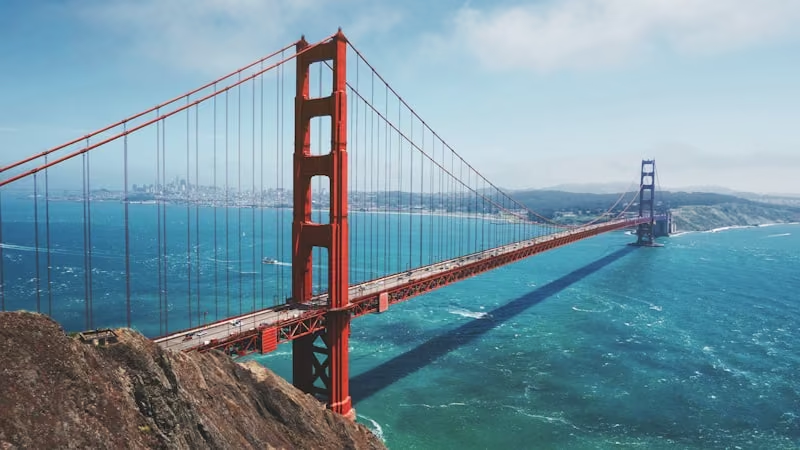
The bridge deck isn't the only way to see the Golden Gate Bridge. The Crissy Field and Presidio waterfront is good for walking; Battery Spencer on the far side for the classic angle. Crossing to the other side, getting back and the weather each need their own plan. Cycling to Sausalito can be lovely, but don't make a one-way plan without checking ferry capacity, wind and return times.
Golden Gate Park is very long from east to west. Squeezing the de Young, the California Academy of Sciences, the Japanese Tea Garden, the botanical garden and Ocean Beach into one day is exhausting. Choose one big institution; combine the park walk with a meal in the Inner Sunset or Richmond. SFMOMA fits more naturally into a Downtown/SoMa day.
Alcatraz: the right operator, the right pier, the right time
Looking at Alcatraz from land is free; to set foot on the island you need a timed ticket from the National Park Service's authorised ferry provider. Not every package labelled "Alcatraz tour" in the street or in search ads includes landing on the island. Check that the ticket details say landing, ferry and which pier it departs from; the official departure point is Pier 33.
The visit isn't just the boat time. Allowing half a day for security/queuing, the crossing, the uphill island path, the cellhouse audio tour and the return is more realistic. Read the island's service and accessibility conditions in advance. The wind can be sharper than on land; don't go out without a jacket trusting the sunny weather in the centre.
Tickets can sell out on busy dates. A high price on a resale platform isn't an indication of official capacity. Read change, cancellation and last-ferry terms directly from the operator. The evening tour offers a different atmosphere, but means a return in the dark, cooler weather and giving up your evening plans.
Getting to the city from SFO and OAK
San Francisco International (SFO) is the natural gateway for international visitors. The BART station is inside the International Terminal; from other terminals it's reached by AirTrain. Confirm the right train direction to the city on the platform screen. As rush hours, planned maintenance and last late-night trains can change, open the BART planner on your flight day.
BART now accepts eligible contactless bank cards and mobile wallets at the fare gates. On the same journey, tap in and out with the same physical card or the same device; tapping in with your phone and out with your watch may count as two separate payment methods. You can also use a Clipper card if you like. If a foreign card is declined, check your bank's travel/security settings for the card.
Oakland (OAK) is a sensible alternative on some domestic routes. The airport connector takes you to Coliseum BART station, where you continue towards San Francisco. Don't be fooled by the short distance on the map: a transfer, the bay crossing and night frequency are added. Weigh the flight price difference against the time you'll lose in the city.
Taxis and rideshare can be competitive for three or four people or with big luggage; pickup zones are signed by terminal. When using BART with a big suitcase at rush hour, don't block the gates. On a very late arrival, rather than assuming a last train, compare the official planner with a taxi estimate before you even board the plane.
Muni, BART, cable cars and payment differences
Muni carries buses, metro, the historic F-line streetcars and cable cars; BART carries longer corridors such as the airport, Downtown, the Mission and the East Bay. Muni's bus/metro fare and the cable car fare aren't the same. BART has distance-based fares and a tap on exit; on Muni you need proof of payment when boarding.
In 2026, open-loop contactless payment can be used on Muni vehicles. Using the same card/device matters for the transfer window to be recognised correctly. SFMTA removed single-ride and day-pass products from MuniMobile as of 1 August 2026; some products, such as the visitor passport and cable car tickets, may remain. Don't look for the app based on screenshots in old blogs.
If a foreign bank card is declined in the MuniMobile app, changing your App Store/Google Play country isn't the first solution. SFMTA suggests trying options such as PayPal or Apple/Google Pay; a contactless card or physical Clipper can also be used. Installing the app isn't a prerequisite for an ordinary Muni ride.
The cable car is as much a historic experience as transport. You don't have to join the long queue at the Powell turnaround; you can board at suitable stops along the line if there's room. Standing on the outside step is subject to staff instructions. The historic streetcar on the F line isn't a cable car; don't confuse the two in terms of tickets and route.
Where to stay? A cheap room and a good street aren't the same thing
Union Square provides BART/Muni, shops and a central stock of hotels for a first visit. Because the street feel changes from block to block, look not just at the hotel's stars but at the street its entrance is on and the route you'll walk at night. SoMa is practical for conventions, SFMOMA and stadium events; its wide avenues and quietness outside events don't suit everyone.
Fisherman's Wharf is easy for families, early ferries and flat waterfront walks; it comes at the price of tourist-heavy food and distance from BART. North Beach is strong for dinner and character, but needs a walk to rail. Nob Hill offers classic hotel atmosphere and cable cars, but creates a daily hill budget.
The Mission offers more local food and nightlife, BART access and a sunny microclimate; noise and street conditions should be checked block by block. Marina/Cow Hollow is close to the Presidio and the bay, but far from airport BART. Richmond or Sunset is quiet and rich in food; it adds a long Muni ride to Downtown every day.
In the hotel total, read the tax, mandatory destination/amenity fee, parking and pre-authorisation. Although the FTC rule makes mandatory fees more visible in the first total shown, taxes and optional items may be added later. Compare room prices not by screenshot but by the nightly total and cancellation terms on the final payment page.
Cars, parking, bridge tolls and belongings in the car
For a trip around central San Francisco, a car is mostly unnecessary. Steep streets, one-way systems, expensive garages and the risk of break-ins can turn a daily rental from an advantage into a burden. If you're heading out to Napa, Sonoma or the coast road, picking the car up after your city days is more sensible for most routes.
The city and police warning is clear: leave no valuables visible or in the boot of a hire car. "Just five minutes" and covering things with a blanket aren't safe solutions; leave your suitcase at the hotel's luggage store. Leaving the airport by car and stopping at a tourist sight with a full boot is one of the most easily avoidable mistakes.
Crossing the Golden Gate Bridge towards San Francisco is electronically tolled; the booths don't take cash. Ask about the hire company's toll programme and service fee before collecting the car. For your own plate/an eligible hire car, read the time window for the official one-time payment option; entering the wrong plate can turn into a fine.
Street parking has rules on coloured kerbs, cleaning days, permit zones and wheel direction. Turning your wheels the right way when parking on a slope isn't a local detail but an enforced safety rule. The time shown in a parking app doesn't override the physical restriction on the sign.
Eating in San Francisco: from icons to immigrant neighbourhoods
Don't define the city's food only by clam chowder in a sourdough bread bowl. Bay seafood, Mission burritos, dim sum, regional Chinese cuisines, Filipino, Japanese, Burmese and California's seasonal-produce approach are all on the same map. Chinese restaurants in Chinatown and in Richmond don't follow the same menu logic either.
A Mission burrito is a big, foil-wrapped, portable meal; at a taqueria the line moves fast, so don't expect table service. A morning bakery queue and an evening reservation restaurant create different time costs. Rather than wrecking the whole day for a popular place, pick two verified backups in the same district.
For table service, a tip of 15–20 per cent before tax is common. If you see a service charge, SF mandate or employee benefit item on the bill, ask whether it's an automatic gratuity; similar names don't mean the same thing. The high preset percentages on a counter-service screen are suggestions, not a legal obligation.
Restaurant hours and service formats change fast. Check the official site on the day; don't rely only on the map card. Especially at daytime institutions with few seats, such as Swan Oyster Depot, the queue is the real cost of the experience. At a reservation-focused place such as State Bird Provisions, you need to follow the calendar as it opens.
Fog, layers and the right seasonal expectations
A San Francisco summer isn't like a Mediterranean summer. From June to August, coastal fog and wind can be harsh, especially in the morning/evening; a few districts away, the Mission may stay sunny. A thin T-shirt, a mid layer and a wind-blocking outer layer are more useful than one thick coat.
September–October can often bring warmer, clearer days; that isn't guaranteed. Winter is the rainy season, but city sightseeing doesn't shut down completely. Keep things swappable: a rainy day with SFMOMA, the Exploratorium, the Ferry Building and neighbourhood food; a clear window with the bridge, Twin Peaks and a waterfront walk.
Don't tie the Golden Gate Bridge to a single hour, first and last. If fog blocks the view, carry on with the Presidio day with a museum/neighbourhood and try again later. Timed events such as Alcatraz are fixed; viewpoint stops should be flexible. The temperature drops quickly after sunset.
Safety, street reality and visiting respectfully
San Francisco's housing, mental health and substance use crisis is a reality visitors may see on some central streets. Don't turn people into photo subjects. If you feel uncomfortable, move to a bright, busy street without getting into an argument; in immediate danger call 911, and for non-emergencies use the local line.
The basic precautions against phone snatching and car break-ins are situational awareness and not leaving belongings in the car. On public transport, don't carry your bag loosely near the door. For a night route, look not only at the shortest line but at open businesses and the number of transfers. Don't label whole neighbourhoods "safe/unsafe" based on a single social-media video.
Common planning mistakes by tourists are leaving Alcatraz without tickets, spreading the cable car queue across a whole morning, walking every hill and coming without a jacket in summer. Budget mistakes are paying for a car/garage within the city and noticing the mandatory hotel fee on the final screen. A good route reduces these frictions from the start.
Where to eat: selected places
These aren't places to tick off one by one — they're the stops that best capture how the city eats. Opening hours and prices change, so check before you go.
Swan Oyster Depot
UpscalePolk Gulch · Seafood and oysters at the counter
This daytime institution with few seats shows the city's old seafood culture. You go for the produce and the rhythm of the counter rather than the menu.
The queue and the day's produce change; check opening/hours through the official channel on the day.
Zuni Café
UpscaleHayes Valley · California cuisine and wood-oven chicken
Seasonal produce and service that looks casual but is technically strong are an important part of the city's modern food identity.
The famous chicken needs time and is a big portion; read the preparation expectations when booking.
La Taqueria
BudgetMission · Mission-style burritos and tacos
It represents the neighbourhood's quick-service tradition strongly and accessibly, with its rice-free approach to the burrito.
The line can move quickly; confirm payment methods and current hours on the official site.
Tartine Bakery
Mid-rangeMission · Pastries and bread
A reliable stop for experiencing San Francisco's sourdough and contemporary bakery culture at neighbourhood scale.
Don't confuse the Guerrero location with the Manufactory; check which branch has the product you want.
State Bird Provisions
UpscaleFillmore · Small plates chosen from a cart
A hard-to-copy evening experience combining California ingredients with a dim-sum-like rhythm of service.
The reservation calendar can fill up fast; for walk-ins, pick a backup in the neighbourhood in case of a long wait.
House of Nanking
Mid-rangeChinatown · A long-lived Chinese-American neighbourhood institution
It lets you feel Chinatown's living restaurant history more directly than the tourist frontage; it's on San Francisco's Legacy Business register.
Expect a queue at busy times and fast service; state any special request clearly at the start of your order.
Dietary preferences
Vegan and halal restaurants in San Francisco
For San Francisco we picked one plant-based place and one aimed at Muslim travellers. Halal labels don't all mean the same thing: certification, the restaurant's own declaration and "some halal options" are shown separately on each card.
Vegan Pick
Fully veganShizen
Mission District · Vegan sushi
A fully vegan sushi bar that uses Japanese techniques to bring out vegetables, mushrooms and fermented flavours.
Why we picked it: For its creative omakase approach, which shows that plant-based sushi is more than just substitute products.
Verification note
The venue's plant-based coverage was checked in the directory; reconfirm the menu and opening days before booking.
Source: HappyCow's current vegan restaurant directory ↗Halal Pick
Restaurant-declaredOld Mandarin Islamic Restaurant
Outer Sunset · Chinese Muslim cuisine
A long-established restaurant serving northern Chinese noodles, lamb and wok dishes on a halal-focused menu.
Why we picked it: For experiencing Chinese Muslim cuisine, rare in San Francisco, through shared plates.
Verification note
Listed as a halal restaurant for a long time; confirm the current certificate, sauce ingredients and alcohol service with the business.
Source: Halal Food Standards Alliance of America ↗Menus, suppliers and certifications change. If you keep strict halal, confirm the current certificate, alcohol, sauce ingredients and shared-kitchen risk directly with the restaurant.
Day-by-day itinerary
- 01
The Embarcadero, Chinatown and North Beach
- Morning
- The Ferry Building and an Embarcadero walk; on market days, confirm the farmers' market hours.
- Afternoon
- Walk from the streets and historic stops of Chinatown to North Beach; add Pier 39 as a short waterfront detour.
- Evening
- Dinner in North Beach, then the Coit Tower area or Aquatic Park depending on the light.
- 02
Alcatraz and the northern waterfront
- Morning
- The official Alcatraz ferry from Pier 33, booked in advance; arrive early and dress in layers.
- Afternoon
- Via Aquatic Park, Fort Mason and the Marina to Crissy Field/the Presidio; shorten it according to your energy.
- Evening
- Dinner in the Marina, Russian Hill or around Polk; use the cable car one way, as both transport and experience.
- 03
Golden Gate Park and the western neighbourhoods
- Morning
- In the park, explore either the de Young or the Academy of Sciences in depth.
- Afternoon
- Gardens and a walk; if it's clear, Ocean Beach, if not, an Inner Sunset/Richmond shop and food route.
- Evening
- Regional Asian food in Richmond, or, if the sunset is good, the safe, marked section of Lands End.
- 04
The Mission, the Castro and city views
- Morning
- A respectful walk for the Mission murals, followed by a taqueria lunch.
- Afternoon
- Dolores Park and Castro history; depending on your interests, head towards the Haight or SFMOMA.
- Evening
- If it's clear, safe transport to Twin Peaks near sunset; then dinner in the Mission/Hayes Valley.
Before you go
Things that make a San Francisco trip noticeably easier
BART and Muni aren't the same system
BART is the regional backbone, Muni the city network. Don't assume fares, transfers and payment products are interchangeable.
The same card or the same device
For contactless tap-in and tap-out, a phone, a watch and a physical card are different identities. Exit BART with whatever you entered with.
MuniMobile changed in 2026
Single-ride and day-pass products were removed from the app on 1 August 2026. Use contactless or Clipper rather than looking for an old screenshot.
Pier 33 for Alcatraz
Buy a ticket that includes landing on the island from the authorised operator. A similarly named bay cruise may only pass around the island.
Nothing left in the car
Leave no visible/valuable items, including in the boot. Don't make tourist stops in a hire car before dropping by the hotel.
The Golden Gate is cashless
The crossing towards San Francisco is electronically tolled. Find out the hire company's programme and the official one-time payment window in advance.
A windbreaker even in summer
While the Mission is sunny, the bridge and Ocean Beach can be foggy. Don't leave your layer at the hotel.
See the hills on the map
There can be a serious gradient between two parallel streets. For an accessible/less steep route, check the map's elevation and Muni options.
Continue your United States route
This city works well on its own; if you have time, the stops below add a different region and city to the same trip.
Extend your California route south
Move from compact, transit-friendly San Francisco to Los Angeles, shaped by corridors and decisions about cars.
Read the guide →From the bay to the desert
From urban nature and neighbourhood rhythm to a different western experience where Strip logistics and a Red Rock plan come first.
Read the guide →Frequently asked questions
How many days is enough for San Francisco?+
Four full days is balanced for the central districts, Alcatraz, the Presidio and Golden Gate Park. If you add Sausalito, Oakland or museum depth, a fifth day makes things easier.
Do you need a car in San Francisco?+
Not within the city. Muni, BART and walking are more practical; a car creates parking costs and a risk to your belongings. Hire one on the day you leave the area.
What's the easiest way from SFO to the centre?+
BART goes directly from the International Terminal to Downtown and the Mission. On your flight day, check the last service, maintenance and the real walk from the station to your hotel.
Where do you buy Alcatraz tickets?+
From the authorised ferry operator listed by the National Park Service. Confirm that the package includes landing on the island and departs from Pier 33.
Do you have to get a Clipper card?+
No; an eligible contactless bank card/device can be used on BART and Muni. For multiple travellers, passes or regional use, Clipper can still be useful.
What's the best time to visit?+
September–October can be clearer and milder for most visitors; it isn't guaranteed. You need a flexible plan with layers for the summer fog and rainy-day alternatives for winter.
Note: BART and Muni fares/products, Alcatraz capacity, fog, bridge payment conditions and restaurant service hours can change; verify official channels close to your trip. Last updated: .
Official sources and latest check
Visa, transport, entry and visiting rules change — re-check them with these official sources before you travel.