Contents
Understanding Chicago: the Loop is the centre, not the whole city
The Loop, south of the Chicago River, is the elevated train ring, the business district, and the area around Millennium Park and the Art Institute. It's a perfect backbone for a first day; in the evenings some blocks quieten down after office hours. To the north, River North offers a concentration of restaurants and hotels, Streeterville the lakefront and museums, and the West Loop/Fulton Market the modern food scene.
The real city opens up in the neighbourhoods: Wicker Park/Bucktown for shops and nightlife; Logan Square for boulevards and restaurants; Pilsen for Mexican-American culture and murals; Hyde Park for the university, science and history; Andersonville for independent shops; Chinatown for a food route. Don't think of any of them as a "short walk" from Downtown; build area days by L/Metra/bus.
The local logic is the grid address system. State and Madison are the reference point; the address number gives you a rough sense of distance. The river, the train lines and the lake make it easy to get your bearings. The lake is always to the east; even when it's hidden by fog or skyscrapers, this mental compass makes walking easier.
Not just looking at the architecture, but reading it
Chicago's strongest paid experience, weather permitting, is an architecture river tour. The Chicago Architecture Center's official tour lasts about 90 minutes with trained volunteer guides; read the rule about arriving early for the boat and the non-refundable terms. Not every boat sold as an "architecture cruise" has the same depth of content.
To continue on land, the Chicago Architecture Center exhibition, the permitted lobby of the Rookery, the Monadnock, the Marquette and the modernist Federal Center area make a good walk. Building lobbies are private property; an open door doesn't mean you can enter every area. If free programmes such as Chicago Greeter have current reservation requirements, confirm them on the official tourism site.
Willis Tower Skydeck and 360 Chicago are two separate observation experiences; you don't need to go up both. Complete the open-air views for free from around the Adler Planetarium, Milton Lee Olive Park or the lakefront. If the cloud base is low, don't rush to the tower without checking the exchange terms of your timed ticket.
Things to see: the lakefront, museums and public art
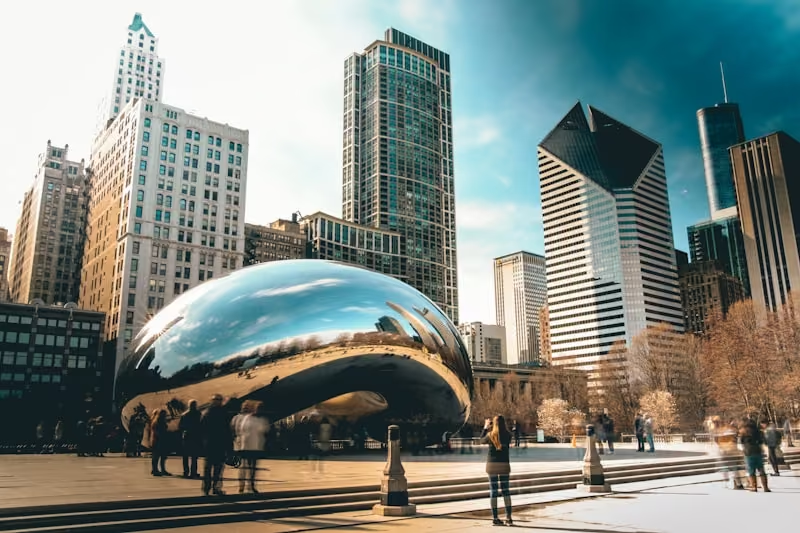
Cloud Gate in Millennium Park is a free, central starting point; the Art Institute of Chicago just to the south needs a few hours. On the Museum Campus, the Field Museum, Shedd Aquarium and Adler Planetarium look side by side, but all three won't fit in one day. Choosing one to see inside and walking the rest of the lakefront is more balanced.
The Chicago Riverwalk lets you read Downtown from water level; the Lakefront Trail is a separate north–south corridor. When hiring a bike, keep to the right section, separate from pedestrians and fast cycle traffic. In summer the beaches are real city beaches; follow lifeguards and swim flags, and don't mistake the lake for a calm sea.
In Hyde Park, the Museum of Science and Industry can take a full day; build a separate route with the University of Chicago campus, Robie House and Promontory Point. Pullman National Historical Park is meaningful for anyone interested in industrial and labour history; it isn't a random extension of the Downtown list but a half day with planned transport.
Where to stay? Balancing evening rhythm and transit
The Loop is the most efficient location for a first visit, museums and business days; its evening options aren't as lively as River North/West Loop. River North is practical, with access to restaurants and the Magnificent Mile, but can be noisy at weekends. Streeterville is comfortable for families and the lakefront; the walk to some L stations is longer.
The West Loop is strong for food and evenings, but rooms can get expensive; check the walk/Green-Pink Line connection to the main tourist sights. Wicker Park/Logan Square offers a neighbourhood feel and O'Hare access thanks to the Blue Line; it adds travel time to Downtown each day. The South Loop can be a good balance for the Museum Campus and quieter accommodation.
The events calendar changes prices dramatically: on weekends with big conventions, the marathon, sport and festivals, the same room can double. Read the tax, destination fee, breakfast and pre-authorisation in the hotel total. If you're arriving by car, don't compare without adding a daily Downtown garage to the room price.
O'Hare and Midway: both airports have trains
O'Hare (ORD) is directly connected to Downtown by the CTA Blue Line, and the Blue Line runs 24 hours. From Terminals 1–3, follow the "Trains to City" signs; from Terminal 5 you need the in-airport ATS or current directions. A special/premium fare may apply when boarding at O'Hare; check the current CTA table on your travel day.
Midway (MDW) connects to the Loop by the Orange Line. The Orange Line doesn't run 24 hours; in the 2026 timetable, service starts early in the morning and ends around 01:00 at night, with times varying by day. On a late-night landing, don't assume there's a last train. Midway is practical for domestic options such as Southwest; for international routes and the northern neighbourhoods, ORD may be more natural.
If you're connecting between ORD and MDW, a free transfer from the Blue Line to the Orange Line at Clark/Lake is possible; the airport's official page recommends allowing up to two hours by public transport. On separate tickets, a much wider buffer is needed because of terminal, security and delay risks.
Rideshare pickup at ORD can vary by terminal; match the official airport signs with the app pin. In winter storms, road and rail times can also lengthen. Follow CTA and FlyChicago alerts as well as the gate notifications in your airline app.
The CTA, Ventra and contactless payment
Pay-as-you-go with a contactless bank card or mobile wallet is possible on CTA 'L' trains and buses; a Ventra Card can be more predictable for short-term unlimited passes and regular transfers. Single-use tickets, passes and O'Hare boarding fares are different. As CTA's 2026 budget documents include fare changes, check the current official fares page rather than fixing on an old blog figure.
Tapping several people through one after another with a contactless card can muddle each passenger's transfer entitlement. For a family, use separate payment methods or suitable Ventra tickets. The Ventra app is useful for balances/passes and Metra mobile tickets; you don't have to install it to ride the CTA.
The Red and Blue lines are the 24-hour backbones; other lines have different last times. On the elevated Loop Downtown, a train's direction is shown by the final stop on the sign. In 2026, State/Lake station is closed for reconstruction; as the closure is long-term, check the Clark/Lake or Washington/Wabash alternative in your route app.
In winter, waiting on platforms makes a short transfer on the map harder. Checking live arrivals and waiting indoors, proper outerwear and bus–L combinations improve the trip. At summer events, walking a few minutes and boarding at the previous station is sometimes easier than a crowded train back.
Chicago food: wider than deep-dish
Deep-dish is a thick meal with a long baking time; don't think of it as a snack slice. In Chicago the more everyday and widespread local style may be the thin, crisp, square-cut tavern-style pizza. Comparing the two is more instructive than dismissing one as "real" and the other as "tourist stuff".
When ordering an Italian beef, there are dry, wet or dipped options, with sweet peppers and hot giardiniera. On a first try, a fully dipped sandwich can fall apart; wet + hot is a more manageable start. With a Chicago-style hot dog, the ketchup debate has become a cultural joke; you can eat it however you like, but it's worth trying the classic combination as it comes once.
The modern food scene isn't limited to the West Loop. Mexican in Pilsen, South Asian on Devon Avenue, Vietnamese and Southeast Asian around Argyle, Greektown and Chinatown are separate routes. If a foreign phone number causes problems when using a reservation platform, the restaurant's official site/email or a direct call is an alternative; there's no need to change your App Store country.
For table service, 15–20 per cent before tax is the common custom. The bill may include a service charge/employee benefits surcharge/automatic gratuity; read the explanation and ask what's passed on to staff. For counter service and takeaway, the tablet percentage isn't compulsory.
Winter, summer and the lake effect
Winter in Chicago isn't just "cold"; it means wind, icy pavements, short days and flight disruption. Layers, waterproof soles and ear/hand protection make city walking possible. On an extremely cold day, rather than walking in the open between the Museum Campus buildings, explore one museum in depth and return to the indoor architecture of the Loop.
Spring changes quickly; the lakefront can be noticeably cooler than inland neighbourhoods. Summer is festival, beach and boat season; it brings heat/humidity and busy-event prices. Autumn is strong for architecture walks, but the boat season and daylight get shorter. Don't leave the river tour to your last day; have an alternative day in case of weather cancellation.
Safety and the concrete mistakes tourists make
Explore the city without dividing neighbourhoods by fear labels. Know your last connection at night, which way the crowd goes after events and your hotel entrance in advance. Rather than being alone in an empty carriage, choose a section near staff/passengers; don't hold your phone and bag loosely by the door.
Multi-level road systems such as Lower Wacker Drive can confuse GPS; put your rideshare pin at the right door at street level. If you haven't hired a car, this problem largely disappears. If you have, read the parking signs, snow-clearing/special-event restrictions and garage closing times.
The most common planning mistake is putting three big museums on the same day; the budget mistake is wanting an "iconic" portion at every meal; the transport mistake is hiring a car despite a Downtown hotel. Buy a city pass only after checking the timed reservations of the institutions it covers and your real daily capacity.
Where to eat: selected places
These aren't places to tick off one by one — they're the stops that best capture how the city eats. Opening hours and prices change, so check before you go.
Pequod's Pizza
Mid-rangeLincoln Park · Pan pizza with a caramelised edge
Different from classic chain deep-dish, it's a thick pizza where the cheese caramelises in the pan. It shows why the Chicago pizza debate can't be reduced to a single style.
Baking time and the evening queue run long; see the reservation/ordering arrangements on the official site.
Vito & Nick's
BudgetAshburn · Thin tavern-style pizza
You go for square-cut, crisp pizza tied to the neighbourhood pub tradition. It's far from Downtown; factor in the round trip if going just for this.
The official site says the Chicago location is cash only; have cash ready rather than relying on an ATM.
Manny's Cafeteria & Delicatessen
Mid-rangeNear West Side · Corned beef and a cafeteria line
Operating since 1942, this institution shows Chicago's working/courthouse lunch culture and Jewish deli tradition.
At the lunchtime rush, decide what you want before joining the line; a big sandwich can be shared.
Superdawg Drive-In
BudgetNorwood Park · A 1948 drive-in hot dog
It preserves the neon, carhops and local hot dog ritual of car-age Chicago. A meaningful addition to an airport/far-north route.
It may be a long way from Downtown for a single meal; combine it with an ORD day or the northern neighbourhoods.
Kasama
UpscaleUkrainian Village · A Filipino bakery by day and a tasting menu by night
It shows Chicago's contemporary immigrant cooking in two separate formats. Don't mistake the morning bakery queue and an evening tasting reservation for the same experience.
The official site publishes current service and award information; reconfirm the Michelin status on your travel date.
Lou Malnati's
Mid-rangeVarious branches · Accessible classic deep-dish
For a first deep-dish, a central branch offers reliable service and group sharing. Rather than eating two thick pizzas on the same day as Pequod's, try the styles on different days.
Factor pizza baking time in before an event; choose the right branch on the official site.
Dietary preferences
Vegan and halal restaurants in Chicago
For Chicago we picked one plant-based place and one aimed at Muslim travellers. Halal labels don't all mean the same thing: certification, the restaurant's own declaration and "some halal options" are shown separately on each card.
Vegan Pick
Fully veganAlice & Friends' Vegan Kitchen
Edgewater · Vegan Asian-American
A fully vegan kitchen ranging from dumplings and noodles to comfort food and desserts.
Why we picked it: Its wide menu suits different tastes, making it a safe choice especially for mixed groups.
Verification note
The venue's plant-based coverage was checked in the directory; reconfirm the menu and opening days before booking.
Source: HappyCow's current vegan restaurant directory ↗Halal Pick
Restaurant-declaredHummus Grill
Near North · Mediterranean and Levantine
A casual restaurant that describes itself as 100 per cent halal, serving kebabs, shawarma and mezze.
Why we picked it: For a quick, straightforward halal meal that's good for sharing, in a central location.
Verification note
The business declares itself 100 per cent halal; confirm its HFSAA/HMS record and drinks policy before visiting.
Source: Halal Food Standards Alliance of America ↗Menus, suppliers and certifications change. If you keep strict halal, confirm the current certificate, alcohol, sauce ingredients and shared-kitchen risk directly with the restaurant.
Day-by-day itinerary
- 01
The Loop and the river
- Morning
- Millennium Park early, then a few hours for the Art Institute.
- Afternoon
- The Chicago Architecture Center and a river tour booked in advance; continue on the Riverwalk.
- Evening
- Dinner in River North or the West Loop; if you want an observation deck, choose one according to visibility.
- 02
The lakefront and the Museum Campus
- Morning
- A lakefront walk, then just one of the Field/Shedd/Adler.
- Afternoon
- Museum Campus views and Grant Park; if the weather is bad, an indoor architecture walk.
- Evening
- Dinner in the South Loop, Chinatown or Pilsen.
- 03
Northern neighbourhoods
- Morning
- Lincoln Park and the lakefront; depending on your interests, the free zoo's current entry arrangements.
- Afternoon
- Wicker Park/Bucktown and Logan Square; independent shops, coffee and a boulevard walk.
- Evening
- A neighbourhood restaurant or live music; check your last L/bus connection.
- 04
History and culture in the south
- Morning
- The Hyde Park campus and the Robie House area; one museum/house tour chosen in advance.
- Afternoon
- Promontory Point or the DuSable Black History Museum; move on without compressing the geography.
- Evening
- Pilsen murals and Mexican food, or back Downtown for a game/concert.
Before you go
Things that make a Chicago trip noticeably easier
The Blue Line from O'Hare runs 24 hours
There are trains even on a night arrival; but check frequency and planned works with the CTA. From Terminal 5, follow the internal connection to the station.
The Midway Orange Line doesn't run 24 hours
The last train varies by day. For a late-night flight, open the current timetable rather than trusting a fixed time in an old blog.
The O'Hare boarding fare may differ
Don't assume contactless pay-as-you-go and the standard station fare are the same. Compare an unlimited pass or the current premium fare in the official table.
State/Lake is closed
The station is closed in 2026 for long-term reconstruction. Use the Clark/Lake or Washington/Wabash alternatives in your route planner.
On an architecture tour, the operator matters
The CAC tour focuses on commentary by trained docents. Don't assume the cheapest "architecture cruise" ticket has the same content.
Deep-dish isn't fast food
Factor baking time in before a theatre/game; ask about portions before ordering a large.
Cash for Vito & Nick's
The business's official site lists the Chicago location as cash only. Don't get a card surprise after travelling all that way.
An extra layer for the lakefront
Even if Downtown is warm, the lake wind can be cool. Carry a light windbreaker for the boat and evening walks.
Continue your United States route
This city works well on its own; if you have time, the stops below add a different region and city to the same trip.
A comparison with another big city on rails
An eastern metropolis as car-free as Chicago, but with a different neighbourhood density, museum scale and stage rhythm.
Read the guide →Take the architecture onto the hills
A compact West Coast city explored by public transport, where the geography of water and neighbourhoods shapes the plan.
Read the guide →Frequently asked questions
How many days is enough for Chicago?+
Four full days is balanced for Downtown, architecture, the lakefront and two neighbourhood routes. If big museums or sport are added, five days is more comfortable.
Do you need a car in Chicago?+
No. Rail from ORD and MDW, the CTA in the centre and walking are enough. Apart from a suburban/far-flung restaurant day, a car creates parking costs.
What's the easiest way from O'Hare to the centre?+
The Blue Line runs 24 hours and goes directly Downtown. With big luggage/a group or serious service disruption, compare with a taxi/rideshare.
Is the Ventra app necessary?+
Not for the CTA; you can pay as you go with a contactless card/phone. Ventra is useful for passes, balances and Metra mobile tickets.
Deep-dish or tavern-style?+
Both are part of the city's identity. Deep-dish is a heavy, long-baked sit-down meal; tavern-style is a thin, crisp, square-cut, more everyday pizza.
Is the architecture boat tour worth it?+
If you're interested in architecture, yes; it's one of the experiences that best explains the city's fabric in a short time. Check the weather, operator, level of guiding and refund terms.
Note: CTA fares and station works, winter weather, the boat season, tickets and restaurant hours can change; verify official channels close to your trip. Last updated: .
Official sources and latest check
Visa, transport, entry and visiting rules change — re-check them with these official sources before you travel.