Contents
Understanding Miami: city, beach and bay
"I'm staying in Miami" doesn't explain an address. Miami Beach is a separate municipality and chain of islands across Biscayne Bay; South Beach, Mid-Beach and North Beach are here. Downtown/Brickell is the skyscraper and business district on the mainland; Wynwood, the Design District, Little Havana and Coconut Grove are also on the mainland, in different directions.
This distinction shapes the daily plan. Although South Beach to Brickell looks like a few kilometres, causeway traffic can stretch the time. Rather than zigzagging — Wynwood in the morning, the beach at midday, Little Havana in the evening — give two days to the beach and two days to mainland clusters. If you're considering the Everglades or the Keys, make it a separate car day.
Miami's local logic isn't "a car for everything" either. Within South Beach, walking, cycling and local buses work; in Downtown/Brickell the free Metromover is strong. But between the beach and the mainland, Coconut Grove and outlying neighbourhoods, transfers and infrequent services increase the role of ride-hailing or a hire car.
Things to see: the Miami beyond the beach
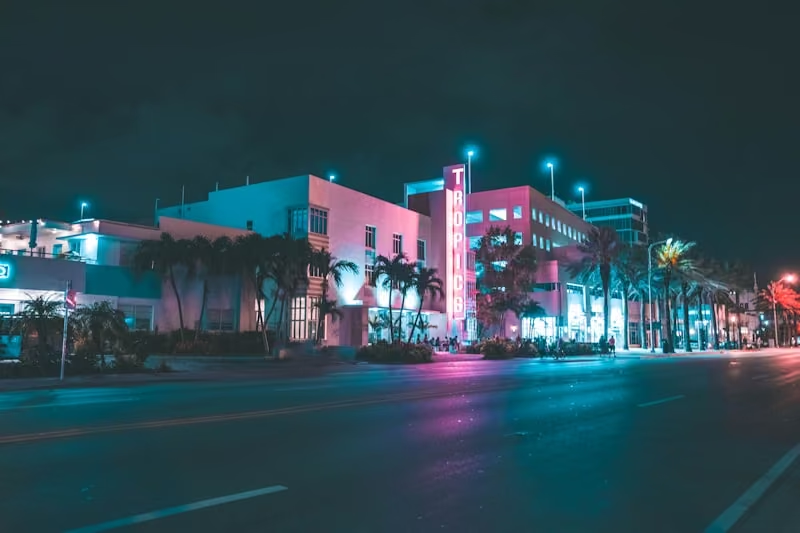
In South Beach, see Ocean Drive by day for the architecture of the Art Deco Historic District, and in the evening as the crowd turns it into a stage. On the beach, don't leave just a towel and go into the sea; set up a simple routine for your phone and passport, such as the hotel safe or taking turns watching in a group. Lifeguard flags, currents and weather warnings aren't decoration.
Little Havana isn't just a few rooster statues and cigar shops on Calle Ocho. Drinking a cafecito standing at a ventanita, respectfully observing the Domino Park area and connecting Cuban migration history through institutions such as HistoryMiami deepen the visit. There's no need for a tour group to market every shop as "local"; a single good meal and a slow walk are enough.
Wynwood works by day for murals and galleries, and in the evening for restaurants/bars. Wynwood Walls can be a ticketed, controlled area; not all the street art in the neighbourhood is covered by the same ticket. The Design District is good for exploring public art and architecture for free; you don't have to go luxury shopping.
Vizcaya Museum and Gardens, Coconut Grove and Key Biscayne make up a southern day. Key Biscayne's beach needs a car or the right bus plan. The Everglades is a real ecosystem trip; rather than businesses of uncertain animal welfare that approach wildlife for an airboat photo, check official park information and permitted operators.
Where to stay? South Beach isn't right for every traveller
South Beach is practical for a first beach trip, nightlife and car-free walking. In return, the total for room, resort fee, valet and restaurants can climb; weekend noise varies from block to block. Mid-Beach is more resort-focused and quieter, but far from the central walks. North Beach offers a residential feel and a calmer shore, with limited evening options.
Brickell is good for new hotels, restaurants, Metromover/Metrorail access and mainland sightseeing; if you'll cross to the beach every day, it adds a causeway journey. Downtown is functional for museums, the arena and before/after a cruise; not every street has a holiday atmosphere. Coconut Grove is green, calm and restaurant-heavy; for a first-timer's short programme it may be too far from the centre.
"Beachfront" in a hotel listing isn't the same as beach services being free. Ask separately about sunbeds/umbrellas, the resort fee, valet, the minibar and the nightly pre-authorisation. A 2025 FTC rule requires mandatory property fees to be included in the total price shown; still, state taxes and optional services such as the parking you choose can be added separately before payment.
MIA and FLL: compare a cheap flight with the last mile
Miami International (MIA) has an Orange Line Metrorail connection from Airport Station to Downtown/Brickell. From the terminal you cross to the transport hub on the MIA Mover. The rail system doesn't go directly to Miami Beach; the current Route 150 Miami Beach Airport Express links Airport Station with the South/Mid-Beach axis. Depending on where your hotel is on Collins/Washington, this bus can be cheaper than a taxi.
Fort Lauderdale (FLL), to the north, looks attractive for its price advantage, but the transfer to South Beach or Brickell is longer and more fragmented. Tri-Rail/Brightline connections can help depending on your destination; calculate a late-night landing, luggage and the station transfer together. Adding a two-hour ride-hail because an FLL flight is a few dollars cheaper isn't a saving.
Rideshare pickup floor/zone rules at MIA and FLL can change; after collecting your luggage, match the airport signs with the terminal pin in the app. If a driver messages asking you to go to a different, unofficial level, don't get in without verifying the plate and app details.
Getting around the city and contactless payment
Miami-Dade Transit is made up of Metrorail, Metrobus and the free Downtown Metromover. Although EASY Card/EASY Ticket options continue, visitors can pay directly with a contactless Visa, Mastercard, American Express or Apple Pay/Google Pay. So the fare cap and transfer logic aren't broken, use the same card/device on entry and exit and for all journeys; don't tap in with an iPhone and out with an Apple Watch.
The GO Miami-Dade app is useful for live information and mobile passes; buying a mobile pass requires an account. But with contactless payment available system-wide, a short-stay visitor can travel without setting up an account just for a ticket. If the App Store region causes problems, the official web/map, a contactless card and stop displays are enough alternatives.
The Metromover is free and handles short distances within Downtown–Brickell well; don't mistake it for a monorail to Miami Beach. Beach buses are affected by traffic. For late-night returns, check service frequency; use taxis/rideshare not all day, but when the last connection or a group cost makes it worthwhile.
Cars, SunPass and parking in Miami Beach
If you're only visiting South Beach + Downtown/Brickell, a car isn't necessary. It becomes useful once the Everglades, the Keys, outlets or scattered suburban food are added. Squeezing your hire days into that out-of-town part reduces paying for daily parking at a resort hotel for nothing.
Many roads in Florida have electronic tolls. SunPass and TOLL-BY-PLATE aren't the same cost or process; with a hire car, the bill goes to the plate owner — the company — which may add an administrative/daily fee. Before collecting the car, ask about the company's toll programme, automatic enrolment, whether it charges every day or only on days of use, and whether adding the plate to your own SunPass account is allowed. Don't generalise one state's rules to the whole country.
ParkMobile and PayByPhone are the official options for municipal parking in Miami Beach. The app makes extending time easy, but it doesn't override the maximum time on the sign, resident zones or towing rules. Enter the hire car's plate in full; a state or letter/number error can break the match even if you've paid.
Don't leave luggage and passports in the car on a beach day. Keep your valet ticket and ask whether the hotel offers "in/out privileges"; every entry may incur a new charge. If a foreign card is declined at a petrol station for the ZIP code, prepaying at the till is a safe, legitimate solution.
Miami food: Cuban influence is the start, not the whole
The Cuban sandwich, ropa vieja, croquetas, pastelitos and cafecito tell the city's migration story. A ventanita is a small service window opening onto the street; for quick coffee and conversation it has a different rhythm from a sit-down restaurant. A cafecito is small but sweet and strong; don't look at the Turkish-coffee-cup size and underestimate the caffeine.
Miami is also a city of the Haitian, Bahamian, Nicaraguan, Colombian, Peruvian and wider Caribbean diasporas. Areas such as Little Haiti, Sweetwater and Doral create separate food routes beyond the small city centre. With seafood, ask about the species, season and price rather than romanticising the word "local".
Florida stone crab is seasonal; going to Joe's Stone Crab in summer expecting the same product sets up the wrong expectation. Check the restaurant's main season, takeaway and reservation/waiting-list arrangements on the official site. At popular places in Miami Beach, the bill may include an automatic gratuity or service charge; read the lines before writing in an extra tip.
Weather, hurricane season and beach safety
The Atlantic hurricane season officially runs from 1 June to 30 November; the peak isn't fixed to the same days each year. Travelling in these months doesn't mean "a storm for sure". Flexible/refundable bookings, your travel insurance's weather clause, airline notifications and following the National Hurricane Center matter. Trust official warnings more than social-media forecasts.
Summer heat isn't just temperature but high humidity, afternoon storms and strong UV. Move outdoor walking to the morning/evening, and don't wait on the beach when there's a lightning warning. Don't leave children, pets, medicine or electronics inside a car; the interior temperature quickly reaches dangerous levels.
When leaving a tab open in nightlife venues, ask who holds your card and how closing works. Match the ride-hail car's plate; rules on alcohol and open containers on the beach can vary by municipality/area, so don't assume "it's allowed in Florida". Cannabis isn't legal in the state for general tourist recreational use; don't take local sales signs as an indication of the law.
Shopping, daily needs and budget
Florida and local sales taxes can be added to the label price at the till. There's no general sales tax refund for foreign tourists. At outlets, a "compare at" price or a high discount percentage may not be the same comparison as a real city-store price; check the product code, return conditions and receipt.
Besides the pharmacy, CVS/Walgreens offer sunscreen, water, snacks and beach needs; they're usually more practical than a beach hotel minibar. If you're going to a big supermarket, think about how long chilled products will be carried. You can ask for tap water in restaurants; carry a refillable bottle on beach walks.
There are four hidden candidates in the budget: hotel tax/property totals, valet, rideshare surges in causeway traffic, and beach clubs/sunbeds. Choosing one paid main experience a day and balancing it with free beaches, neighbourhood walks and the Metromover can work better than chasing passes.
Where to eat: selected places
These aren't places to tick off one by one — they're the stops that best capture how the city eats. Opening hours and prices change, so check before you go.
Versailles
Mid-rangeLittle Havana · Cuban restaurant and ventanita
Since 1971, not just a restaurant but a public meeting point for the Cuban diaspora. You can experience a sit-down plate and cafecito from the window separately.
Touristy, but the cultural context is real. At busy times, the ventanita can be a short stop instead of a full meal.
Sanguich
Mid-rangeLittle Havana · A carefully made Cuban sandwich and batido
It serves the classic sandwich in a more contemporary format focused on ingredients and technique; share rather than squeezing two Cuban eateries into the same big meal.
The official site carries 2025 Bib Gourmand information; reconfirm the award status on your travel date.
Joe's Stone Crab
UpscaleSouth Beach · Seasonal stone crab
Miami Beach's historic seafood institution. Meaningful in stone crab season for the product, the service ritual and the mustard sauce; out of season there's no need to go just for the name.
Check the season, main dining room and takeaway arrangements on the official site; waiting/reservation rules may change.
Zak the Baker
Mid-rangeWynwood · Sourdough bread and bakery
It takes Wynwood beyond murals and bars and connects it to a daytime culture of making; a good stop for bread, pastries and a light lunch.
Baked goods can sell out during the day; go in the morning or early lunchtime.
La Sandwicherie
BudgetSouth Beach · Counter sandwiches and vinaigrette
A classic Miami Beach option that's quick and works late at night too, as an alternative to expensive beach meals. The French baguette format is localised with tropical ingredients.
There are several branches; choose the original Miami Beach location and check current hours on the official site.
Garcia's Seafood Grille
Mid-rangeMiami River · Fish market and riverside seafood
This family business keeps its fish-market roots; with whole fish and local seafood it offers a simple Miami meal, different from glossy resort dining rooms.
For outdoor seating, check the weather; ask about the day's fish and opening hours through the official channel.
Dietary preferences
Vegan and halal restaurants in Miami
For Miami we picked one plant-based place and one aimed at Muslim travellers. Halal labels don't all mean the same thing: certification, the restaurant's own declaration and "some halal options" are shown separately on each card.
Vegan Pick
Fully veganPLANTA Queen
Coconut Grove · Vegan Asian fusion
An energetic, fully plant-based menu of sushi, noodles and small plates.
Why we picked it: Its menu is good for sharing in a group, and it fits easily into a Coconut Grove walk.
Verification note
The venue's plant-based coverage was checked in the directory; reconfirm the menu and opening days before booking.
Source: HappyCow's current vegan restaurant directory ↗Halal Pick
Restaurant-declaredShah's of Kabob
South Miami · Persian grill
A family business preparing kebabs, rice and mezze with a halal meat declaration.
Why we picked it: For anyone after well-marinated grills and generous portions with no-frills service.
Verification note
The restaurant declares that it uses halal meat; check the current certificate and alcohol status in the HFSAA Miami section.
Source: Halal Food Standards Alliance of America ↗Menus, suppliers and certifications change. If you keep strict halal, confirm the current certificate, alcohol, sauce ingredients and shared-kitchen risk directly with the restaurant.
Day-by-day itinerary
- 01
South Beach and Art Deco
- Morning
- Go to the beach early; then walk Ocean Drive and the Art Deco district in the shady hours.
- Afternoon
- Cycle/walk towards South Pointe; have lunch at a chosen counter rather than an expensive beach terrace.
- Evening
- A South Beach dinner after sunset; check the bill for an automatic gratuity line.
- 02
Little Havana and Downtown
- Morning
- A calm walk for Calle Ocho, the Domino Park area, ventanita coffee and cultural context.
- Afternoon
- To Downtown by Metrorail/ride-hail; choose either the Pérez Art Museum or Frost Science.
- Evening
- A Brickell loop on the free Metromover and a reserved dinner.
- 03
Wynwood and the Design District
- Morning
- The streets of Wynwood and, if you prefer the ticketed mural area, check times in advance.
- Afternoon
- A meal around Zak the Baker; a public art and architecture walk in the Design District.
- Evening
- Dinner/nightlife in Wynwood; call your ride back from an official pickup point on the busy street.
- 04
Nature or the southern neighbourhoods
- Morning
- Choose either an Everglades trip by car or Vizcaya + Coconut Grove; don't rush both.
- Afternoon
- On a nature day, a heat/storm plan; on a city day, Coconut Grove and Key Biscayne.
- Evening
- Seafood on the Miami River, or a quiet dinner in Coral Gables/Coconut Grove.
Before you go
Things in Miami that look small but change the budget
The metro doesn't go to Miami Beach
From MIA, Metrorail goes to the mainland; for the beach you need Route 150, another bus or a car. Verify on the map whether your hotel address is on the island or the mainland.
Don't switch devices with contactless
If you tap in with an iPhone and out with the Apple Watch version of the same card, the system may count a new journey and the fare-cap benefit can break.
An account is needed for a mobile pass, not for travelling
A GO Miami-Dade mobile pass requires an account; a short-stay visitor can ride with a contactless bank card without opening one.
Compare totals, not resort fees
Mandatory fees should appear in the upfront total; taxes, parking and optional beach services may come separately. Save the final payment screen.
There are two official parking apps
Miami Beach accepts both ParkMobile and PayByPhone. Enter the plate/state correctly, and don't exceed the time on the sign even if the app lets you extend.
Don't automatically accept the company toll programme
Besides SunPass/TOLL-BY-PLATE, there's the hire company's administrative fee. Ask whether it applies per day of use or for the whole rental.
Stone crab is seasonal
Even if the famous restaurant is open, its namesake product may not be available the same way all year. Check the season and menu on the official site.
Hurricane season isn't a cancellation order
June–November calls for more careful booking and following the official NHC. Read the refund/postponement terms before any weather develops.
Continue your United States route
This city works well on its own; if you have time, the stops below add a different region and city to the same trip.
Combine Miami with New York
Two contrasting city experiences often combined in winter, but which should be planned as a flight leg, not a road trip.
Read the guide →Compare resort logic in Las Vegas
Another city where hotel totals, valet and entertainment fees shape the trip, but with a different climate and transport.
Read the guide →Frequently asked questions
How many days is enough for Miami?+
Four full days is balanced for the beach, Little Havana, Downtown and Wynwood. If you're adding the Everglades or the Keys, allow 5–6 days.
Do you need to hire a car in Miami?+
Not for a trip focused on South Beach and Downtown. A car is useful for the Everglades, the Keys, outlets and outlying neighbourhoods; hiring only on the days you need it reduces parking costs.
Are Miami Beach and Downtown Miami the same place?+
No. Miami Beach is a separate municipality across the bay; Downtown/Brickell is on the mainland. Causeway traffic affects the daily plan.
How do you get from MIA to South Beach?+
The current main public transport option is Route 150 Miami Beach Airport Express from Airport Station. Late at night or with luggage, compare it with an official taxi/rideshare.
Can you use public transport in Miami with a contactless card?+
Yes. Supported contactless bank cards and digital wallets work. For transfers and the fare cap, always use the same card/device.
Can you go to Miami in hurricane season?+
You can; the risk isn't the same every day. You need flexible bookings, insurance cover and to follow the National Hurricane Center. Official evacuations/warnings come before any plan.
Note: Storm warnings, beach conditions, bus timetables, toll and parking apps, and restaurant seasons can change; recheck official sources on your travel date. Last updated: .
Official sources and latest check
Visa, transport, entry and visiting rules change — re-check them with these official sources before you travel.