Contents
Los Angeles's local logic: split the day into corridors
On the map you see a single city between Santa Monica and Downtown; in practice, depending on the traffic hour, that axis is the backbone of a whole travel day. Three-cornered plans like Griffith in the morning, Venice at midday and Downtown in the evening look attractive on paper and are exhausting on the road. Take the Westside, Central LA/Hollywood, Downtown–Eastside and South LA clusters on separate days.
Los Angeles isn't as simple as "you can't see it without a car". The Metro rail system connects Downtown, Koreatown, Hollywood, Santa Monica, Pasadena and the surrounding area; the bus network is wider. If your hotel and main sights are on these lines, spending the first two days without a car is possible. If you're planning Malibu, mountain hikes, lots of far-flung food stops or the studio area, a car starts to make sense.
Choose accommodation by the centre of gravity of your route, not by price. Going back and forth from west to east every day claws back a low room rate in fuel, parking and time. Changing hotels within the same trip is often unnecessary; but forcing a beach-heavy programme and Downtown events into a single base doesn't work well either.
Things to see: four different faces of the city
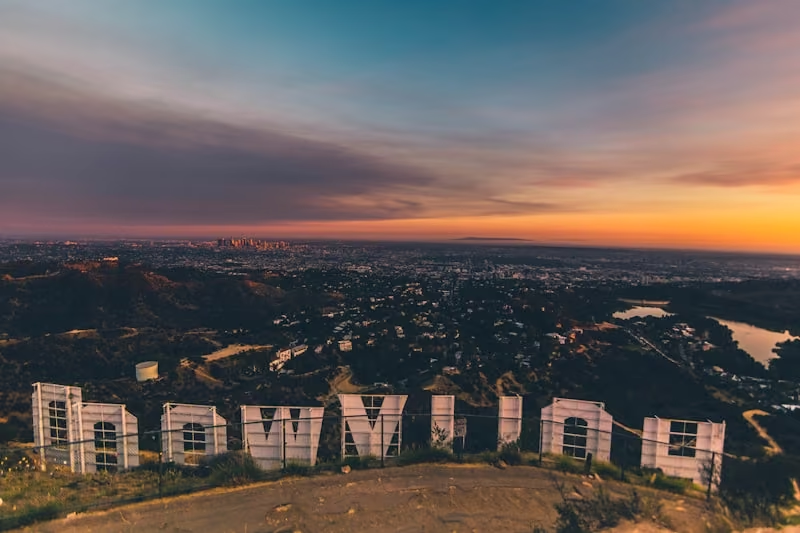
Griffith Observatory is one of the best public spots for views of the city and the Hollywood Sign. The building, events and park arrangements can change; at sunset the queue of cars grows. Consider the public transport/shuttle connection from below, or parking and walking. Hollywood Boulevard is a short stop for cultural history; spending the whole day looking for stars makes you miss the rest of Los Angeles.
You go to the Getty Center as much for Richard Meier's architecture, the garden and the city view as for the collection. Entry is free, but a timed reservation is required and parking is paid; there's no visitor parking on the surrounding streets. Writing it into your budget as zero because it's a "free museum" is a common mistake for those who arrive by car.
Within Downtown, Grand Central Market, the exterior/permitted areas of the Bradbury Building, Angels Flight, The Broad, Walt Disney Concert Hall and Little Tokyo form a walkable cluster. Each institution has different free-entry and reservation rules. The Arts District can be combined with dinner; keep your map route on the main pedestrian axes rather than using Skid Row as a tourist shortcut.
Santa Monica and Venice aren't the same thing. Santa Monica is a tidier beach centre and the end of the line for public transport; Venice Boardwalk is rawer, more crowded and performance-focused. Linking the two by the bike path or on foot works better than looking for parking in each. If you're going in the sea, follow lifeguard warnings and water conditions.
Studio tour or theme park?
Studio tours such as Warner Bros. focus on the production process; Universal Studios is a full-day theme park. Plan them as having different purposes despite the similar names. For Universal, check the official app, current opening hours and queuing system close to your trip; accept that CityWalk and the park will take up most of a day.
Where to stay? Choose a base by your interests
Santa Monica is comfortable for walkability, the beach and first-timers; it's far from Downtown and the Eastside, and rooms and parking can be expensive. West Hollywood offers a balance of restaurants, nightlife and a central location; direct rail access isn't good everywhere. Hollywood is close to the Metro B Line and tourist sights, but street quality can vary from block to block.
Downtown LA makes sense for museums, concerts, sport and rail connections. It's not the right base for anyone expecting a beach holiday. Koreatown offers late-night food, more central prices and D Line access; parking is hard and some hotels can be noisy. Beverly Hills/Westwood is quiet and high-budget; a car or bus plan matters more there.
When choosing a hotel, count daily parking and valet charges as part of the room price. "Parking available" doesn't mean free. Resort/destination fees should now appear in the mandatory total shown, but taxes and extras such as the parking you choose may still come on top. Look in the written conditions for the check-in pre-authorisation and in-and-out privileges for the car.
Metro in 2026: TAP isn't required, the same card matters
As of May 2026, LA Metro accepts physical contactless credit/debit cards and Apple Pay/Google Pay directly. Regular full-fare visitors no longer have to set up a TAP card just for this trip. Contactless payment offers two-hour Metro transfers and daily/weekly fare caps; for the benefit to work, use the same physical card or the same digital device.
TAP is still a handy card that works with more than 25 regional agencies; if you'll make heavy use of non-Metro buses, it may make sense depending on coverage. The new Official LA Metro app was released in 2026 for journey planning and service information. Before changing your App Store country just for the app, try the metro.net web planner and map alternatives; you don't need the app to pay fares.
Rail lines don't go to every tourist sight. Complete the last kilometre after the station by bus, on foot or by a short ride-hail. For the trip back at night, check service frequency and the last connection in advance. If you're relying on your phone as your only map and ticket, carry a power bank.
Leaving LAX: don't wait for a car at the terminal kerb
At LAX, standard Uber/Lyft and taxi pickups take place at the LAX-it area next to Terminal 1. Take the free shuttle with green signs on the arrivals level, or walk depending on your terminal. Premium ride-hail cars and some special services can pick up at the terminal; on departure, ride-hail cars drop off directly at the terminal. Don't trust old content claiming "the people mover has opened": in research in August 2026, the airport's official page still describes the system as under construction/a future connection, and LAX-it is active.
The FlyAway bus offers a direct alternative to points such as Union Station and Van Nuys; confirm current stops and payment on the LAX page. If you'll use a Metro connection, factor in luggage, transfers and the time of night. There's no single "best" transfer for a Santa Monica hotel and a Downtown hotel alike.
Burbank (BUR) is small and easy for Hollywood and the Valley; Long Beach (LGB) may suit a southern and coastal route. But if you've made a separate booking on a ticket connecting to your long-haul flight, consider the risk of collecting and re-checking your luggage and of not being protected in case of delay. Don't automatically pick the cheapest airport that says "Los Angeles".
Cars, parking and freeways: do the maths before hiring
If you'll hire a car, splitting the programme in two is efficient: don't pay for a car and hotel parking on Downtown/Hollywood days that can be done by rail; pick it up before your Westside, Malibu or mountain day. Think of rush hour not as a single hour but as wide windows in the morning and afternoon. Don't assume Carpool/HOV and ExpressLane signs are the same thing; toll-lane conditions vary by corridor.
Street signs are layered: cleaning days, time limits, permit zones and red/yellow/white kerbs are each separate rules. Just paying a parking meter doesn't always make a space legal. LADOT's PARK SMARTER app works at many city meters and ParkMobile in certain areas; go by the logo/zone number on the meter. A Text to Pay option at some meters also lets you pay without installing an app.
California's electronic toll systems vary by corridor. Metro ExpressLanes around Los Angeles and the Orange County Toll Roads aren't the same user experience. Before leaving the counter, ask about the hire company's toll programme, the daily usage/administrative fee and how the plate is registered to you. Don't assume there are cash booths.
Don't leave luggage, your passport or shopping bags in the car; even if they're out of sight in the boot, set up a storage solution for the travel day in advance. Some fuel pumps may ask for a US ZIP code with a foreign card. Rather than trying a made-up universal ZIP, go to the till and prepay a set amount; ask the attendant about refunding the unused difference.
Los Angeles food: neighbourhoods come before menus
You can't understand the LA food scene with a list of "Hollywood restaurants". Korean barbecue and late-night food in Koreatown, Mexican traditions in East LA/Boyle Heights, regional Thai in Thai Town, shared plates in Little Ethiopia and Chinese cuisines in the San Gabriel Valley each have their own geography. Put your food goal in that day's area; don't create a cross-city drive for one taco.
At a taco truck or street stand, the menu may be short, seating limited and payment arrangements variable. Carry backup cash, but check for card/contactless symbols. Tax may be added to the listed price. With table service, read whether the service charge and gratuity on the bill serve the same purpose; an automatic charge may not be distributed to staff the same way at every business, so ask if needed.
You don't have to set up an app/loyalty account for coffee and brunch. If an app doesn't show up with a foreign App Store account, use web ordering, a QR menu or paying at the counter rather than changing your main Apple account's country. Most of the city's best food doesn't need a mobile-order "hack".
Safety, climate and common mistakes
In LA, safety varies by block and time of day; rather than social-media generalisations, plan the way into your hotel, night transport and event exits. Not leaving your phone on the car seat or a bag in view of the window, not spending a long time sorting belongings in a deserted car park, and verifying the ride-hail car's plate are concrete precautions.
Coastal mornings can be cool and cloudy even in summer, while inland areas can be very hot the same day. Carry layers and use sun protection on a cloudy beach too. Wildfire smoke and road closures vary seasonally; before a mountain/canyon day, check air quality and official park/fire service warnings.
The most common mistake is choosing a cheap hotel in a distant suburb, adding two hours of traffic to every day and wiping parking costs out of the budget. The second is hiring a car for the whole trip when a very good plan exists along a transit line. The third is thinking the Hollywood Sign is a single point you physically "reach" and entering restricted residential roads; use the official viewpoints/hiking routes.
Where to eat: selected places
These aren't places to tick off one by one — they're the stops that best capture how the city eats. Opening hours and prices change, so check before you go.
Guelaguetza
Mid-rangeKoreatown · Oaxacan cuisine and mole
It takes LA's Mexican food culture beyond the one-size-fits-all idea of tacos. You go for the varieties of mole, tlayudas and shared plates.
Check live music/event days and reservation arrangements on the official site.
Holbox
Mid-rangeMercado La Paloma · Mexican coastal seafood
Through aguachile, ceviche and seafood tacos, it shows Yucatán and Pacific influences in a refined but relaxed market setting.
The day's produce and the queue can change. The official site publishes 2024–2025 Michelin star information; recheck the current status on your travel date.
Langer's Delicatessen
Mid-rangeWestlake · The No. 19 pastrami sandwich
It lets you experience Los Angeles's take on the East Coast deli tradition, with thick-cut pastrami and a historic dining room.
Opening hours may be limited; build your lunch plan from the official site and consider the nearby Metro station.
Philippe The Original
BudgetChinatown / Downtown · French Dip sandwich
An old LA eatery with shared tables, operating since 1908. It turns the city story of the French Dip into a reasonably paced Downtown meal.
State your meat and how wet/dipped you want it clearly at the counter; on event days the Union Station area gets busy.
Grand Central Market
BudgetDowntown · A historic market with multiple stalls
It solves different budgets and wishes within a group in one meal. Share a few stalls rather than reducing the market to one queue for a "famous egg sandwich".
Go before the lunch rush; each stall may have different days and hours.
République
UpscaleMid-Wilshire · Bakery, brunch and dinner service
In a historic building it offers two different experiences: the morning bakery queue and a reserved dinner; strong for a special meal.
Brunch and dinner service work differently; use the official reservation page for the right service.
Dietary preferences
Vegan and halal restaurants in Los Angeles
For Los Angeles we picked one plant-based place and one aimed at Muslim travellers. Halal labels don't all mean the same thing: certification, the restaurant's own declaration and "some halal options" are shown separately on each card.
Vegan Pick
Fully veganCrossroads Kitchen
West Hollywood · Plant-based Mediterranean
A fully vegan restaurant serving vegetable-led small plates, pasta and desserts with stylish service.
Why we picked it: For a special evening experiencing Los Angeles's refined plant-based cooking with a high standard of service.
Verification note
The venue's plant-based coverage was checked in the directory; reconfirm the menu and opening days before booking.
Source: HappyCow's current vegan restaurant directory ↗Halal Pick
Restaurant-declaredUrban Skillet
North Hollywood · Halal American fusion
A casual spot serving burgers, cheesesteaks and Korean-inspired street food with a 100 per cent halal declaration.
Why we picked it: It combines fast service with a creative fusion menu and a clear statement on where its meat comes from.
Verification note
The business declares itself 100 per cent halal; confirm the current supplier and any shared equipment with the branch.
Source: Halal Food Standards Alliance of America ↗Menus, suppliers and certifications change. If you keep strict halal, confirm the current certificate, alcohol, sauce ingredients and shared-kitchen risk directly with the restaurant.
Day-by-day itinerary
- 01
Downtown and the Eastside
- Morning
- Union Station, Olvera Street and Little Tokyo; then a reserved visit to the Broad/Disney Hall.
- Afternoon
- Grand Central Market, the Bradbury Building area and the Arts District. Bring the museum forward according to opening days.
- Evening
- Dinner in the Arts District or Koreatown; if you're driving, keep your drinking plans separate from driving.
- 02
Hollywood and Griffith
- Morning
- Keep Hollywood Boulevard short; depending on your interest in film history, move on to the Academy Museum.
- Afternoon
- A meal in Los Feliz or Thai Town, then a walk in Griffith Park or the shuttle connection.
- Evening
- Sunset at the Observatory; leave margin for the crowds heading back and the last public transport connection.
- 03
The Westside and the coast
- Morning
- A timed reservation for the Getty Center; architecture, gardens and selected galleries.
- Afternoon
- Head down to Santa Monica and walk/cycle along the coast towards Venice.
- Evening
- Dinner in Venice or Santa Monica; check traffic time for the drive back east.
- 04
An interest day
- Morning
- If you're a film fan, a studio tour booked in advance; if you want design, the Mid-City galleries.
- Afternoon
- Choose a food neighbourhood in the same area; don't add a second big citywide target.
- Evening
- Dinner and a live event in West Hollywood, or a concert/game Downtown; see the ticket total in advance.
Before you go
Nine details that save money and time in Los Angeles
Don't look for LAX-it at the terminal
For standard Uber/Lyft and taxis you need the free shuttle with green signs or a walk to next to Terminal 1. Open the app in the right area after you've collected your luggage.
Don't assume the people mover has opened
In August 2026, the official LAX page still showed the APM as under construction/a future connection. Check the airport's own transport page on your travel day.
Bank cards now work on the Metro
Since May 2026 you can pay directly with a contactless card/phone. For the fare cap, stick to the same physical or digital payment method.
Choose the parking app by the meter
PARK SMARTER works at many city meters and ParkMobile in certain areas; the logo and zone code are the authority. At some meters, Text to Pay is an app-free alternative.
Add hotel parking to the nightly price
A room deal can get expensive with daily valet/self-parking. Ask about in-and-out privileges and the tax-inclusive total before booking.
Solve the ZIP problem at the fuel pump inside
If your foreign card is declined, don't try a made-up ZIP; prepay at the till. Ask the attendant how the unused difference is returned to your card.
Don't leave luggage in the car
On check-out day, use the hotel luggage room or verified storage. Even luggage out of sight doesn't eliminate the risk of theft.
The Getty is free but not cost-free
The timed-entry reservation is free; parking is paid and there's no street parking nearby. Plan the public transport/car cost.
Ask about the toll programme at the counter
FasTrak and the various toll corridors aren't a single cash system. Get the hire company's daily administrative fee and opt-in/opt-out rules in writing.
Continue your United States route
This city works well on its own; if you have time, the stops below add a different region and city to the same trip.
Take California north
A second California city that's more compact than car-dependent LA, with strong rail transport and a completely different climate.
Read the guide →Los Angeles to Las Vegas
It's possible by road, but because of weekend traffic and desert conditions, allow more time than the map estimate.
Read the guide →Frequently asked questions
Can you see Los Angeles without a car?+
Yes, if you choose a hotel near a Metro line and focus on the Downtown–Hollywood–Santa Monica corridor. For Malibu, the mountains and a scattered restaurant route, a car is more useful.
How many days do you need for Los Angeles?+
Four full days is the minimum for the main areas; if you're adding a studio/theme park or Malibu, allow 5–6 days.
Where do you get an Uber at LAX?+
Standard ride-hail cars pick up from the LAX-it area. Use the free shuttle with green signs on the arrivals level, or walk depending on your terminal; premium classes may have different rules.
Do you need a TAP card on LA Metro?+
As of 2026, full-fare passengers can pay directly with a contactless bank card/phone. If you'll use multiple regional operators, TAP may still be useful.
Should you stay in Santa Monica or Hollywood?+
Santa Monica for the beach and walking; Hollywood/West Hollywood for studios, nightlife and a more central driving route. Your daily goals should decide.
Which app for parking in Los Angeles?+
There's no single app. Go by the PARK SMARTER, ParkMobile or Text to Pay sign on the LADOT meter; paying by app doesn't override traffic signs.
Note: LAX infrastructure, Metro payment arrangements, fire/road conditions, parking and business hours change quickly; check official transport and venue pages on the day of your trip. Last updated: .
Official sources and latest check
Visa, transport, entry and visiting rules change — re-check them with these official sources before you travel.