Contents
How to plan a trip to Ubud
Ubud is more layered than the cliché of Bali's single 'spiritual centre': palace tradition, painters' villages, the ceremonial calendar and the global wellness economy all load onto the same narrow roads.
The town breathes when you split the Palace–Market–Monkey Forest axis in the centre, the terraces and water temples to the north, and the workshops to the east and south into separate days.
Things to do in Ubud
Ubud Palace, the market and a dance evening
Link the palace's courtyards by day, the market's early hours and a Legong or Kecak performance in the evening on a single central day; confirm the performance venue and seating from the poster.
Campuhan and rice-field walks
The Campuhan Ridge Walk is comfortable in the cool hours after sunrise. On the Kajeng–Sari Organik line, stay respectful of the fields; don't treat private land and farm paths as a photo backdrop.
Tirta Empul and the surrounding villages
At the holy water temple, sarongs, offerings and the purification order follow local rules. Add nearby Gunung Kawi or Tegallalang to the same route cluster, factoring in the stairs and heat.
Area by area: where to go
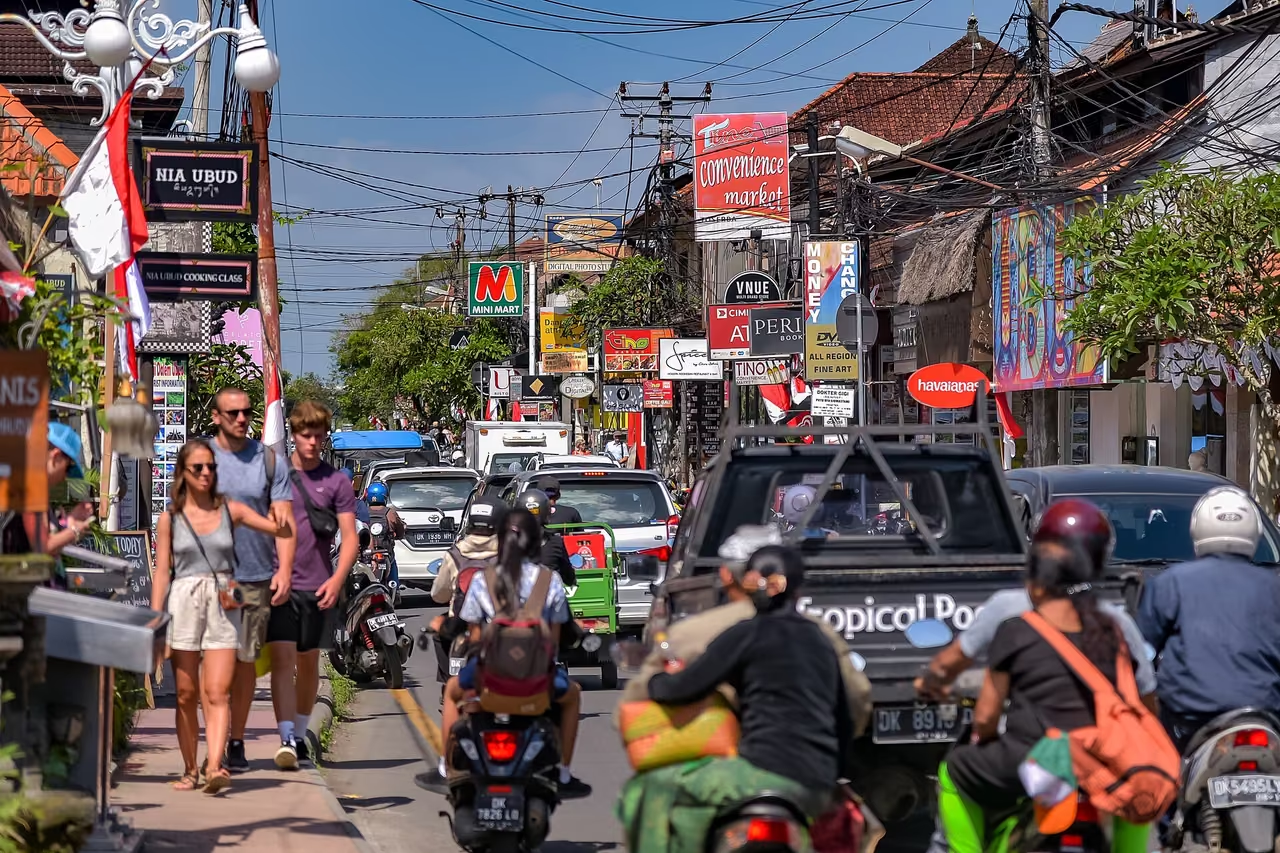
Central Ubud gives you walking access to the palace, market, restaurants and dance; traffic and night-time noise are high around Monkey Forest Road.
Penestanan or Sayan are quieter, scenic and suit long stays; they may mean calling a car to the centre for every meal.
Where to stay in Ubud
For a first, short visit, choose a location 10–15 minutes from the Palace but set back from the main traffic. If rest is the priority, Sayan/Penestanan; for daily classes and wellness, consider Nyuh Kuning.
What to eat in Ubud
Babi guling, bebek betutu, nasi campur and lawar are the core flavours of Balinese cooking; ask clearly about pork and recipes that may contain blood according to your dietary preferences.
Ubud has a strong vegan and contemporary Indonesian scene. Still, don't shut yourself away with smoothie bowls; try kitchens that highlight local spices, tempeh, sambal matah and seasonal vegetables.
Getting to and around Ubud
The road from Ngurah Rai Airport to Ubud can take about 1.5–2.5 hours depending on traffic. When choosing a fixed-price hotel transfer or a ride-hailing car, confirm the meeting point according to your terminal.
Although the centre looks walkable, pavements are uneven and the surrounding temples are scattered. A car for short distances and a car with a driver for full-day trips are safer; don't rent a scooter without an international and Indonesian licence.
Cafés, nightlife and shopping
Traditional dances around the palace are the strongest evening plan; Penestanan and the centre have quiet restaurants, live music and cocktail bars. At ceremonies, follow staff directions on flash, approaching the stage and dress.
Day trips from Ubud
The Sidemen rice valley gives a calm rural day from Ubud; plan the return traffic and a weaving workshop visit in advance.
The Kintamani–Batur sunrise trek starts very early; confirm the volcano's status, the fitness level and a licensed guide.
Best time to visit Ubud
May–June and September strike a good balance between rain and crowds. July–August is very busy; in the rainy season, streams and steps can be slippery.
How to budget for your trip
Central warungs are affordable; resorts and wellness packages are costly. Compare private drivers not by the number of stops but by the total price including hours, waiting, parking and fuel.
Safety and common mistakes
In the Monkey Forest, don't show food, water bottles or loose belongings; don't make eye contact or physical contact with the animals, and follow staff instructions.
Even if a sarong is provided at a temple, the rules on shoulders and behaviour still apply. Respectfully follow local entry rules regarding menstruation and closed areas during active ceremonies.
Top stops
The stops that best capture the city. Timed entry, tickets and opening hours change, so check official channels before you go.
Ubud Palace, the market and a dance evening
Main sightseeing line · The city's signature experience
Link the palace's courtyards by day, the market's early hours and a Legong or Kecak performance in the evening on a single central day; confirm the performance venue and seating from the poster.
Campuhan and rice-field walks
Second route cluster · Local character and culture
The Campuhan Ridge Walk is comfortable in the cool hours after sunrise. On the Kajeng–Sari Organik line, stay respectful of the fields; don't treat private land and farm paths as a photo backdrop.
Tirta Empul and the surrounding villages
The surrounding route · A change of scenery and pace
At the holy water temple, sarongs, offerings and the purification order follow local rules. Add nearby Gunung Kawi or Tegallalang to the same route cluster, factoring in the stairs and heat.
Dietary preferences
Vegan and halal restaurants in Ubud
For Ubud we picked one plant-based place and one aimed at Muslim travellers. Halal labels don't all mean the same thing: certification, the restaurant's own declaration and "some halal options" are shown separately on each card.
Vegan Pick
Fully veganZest Ubud
Penestanan · Vegan Balinese and world
A restaurant with a view preparing colourful, fully plant-based plates with local produce.
Why we picked it: A strong choice for a special evening that combines Balinese spices with contemporary vegan cooking.
Verification note
The venue's plant-based coverage was checked in the directory; reconfirm the menu and opening days before booking.
Source: HappyCow's current vegan restaurant directory ↗Halal Pick
Re-check recommendedWarung Makan Bu Rus
Central Ubud · Indonesian home cooking
A long-running family warung serving nasi campur, vegetable and chicken dishes.
Why we picked it: A candidate for an alcohol-free local meal in the centre where you can discuss simple ingredients; don't assume certification.
Verification note
As no current independent certificate record was found, reconfirm meat sourcing, the shared kitchen and alcohol policy with the business.
Source: Indonesia's BPJPH, the official halal product and certification agency ↗Menus, suppliers and certifications change. If you keep strict halal, confirm the current certificate, alcohol, sauce ingredients and shared-kitchen risk directly with the restaurant.
Day-by-day itinerary
- 01
Day 1 — Ubud Palace, the market and a dance evening and getting to know the city
- Morning
- Start early with Ubud Palace, the market and a dance evening; sort out any entry or transport uncertainty at the beginning of the day.
- Afternoon
- Take in Central Ubud on foot and leave room for an unplanned coffee break.
- Evening
- Round off the evening with a relaxed meal of local dishes.
- 02
Day 2 — Campuhan and rice-field walks and the neighbourhoods
- Morning
- Cover the main route around Campuhan and rice-field walks before the crowds build.
- Afternoon
- Add the small streets, markets and local daily life around Penestanan or Sayan to the plan.
- Evening
- Traditional dances around the palace are the strongest evening plan; Penestanan and the centre have quiet restaurants, live music and cocktail bars. At ceremonies, follow staff directions on flash, approaching the stage and dress.
- 03
Day 3 — Tirta Empul and the surrounding villages and a flexible finish
- Morning
- Confirm the weather, tickets or transfers for Tirta Empul and the surrounding villages the night before.
- Afternoon
- The Sidemen rice valley gives a calm rural day from Ubud; plan the return traffic and a weaving workshop visit in advance.
- Evening
- Before heading back, prepare the next day's connection, luggage time and offline tickets; if the programme is tight, don't leave shopping to this slot.
Continue your Indonesia route
This city works well on its own; if you have time, the stops below add a different region and city to the same trip.
Canggu travel guide
Surf beaches, café culture, Tanah Lot days and Bali's fast-changing west coast.
Read the guide →Uluwatu travel guide
A cliff-top temple, powerful surf breaks and the dramatic sunsets of the Bukit Peninsula.
Read the guide →Nusa Penida travel guide
A nature route of limestone cliffs, manta spots and rough island roads that calls for planning.
Read the guide →Frequently asked questions
How many days do you need in Ubud?+
A stay of 3–5 full days makes for a balanced first visit. Rather than ticking off the main sights, leave room for neighbourhoods, food and possible weather or transport delays and the city opens up in a more meaningful way.
Where should you stay in Ubud?+
For a first, short visit, choose a location 10–15 minutes from the Palace but set back from the main traffic. If rest is the priority, Sayan/Penestanan; for daily classes and wellness, consider Nyuh Kuning.
When is the best time to visit Ubud?+
The most balanced period is generally May–June · September. May–June and September strike a good balance between rain and crowds. July–August is very busy; in the rainy season, streams and steps can be slippery.
Should you rent a car in Ubud?+
Getting around: Although the centre looks walkable, pavements are uneven and the surrounding temples are scattered. A car for short distances and a car with a driver for full-day trips are safer; don't rent a scooter without an international and Indonesian licence.. Before deciding on a car, weigh up parking, licence, insurance and getting back at night together.
What can you combine with Ubud on the same trip?+
Canggu, Uluwatu, Nusa Penida are the natural next stops in this guide. Look not only at the distance on the map but at the real door-to-door travel time.
Note: Museum and business hours, event calendars, transport fares and entry fees change periodically. Re-check places that require reservations only through official channels, close to your visit date. Last updated: .
Official sources and latest check
Visa, transport, entry and visiting rules change — re-check them with these official sources before you travel.