Contents
How to plan a trip to London
London has no single centre. Westminster's monuments, the South Bank culture strip, Bloomsbury's museums, the City's Roman–financial layer, the East End markets and Hampstead/Greenwich are separate day clusters. Stations that look close on the Tube map may require a longer transfer than walking above ground.
Free national museums are a budget advantage, but timed slots/special exhibition tickets may be required. Don't put the British Museum, the National Gallery and the V&A on the same day; balance collection fatigue with parks and neighbourhood markets.
Things to do in London
Westminster and the South Bank
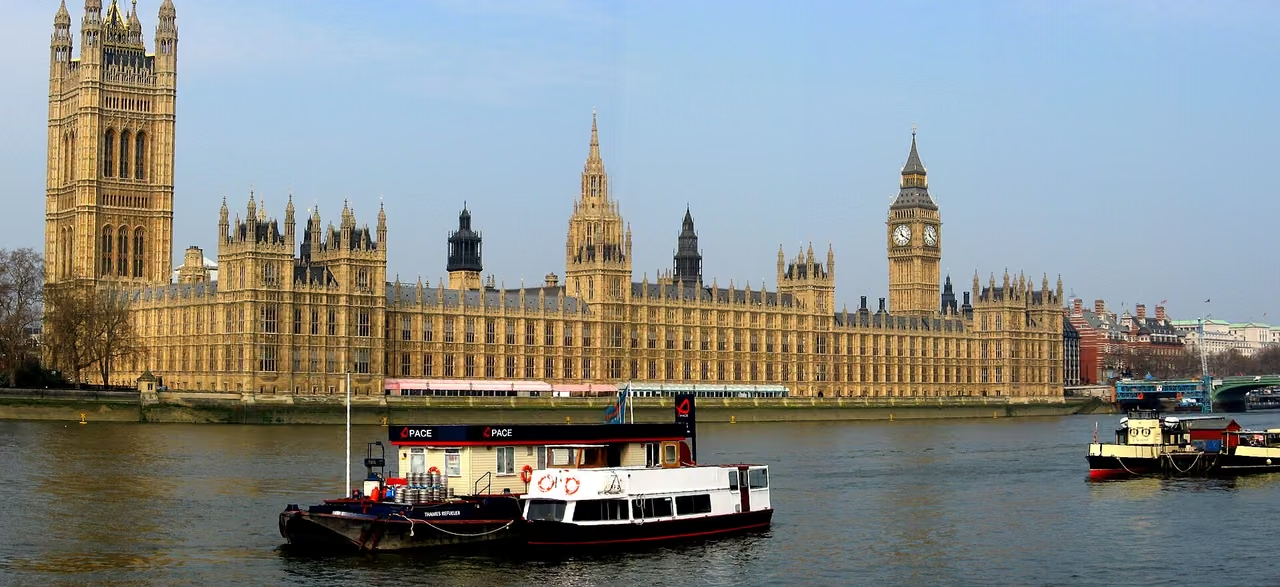
Do Westminster Abbey and the area around Parliament in the morning; walk the north bank of the Thames, a bridge crossing and the South Bank in the afternoon. The Big Ben tower tour and visits to Parliament are separate official reservations.
The British Museum, the West End and theatre
Choose two or three galleries at the British Museum; continue with a Covent Garden–Soho–Chinatown walk. For theatre tickets, use reliable channels such as the official box office, TodayTix or TKTS; read about restricted-view seats.
The City, the Tower and the East End
Go to the Tower of London at opening time; the Tower Bridge exhibition is a separate ticket. Plan the Spitalfields–Brick Lane–Shoreditch line for a day when the market is open, and approach the street art with respect for a living neighbourhood.
Greenwich and the northern neighbourhoods
Thames Clippers are fast but may not count towards the TfL daily cap in the same way. Make Greenwich's museums/park a half day, and Camden–Regent's Canal or Hampstead another half day.
Area by area: where to go
Bloomsbury/King's Cross offers transport and museums; the South Bank/Waterloo views and trains; Soho/Covent Garden nightlife but is expensive/noisy; Shoreditch markets–nightlife; Paddington Heathrow; and Kensington museums and quieter stays.
Where to stay in London
Rather than the 'Zone 1' label, choose 5–8 minutes from a station and at least two lines. Read reviews about basement rooms, air conditioning (for summer), lifts and night buses. For an early flight, staying on the right airport corridor is worth more than a central view.
What to eat in London
London cuisine isn't just fish and chips: pie and mash, Sunday roast, pub food and Borough produce; and the migrant cuisines of Southall/Brick Lane curries, Chinatown, Edgware Road, Dalston and Brixton are the city's real strength.
In pubs you usually order at the bar and give your table number; check the discretionary service charge line on restaurant bills. At markets, don't take the longest queue as proof of quality; look at stall hygiene and prices.
Getting to and around London
From LHR Heathrow there's the Elizabeth line, the Piccadilly line or the Heathrow Express; from LGW Thameslink/Southern/the Gatwick Express; and from STN and LTN train/bus options. Airports with 'London' in their name are not all the same distance away.
On the TfL network, tap in and out with the same contactless card/device; don't share one card between two people. On buses, tap only when boarding; on the Tube/rail, on entry and exit. Outside Oyster/contactless coverage, you need a National Rail ticket.
Cafés, nightlife and shopping
Soho suits post-theatre and LGBTQ+ nightlife, Shoreditch clubs/bars, Camden live music, and Brixton concerts. Note the last Tube and night bus. For shopping, Oxford Street means chains, Marylebone/Seven Dials independents, Portobello antiques and Borough food; tax-free shopping no longer works the old way for general visitors, so check current GOV.UK information.
Football and match day
The stadiums of Arsenal, Chelsea, Tottenham, West Ham, Fulham and other London clubs are far apart. Tickets for big matches can be hard to get because of membership or points systems; use only the club's official sales or recognised hospitality channels. Wembley isn't a club ground but a separate venue for internationals and finals.
On match days, station closures or one-way pedestrian flows may apply. Download your mobile ticket, ID and the bag rule in advance; arrive around the ground at least 90 minutes early, and note walking to the next station as an alternative for leaving.
Day trips from London
Oxford, Cambridge, Brighton and Bath can be done by train, but choose at most two day trips on one visit. Windsor is an easy palace day; Stonehenge requires Salisbury + a shuttle on public transport. On a car-free Cotswolds day tour, you may spend very little time in the villages.
Best time to visit London
May–June is good for long days and parks; September is calmer. In summer, rooms without air conditioning can be hot; in winter the lights are lovely but the days short. Rain is possible in all four seasons; carry a thin waterproof layer. On Christmas Day public transport largely stops.
How to budget for your trip
Accommodation and long-distance trains are expensive. Free museums, parks, walking and the TfL daily cap balance things out. If your contactless card charges foreign transaction fees, compare an Oyster; each passenger needs their own means of payment.
Safety and common mistakes
Don't tap in with your phone and out with a physical card; it may be charged as two separate journeys. Don't stop in cycle lanes, and look left–right on the road as the markings tell you. Avoid fake theatre/event sellers; don't tip twice on a pub bill that already includes service.
Where to eat: selected places
These aren't places to tick off one by one — they're the stops that best capture how the city eats. Opening hours and prices change, so check before you go.
St John
UpscaleSmithfield · Nose-to-tail British cooking
For seeing the tradition of produce and offal as a contemporary London classic in a simple dining room.
Book ahead.
Dishoom Covent Garden
Mid-rangeCovent Garden · Bombay café cooking
For London's migrant cuisine and lively service all day.
Check the branch/reservation arrangements.
Rochelle Canteen
UpscaleShoreditch · Seasonal British food
For a short menu, good produce and lunch in a quiet courtyard.
Beigel Bake
BudgetBrick Lane · Salt beef bagel
A quick, cheap 24-hour East End classic.
Monmouth Coffee
Mid-rangeBorough · Specialty coffee
One of the strongest addresses in London's coffee history on a market morning.
Rules
UpscaleCovent Garden · Historic British restaurant
For a special long meal with game, pies and classic service.
Check the dress code and reservations.
Dietary preferences
Vegan and halal restaurants in London
For London we picked one plant-based place and one aimed at Muslim travellers. Halal labels don't all mean the same thing: certification, the restaurant's own declaration and "some halal options" are shown separately on each card.
Vegan Pick
Fully veganMildreds Soho
Soho · Vegan world cuisine
A long-established restaurant with a fully vegan menu, from British comfort food to curries and burgers.
Why we picked it: For a wide, reliable plant-based menu that suits mixed groups on a West End plan.
Verification note
The venue's plant-based coverage was checked in the directory; reconfirm the menu and opening days before booking.
Source: HappyCow's current vegan restaurant directory ↗Halal Pick
Halal optionsBerenjak Borough
Borough Market · Persian
A busy restaurant offering halal meat options in its kebabs and small Persian plates.
Why we picked it: For a refined but relaxed Persian meal around Borough Market.
Verification note
Some meat may be halal; alcohol is served. Ask when booking which meats are currently halal and about any shared grill.
Source: Visit London: restaurants with halal menus ↗Menus, suppliers and certifications change. If you keep strict halal, confirm the current certificate, alcohol, sauce ingredients and shared-kitchen risk directly with the restaurant.
Day-by-day itinerary
- 01
Day 1 — Westminster
- Morning
- The Abbey and Parliament
- Afternoon
- St James's–Trafalgar
- Evening
- The South Bank
- 02
Day 2 — Museums and the West End
- Morning
- The British Museum
- Afternoon
- Covent Garden–Soho
- Evening
- Theatre
- 03
Day 3 — The City and the East End
- Morning
- The Tower
- Afternoon
- Spitalfields–Brick Lane
- Evening
- Shoreditch
- 04
Day 4 — Kensington
- Morning
- The V&A/Natural History Museum
- Afternoon
- Hyde Park–Notting Hill
- Evening
- A local pub
- 05
Day 5 — Greenwich
- Morning
- Greenwich by river
- Afternoon
- The park and museums
- Evening
- An evening in Borough/by the Thames
Before you go
London travel tips: what to know before you go
The same card
Use the same physical card/device to tap in and out on TfL.
Airport codes
Compare LHR, LGW, STN and LTN transfers by price and time separately.
Free museums
Special exhibitions and timed reservations may be separate.
Service charge
If it's added to the bill, don't leave another percentage for the same service.
Continue your United Kingdom route
This city works well on its own; if you have time, the stops below add a different region and city to the same trip.
From London to Oxford
Colleges and the Bodleian by train.
Read the guide →From London to Cambridge
The banks of the Cam and the colleges.
Read the guide →From London to Bath
Roman baths and a Georgian city.
Read the guide →The London–Edinburgh railway
A fast train into Scottish history.
Read the guide →From London to the seaside
The Pavilion, the Lanes and the beach.
Read the guide →Frequently asked questions
How many days do you need for London?+
5 days for the main areas; 7 days with two big day trips.
Where to stay in London?+
King's Cross/Bloomsbury for transport, Paddington for Heathrow, Soho/Shoreditch for nightlife; on a budget, Zone 2 but on a direct line.
Is London expensive?+
Hotels and trains are expensive; museums, parks, market meals and the TfL daily cap can balance the budget.
Oyster or contactless card?+
For most visitors, contactless is practical and capped daily; check your bank's foreign transaction fees and card compatibility. Each passenger must use a separate card.
Do you need a visa or an ETA to visit London?+
It depends on your nationality: visa nationals need a Standard Visitor visa, while most other visitors, including EU, US and Canadian citizens, need a UK Electronic Travel Authorisation (ETA) before travelling. Irish citizens need neither. Check your situation on GOV.UK.
Is London safe?+
General big-city precautions are enough; be careful about phone snatching, belongings in crowds and getting back at night.
How do you get to London?+
From LHR Heathrow there's the Elizabeth line, the Piccadilly line or the Heathrow Express; from LGW Thameslink/Southern/the Gatwick Express; and from STN and LTN train/bus options. Airports with 'London' in their name are not all the same distance away.
Note: Museum and business hours, event calendars, transport fares and entry fees change periodically. Re-check places that require reservations only through official channels, close to your visit date. Last updated: .
Official sources and latest check
Visa, transport, entry and visiting rules change — re-check them with these official sources before you travel.