Contents
How to plan a trip to the Cotswolds
The Cotswolds is a National Landscape spread across about five counties. Bourton-on-the-Water, Bibury, Castle Combe and Broadway aren't neighbouring parts of a theme park; putting them on the same day means hours in a vehicle and short photo stops.
Build a Moreton–Stow–Bourton–Broadway cluster in the north and a Tetbury–Castle Combe–Bath cluster in the south. On one trip, it's better to go deep on a single cluster.
Things to do in the Cotswolds
The northern villages
Moreton for the market/station, Stow for antiques and the square, Bourton for the river and heavy visitor numbers, Broadway for its long high street/walks. Plan bus times backwards from the last return.
The Cotswold Way and walking
Walking a section such as Chipping Campden–Broadway Tower gives you the views without doing the whole route. Prepare shoes/a map for mud, farm gates and daylight.
The southern Cotswolds
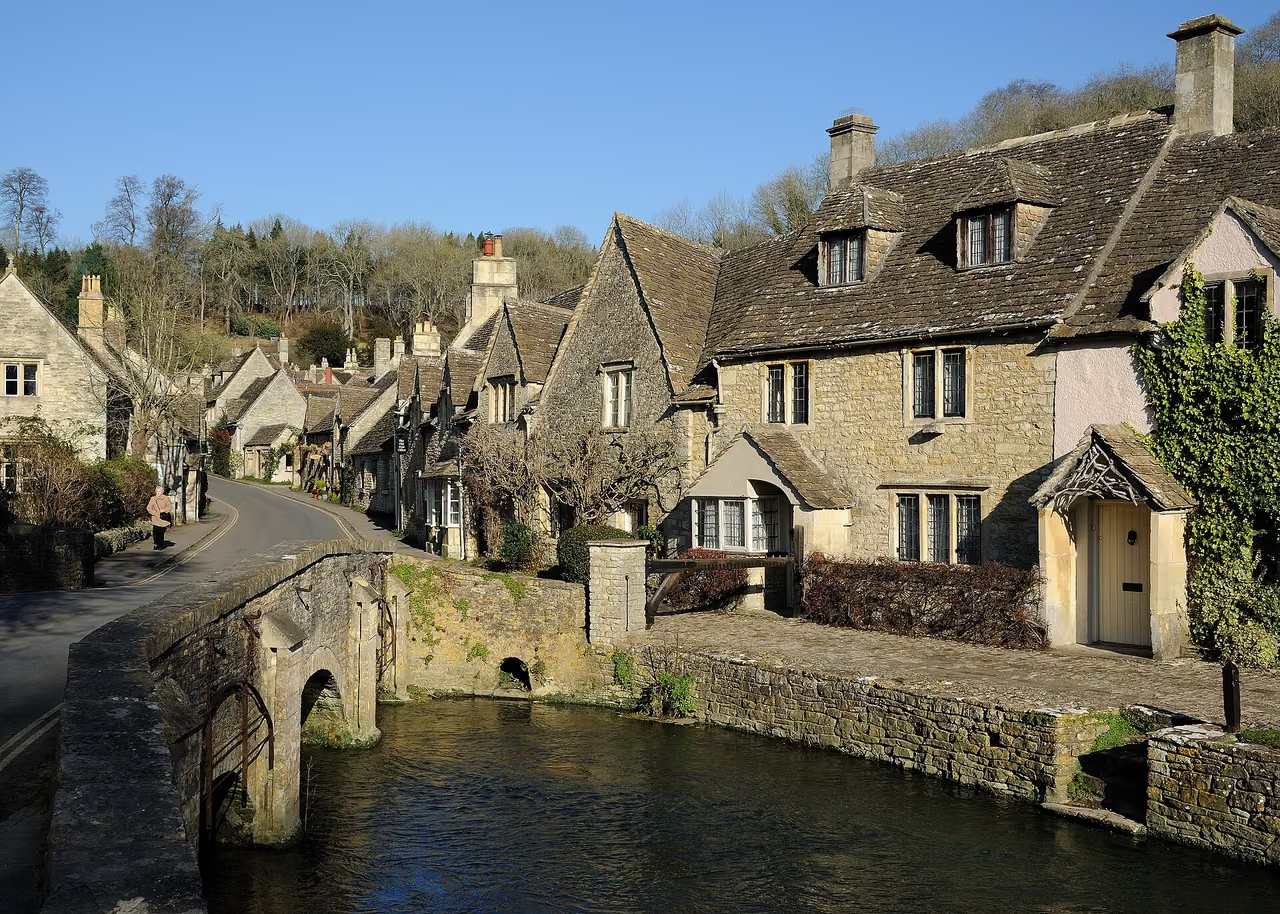
Castle Combe is small and fills quickly; Tetbury offers independents/antiques, and Lacock a historic village with film connections. Making Bath a separate base makes sense.
Area by area: where to go
Moreton-in-Marsh suits car-free travel/the station; Stow-on-the-Wold is a central market town; Bourton is family-friendly and touristy; Chipping Campden suits walking; Tetbury the south; and Bath, though outside the area, is a strong gateway.
Where to stay in the Cotswolds
Without a car, Moreton; with a car, Stow/Chipping Campden. At pubs/inns, check dinner closing times, taxis, stairs and parking; Friday–Sunday fills up very early.
What to eat in the Cotswolds
Cotswold cheese, Gloucester Old Spot pork products, local ale/cider, farm vegetables and afternoon tea stand out. Village pubs need booking for Sunday roast.
Farm shops aren't always cheap; read the producer and regional origin. In small villages, kitchens may close before 20.00.
Getting to and around the Cotswolds
Moreton-in-Marsh has direct trains from London Paddington for the northern Cotswolds; Bath/Chippenham is the south-western gateway and Cheltenham the western one. The region has no single central station.
Bus services are infrequent and may be limited on Sundays. A car gives flexibility; a car-free route should be done with a single base + 2–3 villages and walking. Taxis need booking in advance.
Cafés, nightlife and shopping
Nightlife means pubs, fireplaces and early quiet. For antiques, wool, ceramics, cheese and local drinks, go to independent shops/producers; show respect when taking photos in front of private doors.
Day trips from the Cotswolds
Oxford and Blenheim lie to the north-east, Bath to the south and Stratford to the north. Don't add two big cities to a Cotswolds day. Blenheim can be a separate big day.
Best time to visit the Cotswolds
May–June and September are good; summer is busy with tour coaches, winter muddy but quiet. During spring lambing, follow the rules for dogs and field gates.
How to budget for your trip
Cars/taxis and country inns are expensive. Train + a single base + walking can be economical. For a day-tour price, ask about the real free time in the villages.
Safety and common mistakes
Don't climb onto private doors/walls. Don't park on passing/single-track village roads. Without a car, don't miss the last bus; ride-hailing isn't available in every village.
Where to eat: selected places
These aren't places to tick off one by one — they're the stops that best capture how the city eats. Opening hours and prices change, so check before you go.
The Wild Rabbit
UpscaleKingham · Farm-to-table pub
For trying local farm produce on a careful countryside evening.
A reservation and transport are essential.
The Ebrington Arms
Mid-rangeEbrington · Village pub
Ale and seasonal pub food after a walk.
The Pudding Club at Three Ways House
UpscaleMickleton · British puddings
A fun local experience — confirm the current event/programme.
Bakery on the Water
Mid-rangeBourton · Bakery and tea
A light riverside break in a touristy village.
Daylesford Organic
UpscaleDaylesford · Farm shop and café
Expensive, but for seeing the rural production–retail model.
The Porch House
Mid-rangeStow · Historic pub
An old inn atmosphere on a Stow evening.
Dietary preferences
Vegan and halal restaurants in Cotswolds
For Cotswolds we picked one plant-based place and one aimed at Muslim travellers. Halal labels don't all mean the same thing: certification, the restaurant's own declaration and "some halal options" are shown separately on each card.
Vegan Pick
Vegan optionsThe Organic Farm Shop Café
Cirencester · Organic farm cooking
A café with clear vegan breakfast and lunch options on a menu made with farm produce.
Why we picked it: For local produce, good ingredient transparency and several plant-based options on a rural route.
Verification note
The venue's plant-based coverage was checked in the directory; reconfirm the menu and opening days before booking.
Source: HappyCow's current vegan restaurant directory ↗Halal Pick
Re-check recommendedKoloshi
Charlton Kings · Indian
A restaurant where you can ask in advance about a halal meat option for its curries and tandoor dishes.
Why we picked it: A plannable evening alternative for the limited halal scene at the eastern edge of the Cotswolds.
Verification note
No evidence of certification covering the whole menu was found; confirm halal meat, the shared kitchen and alcohol in writing.
Source: Halal Tourism Britain ↗Research note: Evidence of independently certified options in the Cotswolds is limited; prior confirmation is needed.
Menus, suppliers and certifications change. If you keep strict halal, confirm the current certificate, alcohol, sauce ingredients and shared-kitchen risk directly with the restaurant.
Day-by-day itinerary
- 01
Day 1 — Moreton and Stow
- Morning
- Train/arrival
- Afternoon
- A walk around Stow
- Evening
- A village pub
- 02
Day 2 — Bourton and the Slaughters
- Morning
- Bourton early
- Afternoon
- A Lower/Upper Slaughter walk
- Evening
- Back to your base
- 03
Day 3 — Campden–Broadway
- Morning
- Chipping Campden
- Afternoon
- A section of the Cotswold Way
- Evening
- Broadway/your base
- 04
Day 4 — Blenheim/Oxford
- Morning
- Early transport
- Afternoon
- Your chosen full day
- Evening
- Return
Before you go
Cotswolds travel tips: what to know before you go
One cluster
Don't put northern and southern villages on the same day.
The last bus
Build a car-free route around the return time.
Pub food
In small villages, book in advance.
Private property
Don't enter doorways and gardens.
Continue your United Kingdom route
This city works well on its own; if you have time, the stops below add a different region and city to the same trip.
From the Cotswolds to Oxford
Colleges and museums.
Read the guide →Bath, the southern gateway to the Cotswolds
Roman and Georgian architecture.
Read the guide →From the countryside to Bristol
The harbour and creative culture.
Read the guide →The Cotswolds–London train
A route to the capital.
Read the guide →Frequently asked questions
How many days do you need for the Cotswolds?+
3 days for one regional cluster; 5–6 days for north + south.
Can you explore the Cotswolds without a car?+
Yes, with a rail base such as Moreton and a limited selection of villages; careful planning is needed because of infrequent buses.
Can you do the Cotswolds as a day trip from London?+
You can, but stops on tour programmes are short. At least one night is better for understanding the area.
Where to stay in the Cotswolds?+
Moreton without a car, Stow as a central base with a car, Chipping Campden for walking.
Note: Museum and business hours, event calendars, transport fares and entry fees change periodically. Re-check places that require reservations only through official channels, close to your visit date. Last updated: .
Official sources and latest check
Visa, transport, entry and visiting rules change — re-check them with these official sources before you travel.