Contents
Understanding Venice: the island city, Mestre and the six sestieri
Venice's historic centre is car-free. The moment you get off the train at Venezia Santa Lucia, you are facing the Grand Canal; Venezia Mestre is on the mainland and is not the same experience. If your hotel is on the island, mistakenly choosing a Mestre ticket/accommodation adds a train or bus journey every day. Vehicles only come as far as Piazzale Roma/Tronchetto.
The city is made up of six sestieri. San Marco is close to the main monuments and the most crowded; San Polo is around the Rialto and the market; Dorsoduro balances art, student life and walking; Cannaregio has station access and more everyday streets; Castello gets calmer the further east you go; and Santa Croce is close to the Piazzale Roma logistics. 800 metres on the map can feel like double that for a traveller with luggage, thanks to bridges and dead ends.
A day trip gives you the San Marco–Rialto picture but misses the city's best hours. Staying at least two nights opens up Cannaregio, Castello and Dorsoduro early in the morning and in the evening, when the cruise/day-trip crowds thin out. If you are adding a Murano–Burano day, three full days is more realistic.
The 2026 Venice access fee: who pays and who shows a QR?
In 2026, Venice City Council is applying the Contributo di Accesso on 60 designated days for day-trip entry to the historic centre between 08.30–16.00. The dates are spread across April–July; it does not apply every day. Check your travel date only on the official cda.ve.it portal. The fee may vary depending on how early or late you buy.
Guests staying at accommodation within the Venice municipality and subject to the municipal tourist tax generally do not pay the access fee; however, you may need to generate an exemption document/QR. Ask in writing whether your hotel registers you or which exemption route you need to choose on the portal. The assumption 'I'm staying at a hotel, so I don't need to show anything' can cost you time at a checkpoint.
Staying at a property within the Venice municipality in Mestre and staying in another municipality may not give the same exemption result; the property's exact address and tax status are decisive. Categories such as children, students, business, health and island residents also have different proof/exemptions. Answer the portal's questions for your travel date rather than relying on a blog summary.
Checks may be carried out at the main entry points using the QR code and ID; not registering/not paying risks a fine. Don't give your card to sponsored intermediary sites. Save the official QR as an offline screenshot or PDF as well, not just on your phone.
Arriving via Marco Polo Airport, Treviso and by train
From Marco Polo (VCE), buses by road arrive at Piazzale Roma: ACTV Line 5 is the local service, while ATVO offers an express service with a different stop pattern. If your hotel is towards the Rialto/San Marco, you transfer to a vaporetto from there. The Alilaguna water line goes directly to some island stops; although it is scenic, its route, intermediate stops and walking distance vary depending on your hotel. A private water taxi can drop you close to the door but costs as much as a private vehicle; agree the total before boarding.
Treviso (TSF), although sold under the name Venice, is an airport in another city. Check the last bus to Mestre or Piazzale Roma on the day of your flight. On a late arrival, a cheap plane ticket can lose its advantage if you are forced to take a private transfer.
If you are coming to the island centre by train, the final station on your ticket should be Venezia S. Lucia. You may need to change at Mestre; follow the train number and platform. Validate a paper regional ticket before boarding, and follow the current instructions for digital tickets on the Trenitalia screen.
Don't underestimate the last kilometre with luggage. Bridges may have no lift/ramp; check in advance how many bridges there are on the route from the vaporetto stop to your hotel. Don't hand your belongings to unlicensed 'luggage helpers'; if needed, use the registered porter service your hotel recommends.
Vaporetto and ACTV: tickets, validation and contactless payment
ACTV vaporettos are urban public transport, not tour boats. As a single water-bus ticket is expensive, compare a timed Venezia Unica/ACTV product if you will make several journeys on the same day. You can use the AVM Venezia Official App, Venezia Unica ticket offices, machines and authorised sales points. The airport Alilaguna and some private operators are not included in the ACTV pass.
Validate your paper or digital ticket on the pier reader before every boarding; an open barrier does not mean free passage. The contactless EMV system works across the water and land network, but you need to use the same physical card/same device for the correct fare to be calculated. As water and land fares differ, don't assume the card transaction is a single fixed fee.
Line 1 is slow and scenic along the Grand Canal; Line 2 is faster on some sections. Mixing up the two directional piers at a stop is very common: read the final-stop display on the front of the vaporetto. In crowds, don't put your suitcase in the gangway, and don't block the disembarking area for photos.
The traghetto is a short gondola crossing of the Grand Canal at certain points; it is not a tour gondola, and its operating points and hours vary. Don't walk a long way just for a cheap gondola experience; check on the spot whether it is running. The council publishes official durations and fares for gondola services; agree the route, duration and day/night fare before boarding, and confirm that the price is for the boat service, not per person.
San Marco, the Palazzo Ducale and managing the crowds
The Basilica di San Marco is an active place of worship. The main visit, the Pala d'Oro, the museum/terrace and the bell tower may have different tickets or queues. Check the current entry arrangements only via the basilica's official website; be prepared with clothing covering shoulders and knees, a small bag and the security rules.
The Palazzo Ducale needs at least two hours for its state rooms, the Tintoretto/Veronese halls, the Bridge of Sighs and the prison route. MUVE's official ticket may also cover other museums on St Mark's Square. Special routes such as the Secret Itineraries have limited capacity and require a separate reservation; they are not automatically part of the standard ticket.
Seeing St Mark's Square around 08.00 in the morning is a completely different experience from the midday crowds. Sitting on a historic café terrace with an orchestra in the evening carries a view/service charge; read the menu and any music surcharge before sitting down. Feeding pigeons and dropping food on the square is prohibited.
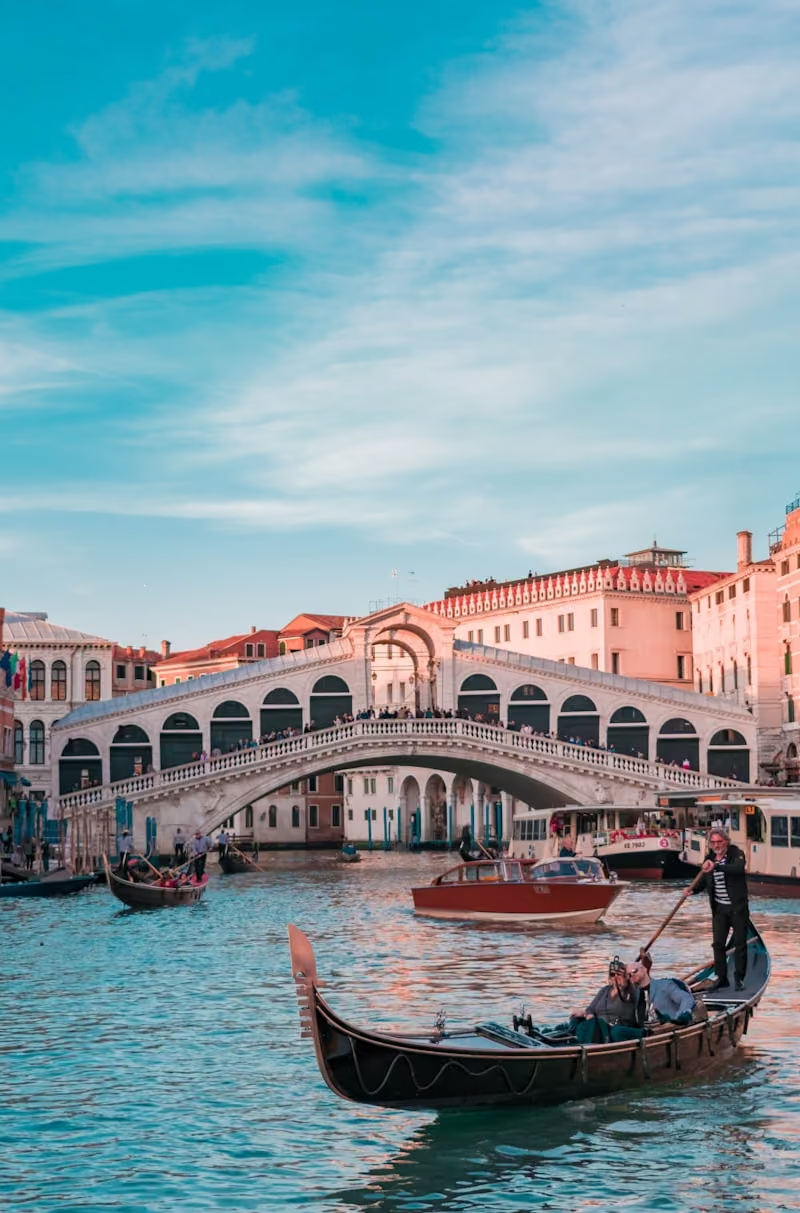
Don't just cross the Rialto Bridge over the top and miss the market. The Pescheria's opening days and morning hours can change; the atmosphere is not the same once the market is over. Stepping even one street away from the main signposted Rialto–San Marco corridor reduces the crowds.
Dorsoduro, Cannaregio and Castello: living Venice
In Dorsoduro, the Accademia, the Peggy Guggenheim Collection, Punta della Dogana and the Zattere link into the same art-and-water walk. Don't squeeze them all into one morning; choose one major collection and leave time for the everyday rhythm around Campo Santa Margherita.
Cannaregio calms down beyond the Strada Nova, which gets busy heading east from the railway station. The history of the Venetian Ghetto weighs more than a 'hidden neighbourhood' photo; check synagogue and museum access on the current official programme. Fondamenta della Misericordia suits an evening bacari route.
Castello shows the city's more residential face towards the Arsenale and the Biennale gardens. A Biennale year/event calendar affects transport and room prices; the main exhibition areas cannot be finished quickly on one ticket. Via Garibaldi is a convenient lunch axis on a busy art day.
In Santa Croce and San Polo, the Scuola Grande di San Rocco and the Frari are powerful interiors for Tintoretto and Bellini. Keeping them for a rainy-day plan is wise, but check closing days at the last minute.
Murano, Burano and Torcello: getting the island day right
Murano stands out for its glass tradition, Burano for its colourful houses and lace, and Torcello for the lagoon's early settlement history. Turning all three into 'photo stops' in two hours ignores vaporetto waiting times. If it's your first time and you only have one day, Murano + Burano; if you are very interested in history, Burano + Torcello may be more coherent.
The free glass-factory boat is often tied to a sales presentation; ask about the return trip and pressure to buy. Going to Murano independently on a regular ACTV boat keeps you in control. For genuine Murano glass, look for maker/origin documentation and transparent prices; not every colourful object sold on the island is made locally.
Burano's main photo streets get very crowded at midday. Set off early, allow a buffer for the vaporetto return queue and consider a restaurant reservation. If the transfer to Torcello and the basilica hours don't line up, you may have to wait.
The Lido is a separate island for beaches and cycling; in summer, don't put a beach day and a Burano trip on the same day. During the Biennale, the Lido can also serve as event accommodation, but factor in the vaporetto time to the island centre at night.
Acqua alta, seasons and lagoon etiquette
Acqua alta is not just the image of a flooded square online; it is an event linked to tides and weather that rises and recedes within hours. MOSE reduces severe events but does not eliminate the possibility of local high water and transport changes. Use Venice City Council's Centro Maree forecast and Telegram alerts; the rain icon in a weather app is not a tide forecast.
When high water is possible, sturdy waterproof boots are safer than thin disposable shoe covers; don't wade into canal water barefoot. Don't assume the temporary pedestrian walkways are set up all year round: the council announced that it would suspend the walkway service during some periods in 2026.
Spring and autumn are balanced for walking; summer is hot/humid and very crowded. Winter is calmer but brings short days, fog and the possibility of high tides. The Biennale, Carnival, Easter and major events determine room prices and how busy the vaporettos are.
Don't get into the canals to swim, don't block passage by picnicking/sitting on bridges, and don't stop suddenly in narrow streets amid cruise crowds. The city is a settlement under pressure from water, waste and housing; refilling a water bottle, sorting rubbish and shopping at local businesses have a small but real impact.
What to eat in Venice? Bacari, cicchetti and lagoon produce
A bacaro is a small wine bar and cicchetti are the small bites on the counter. Having a few bites with a small glass of local wine, known as an ombra, makes for a more Venetian evening than ordering a full plate at every stop. Standing prices at the counter and table service may not be the same; ask before ordering.
Baccalà mantecato, sarde in saor, polenta, bigoli in salsa, risotto al nero di seppia and moeche (seasonal soft-shell crab) carry the history of lagoon/mainland trade. At seafood restaurants, read the price per kilo of fish, the service charge and the coperto on the menu. Frozen products may be marked with a symbol on Italian menus.
Instead of the picture tourist menus of San Marco and the Rialto, look for short menus and daily fish boards in Cannaregio, Castello or Santa Croce. Don't turn a 'cicchetti tour' into a race of ten minutes at five bars; at busy times, having one drink and two bites and not blocking the counter is good manners.
In Burano you can try risotto di gò and bussolà/buranelli biscuits; in Murano, lagoon fish. Planning an island restaurant just before your return vaporetto puts stress on the meal; leave a buffer between the table and the pier.
Where to eat: selected places
These aren't places to tick off one by one — they're the stops that best capture how the city eats. Opening hours and prices change, so check before you go.
Cantina Do Spade
BudgetSan Polo / Rialto · Historic bacaro and cicchetti
Near the Rialto, it offers an accessible introduction to bacaro culture with sarde in saor, baccalà and hot cicchetti.
Standing cicchetti and a full meal at a table are different experiences; don't block the narrow passage at busy times.
Osteria alle Testiere
UpscaleCastello · Daily lagoon seafood in a small dining room
With a short menu that changes with supply, it is one of the places that sets Venetian seafood apart from the touristy mixed menu.
It has very few tables; book in advance through the current official contact channel.
Antiche Carampane
UpscaleSan Polo · Venetian-style fish and pasta
In the back streets of the Rialto, a sit-down evening option for moeche season, seafood pasta and classic recipes.
Don't assume seasonal produce in advance; confirm opening days and reservations with the restaurant.
Vini da Gigio
UpscaleCannaregio · Lagoon cooking and a strong wine list
A family restaurant that gives as much room to offal and seasonal Venetian dishes as to fish, turning a Cannaregio evening into a dining goal in its own right.
It may have closing days; discuss wine pairing and price range before ordering.
All'Arco
BudgetRialto · Fresh cicchetti near the market
A classic stop for trying small bites shaped by the rhythm of the Rialto market during a short late-morning bacaro break.
It may close early and its rhythm changes with market/working days; don't plan it as a dinner spot.
Trattoria al Gatto Nero
UpscaleBurano · Risotto di gò and lagoon fish
A strong lunch stop for understanding Burano through the cooking of a fishing island rather than just as a backdrop of colourful houses.
Book, and leave more than an hour's buffer before your return vaporetto.
Dietary preferences
Vegan and halal restaurants in Venice
For Venice we picked one plant-based place and one aimed at Muslim travellers. Halal labels don't all mean the same thing: certification, the restaurant's own declaration and "some halal options" are shown separately on each card.
Vegan Pick
Fully veganLa Tecia Vegana
Dorsoduro / Santa Marta · Vegan organic Italian
An organic restaurant serving Italian dishes such as ravioli, aubergine lasagne and tiramisù entirely vegan.
Why we picked it: A rare fully vegan dinner in Venice; the 2026 menu is current and booking is required.
Verification note
The venue's plant-based coverage was checked in the directory; reconfirm the menu and opening days before booking.
Source: HappyCow's current vegan restaurant directory ↗Halal Pick
Restaurant-declaredSKK Mediterranea
Cannaregio · Mediterranean and kebab
A casual restaurant serving kebabs, falafel and grills with a halal meat declaration.
Why we picked it: It's an accessible hot-meal option in an area of the historic island where halal choices are limited.
Verification note
Listed in current halal guides; check third-party certification, kitchen sharing and alcohol service on site.
Source: HalalSpy Italy 2026 field guide ↗Menus, suppliers and certifications change. If you keep strict halal, confirm the current certificate, alcohol, sauce ingredients and shared-kitchen risk directly with the restaurant.
Day-by-day itinerary
- 01
Day 1 — From San Marco to Dorsoduro
- Morning
- Head to St Mark's Square early; the basilica if the official arrangements allow, then your timed Palazzo Ducale visit.
- Afternoon
- A short detour from the Riva degli Schiavoni into Castello; then by vaporetto or on foot to the Accademia and Dorsoduro.
- Evening
- Sunset on the Zattere, cicchetti around Campo Santa Margherita; return to your hotel off the main signposted route.
- 02
Day 2 — Rialto, San Polo and Cannaregio
- Morning
- See the Rialto market early on an opening day; choose either the Frari or the Scuola Grande di San Rocco depending on your interests.
- Afternoon
- Take in the Grand Canal once from end to end on Line 1; then a respectful history walk around the Ghetto in Cannaregio.
- Evening
- A relaxed cicchetti evening spread across two or three bacari on Fondamenta della Misericordia.
- 03
Day 3 — The lagoon islands and Castello
- Morning
- An early vaporetto to Murano or straight to Burano; choose two islands and note down transfer and return times.
- Afternoon
- Lunch on Burano; Torcello if you have the time/interest, otherwise back to Venice.
- Evening
- A Castello–Via Garibaldi walk, or seeing a deserted San Marco at night; confirm the next day's transfer.
Before you go
The details tourists most often mix up in Venice
Santa Lucia and Mestre are not the same station
Santa Lucia is the last station on the island; Mestre is on the mainland. Check the full name on your hotel booking and train ticket.
Get your 2026 QR from the official portal
Check your date and your payment/exemption category on cda.ve.it. Even as a hotel guest you may need an exemption QR.
Scan your vaporetto ticket at every boarding
Even with a timed pass, validate it on the pier reader. An open gate or an unstaffed pier does not mean you can travel without a ticket.
Don't mix the same card and the same device
In the contactless payment system, a physical card and a phone wallet may count as different identities; use one method throughout the journey.
A weather app isn't enough for acqua alta
Follow Venice City Council's Centro Maree forecast. Rain and tide are not the same thing; the walkway service is not guaranteed all year round either.
Count the bridges on your luggage route
A hotel that looks close to a vaporetto stop may be behind several bridges with steps. Check the last kilometre with a large suitcase before booking.
Continue your Italy route
This city works well on its own; if you have time, the stops below add a different region and city to the same trip.
Venice to Florence: from canals to the Renaissance
Take the high-speed train from Santa Lucia to SMN; put timed tickets for the Uffizi and the Duomo on separate days.
Read the guide →Venice to Milan: a northern Italy art route
Travel by train to Centrale and build a three-day plan around the Duomo terraces, Brera and the Last Supper.
Read the guide →Venice to Rome: from the lagoon to the ancient capital
After the long high-speed train leg, stay at least four nights, splitting the Colosseum and the Vatican across separate days.
Read the guide →Venice to Naples: high-speed train from north to south
Compare the long distance with flying too; in Naples, set aside separate days for the historic centre, pizza and archaeology.
Read the guide →Venice to the Amalfi Coast: from the lagoon to Mediterranean slopes
Travel via Salerno or Naples; sort out the last ferry/bus and luggage logistics before choosing accommodation.
Read the guide →Frequently asked questions
How many days do you need for Venice?+
At least two nights/two full days are recommended for the historic centre, and three full days for lagoon islands such as Murano–Burano.
Is there a Venice entry fee every day in 2026?+
No. The council applies it on certain dates from April to July between 08.30 and 16.00. Check your date and exemption status on cda.ve.it.
Do people staying at a hotel in Venice pay the access fee?+
Guests at accommodation within the Venice municipality that is subject to the tourist tax generally do not pay; however, an exemption registration/QR may be required. Confirm with the property and the official portal.
Can you drive in Venice?+
The historic centre is completely car-free. Cars come as far as Piazzale Roma or Tronchetto; after that it is walking or water transport.
Can you use a contactless card for the vaporetto?+
ACTV's EMV system can be used on suitable lines/readers. Use the same card or the same device for the correct fare and scan at every boarding.
Which area should you stay in in Venice?+
For a first visit, Dorsoduro or Cannaregio offer a good balance; San Marco is the most central and crowded, Santa Croce the logistical choice and Castello the calmer option.
Note: 2026 access fee dates and the exemption process; vaporetto/ferry lines; tides, gondola fares, and museum and basilica entry can change. Check only the official channels on the day you travel. Last updated: .
Official sources and latest check
Visa, transport, entry and visiting rules change — re-check them with these official sources before you travel.