Contents
Planning Milan: the core in two days, neighbourhoods in three
Milan's main monuments are brought closer by the metro network, but they are not on the same line. The first cluster is Duomo–Galleria–La Scala–Brera; the second Santa Maria delle Grazie–Sant'Ambrogio–Navigli; the third Porta Nuova–Isola or Fondazione Prada–Porta Romana. Two full days cover the core; a third day opens up contemporary architecture/design and a calmer neighbourhood.
The Last Supper (Cenacolo Vinciano) ticket is the fixed point of the trip. Shift your Duomo and Brera times around it; don't panic and fill a day when you can't get a ticket to see the painting with tours. Milan has strong alternatives such as the Pinacoteca di Brera, the Museo del Novecento, the Ambrosiana and the Poldi Pezzoli.
Adding Lake Como or Bergamo as 'a third day in Milan' wipes out your third day in the city. If it's your first visit and you're interested in design/art, keep all three days in Milan. On a longer northern route, make Como a separate night or a full day with an early train; check the ferry timetable and return train together.
Malpensa, Linate and Bergamo: Milan's three airports
Malpensa (MXP) is about 45 km from the centre and has two terminals. Malpensa Express trains run different services towards Milano Cadorna, Centrale and Porta Garibaldi; not every train goes to every central station. Choose the arrival station closest to your hotel and check your T1/T2 departure on your ticket. As there may be line maintenance notices, check the Malpensa Express/Trenord page on the day you travel.
Linate (LIN) is the airport closest to the centre and connects to the city network via San Babila on the M4 blue metro line. You can use an urban ATM ticket/contactless payment; tap the same card when entering and exiting the metro. Even if the flight is a little more expensive, the short transfer can save a lot of time on a two-day trip.
Bergamo Orio al Serio (BGY) is about 50 km from Milan, in the province of Bergamo. Various buses go to Milano Centrale; factor in traffic, terminal queues and the last departure. Assuming BGY is connected to the metro like Linate, or booking a late flight just because it says 'Milan', is a common mistake.
For taxis/private transfers, double-check which airport is written down. A Malpensa–Linate or BGY–MXP transfer is not a short city transfer; leave plenty of time between separately ticketed flights. Note down the airport name with its IATA code.
Public transport in Milan: how does ATM contactless payment work?
On ATM's metro, trams, buses and trolleybuses, you can travel contactless with a bank card/phone at suitable readers. On the metro, tap the same card or the same device on entry and exit. On urban surface lines, tap when boarding; on some outer-zone lines you also need to tap when getting off. The system can only calculate the correct fare with the same payment identity.
One card is for only one passenger at a time. A physical bank card and the Apple/Google Wallet device linked to it may not look the same to the system; don't switch mid-journey. At an inspection you show the card/device you used. The fare appearing on your bank statement as a bulk charge a few days later is not necessarily a new or suspicious transaction.
An important limit: the ATM contactless system is not valid on Trenord and S suburban trains. If you are changing from the metro to an S line at Porta Venezia, Repubblica, Garibaldi or Dateo, exit the metro with the same card and buy a separate valid ticket for the railway. Being in the same station complex does not mean a single payment network.
Activate a QR ticket bought in the ATM app before boarding and use the entry/exit readers on the metro. Validate a paper ticket on first boarding too. The historic yellow tram is photogenic, but not every vehicle runs a tourist loop; read the line number and direction.
The Last Supper ticket: the hardest reservation in Milan
Leonardo's Last Supper is in the Cenacolo Vinciano at the Santa Maria delle Grazie monastery. Because of conservation conditions, reservations are compulsory for every visitor and every ticket type. Official information and sales links are on cenacolovinciano.org; tickets are released in three-month blocks and the date rules are announced.
Under the 2026 arrangements, tickets are named; the name on an individual online ticket may not be changeable afterwards. The museum asks you to be at the adjacent ticket office at least 30 minutes before your visit time to collect your ticket; if you are late, you may lose your entry. Carry ID and proof of payment.
Entry to the refectory where the work is located is in controlled groups and for a short time; this is not a free-roaming hour in a museum. Reading up on the composition beforehand and using the official app/audio content makes the 15 minutes meaningful. Visiting/mass arrangements at the Santa Maria delle Grazie church are separate from the museum ticket.
If tickets are sold out, check the official website regularly: the museum announces that additional tickets for the following week may be released on certain days/at certain times. A high-priced 'skip the line' package in a search ad does not mean official stock. Even if you book a tour, see in writing the name on the ticket, the entry time and compliance with the museum's official rules.
The Duomo terraces, the Galleria and La Scala
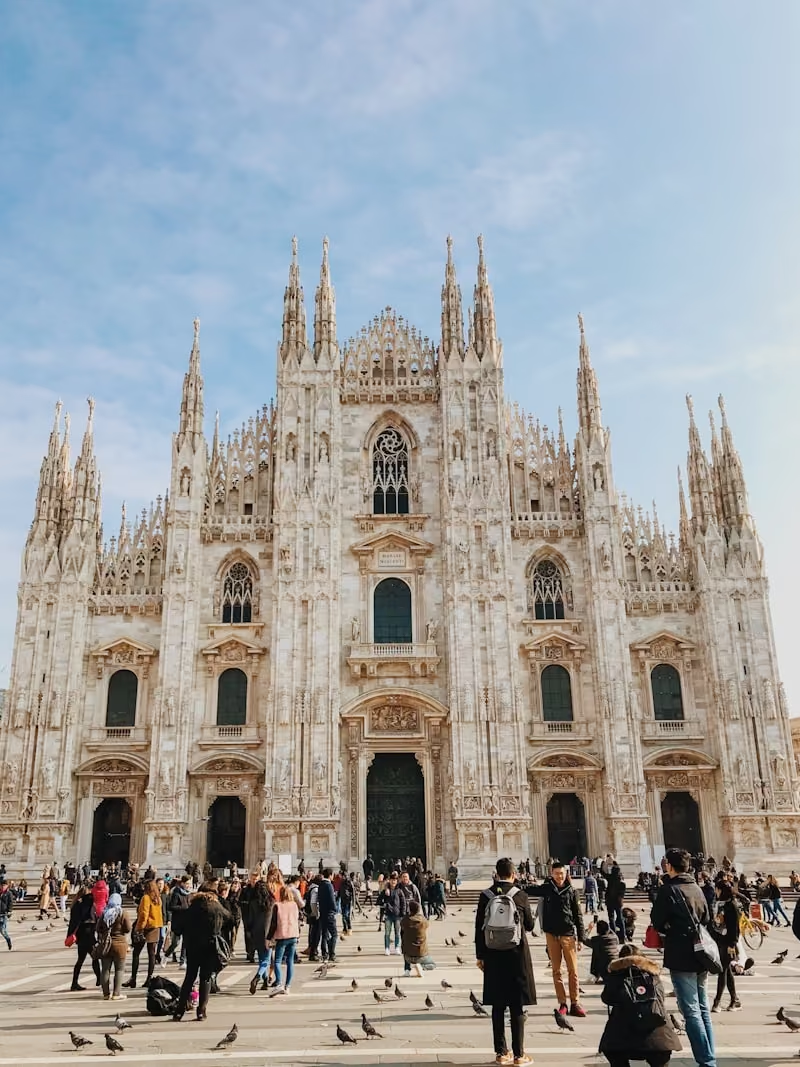
Milan's Duomo complex offers the cathedral, the rooftop terraces, the archaeological area and the museum in different combinations. Stair and lift tickets to the roof may be separate; even a lift ticket doesn't guarantee a step-free route across the whole upper terrace. Access can change because of weather, security or religious services. Buy current tickets only from the official duomomilano.it channel.
Dress appropriately for the cathedral; there are shoulder/knee covering rules and a security check. Choose non-slip shoes for the roof and leave large bags behind. Early morning or end-of-day light is lovely, but check the last entry and the roof weather rules on the day.
The bull mosaic tradition in the Galleria Vittorio Emanuele II is popular; you don't have to join the crowd wearing down the mosaic by spinning on your heel. To get a better look at the Duomo facade, step to the side rather than stopping suddenly in the middle of the square. La Scala's theatre museum doesn't always guarantee a view of the auditorium because of rehearsals/events; a performance ticket and a museum visit are different things.
The Museo del Novecento combines a view of the Duomo with 20th-century Italian art and is a strong choice for a rainy/very hot day. On the pedestrian axis between the Duomo and Brera, set aside time not just for luxury shops but, depending on your interests, for smaller stops such as San Bernardino alle Ossa or the Ambrosiana.
Brera, the Navigli, Isola and contemporary Milan
Brera, with the Pinacoteca, the Orto Botanico and its cobbled streets, is a natural base for an art day; restaurant prices rise in the evening. Check collection and restoration notices for the Pinacoteca di Brera on the official website. Don't reduce the neighbourhood to the shop windows of Via Brera.
The Navigli are known for sunset aperitivo and nightlife around the canals. The main canalside can be very crowded and touristy at weekends; explore the Darsena, the Naviglio Pavese and the Porta Genova area together. Not every drink where you see a buffet photo means 'unlimited free food'; depending on the venue, the aperitivo formula may be a small snack or a paid apericena.
Porta Nuova–Isola shows the contemporary transformation around the Bosco Verticale, Piazza Gae Aulenti and the Fondazione Catella. Isola's inner streets are better for neighbourhood bars and restaurants; don't turn back after your skyscraper photo. CityLife is a contemporary architecture/shopping district in another direction; on a short trip you need to choose rather than treating the two as the same theme.
Fondazione Prada and Porta Romana in the south make a separate half day for modern art/adaptive reuse. If the exhibition calendar doesn't interest you, don't go just for the Instagram tower. NoLo and Lambrate come alive during design week; on non-event days, check whether the programme is open.
Where to stay in Milan?
Duomo/Brera are the most central and most expensive options for a short trip and walking. Centrale is practical for airport/train connections; not every side of the station feels the same, and you need to check your late-night street route via reviews/maps. Porta Venezia is a balanced base with the M1, food and LGBTQ+ nightlife.
The Navigli/Porta Genova area is good for evening entertainment, but rooms facing the canal can be noisy. Isola/Garibaldi offers a contemporary neighbourhood with metro and train connections. Porta Romana is more residential and strong for Fondazione Prada and food and drink; you need the metro/tram to reach the Duomo.
Those coming for a trade fair should not confuse Rho Fiera with Fiera Milano City. Rho is outside the centre, out towards the M1/S trains; during design week and major fairs, accommodation and night-time public transport capacity change. Map the venue by its full name.
A tourist tax may be added depending on the property's category. Ask about the period when room air conditioning is active, reception hours and luggage storage. Don't assume every Malpensa Express service arrives at Centrale just because your hotel is near Centrale; read the arrival line on your ticket.
What to eat in Milan? Aperitivo isn't just an open buffet
Risotto alla milanese comes with saffron and rich stock; ossobuco is slow-cooked veal shank; cotoletta alla milanese is breaded meat with bone-in/boneless versions; and mondeghili are the city's tradition of meatballs made from leftover meat. In winter, cassoeula is heavier and seasonal. Panettone isn't just a Christmas gift box but an enriched yeasted dough with Milanese origins.
Aperitivo is the ritual of small bites served with a drink before dinner. Some places price a large buffet as apericena, while others only bring olives/crisps. Ask what is included with the drink on the menu and about any table-service surcharge; don't assume an old buffet image on social media reflects today's practice.
Drinks such as Campari, Milano–Torino and the Negroni Sbagliato are part of local bar culture. Asking for a non-alcoholic option is normal. While the view premium rises at front-row canal tables on the Navigli, drink/food quality may be more balanced in Porta Venezia, Isola or Porta Romana.
Coffee may be priced differently standing at the bar and at a table. Read the coperto or servizio line; tipping is not a mandatory percentage. At a historic pastry shop/café in the fashion district, sit down knowing that you are paying for the venue experience.
Shopping, fashion and the reality of design week
The Quadrilatero della Moda is for window shopping and luxury purchases; Corso Buenos Aires suits a broader mid-range, Via Torino young chains, and Brera and 5VIE independent design. Don't mistake outlets for cheap boutiques in the city centre; the large outlet villages involve transfers and a full day's cost.
Tax-free conditions depend on residence, a minimum spend and the last point of exit from the EU; the shop form alone does not guarantee a refund. Check passport details, goods, invoices and the customs validation step against the official EU/Italian rules. If you are travelling on by train from Milan to another EU country, don't look for the procedure at the wrong airport.
During the Salone del Mobile and Fuorisalone, exhibitions spread across Rho Fiera and the city's neighbourhoods. Not every event is open to the public or free; follow registration, capacity and hours in the official programme. Leaving accommodation and restaurants to the last minute this week is expensive.
When buying a design product, separate the words 'Made in Italy' from the brand story; ask about materials, place of manufacture and the returns policy. Don't buy fake luxury goods from a market stall as a souvenir despite the customs/fine risk.
Where to eat: selected places
These aren't places to tick off one by one — they're the stops that best capture how the city eats. Opening hours and prices change, so check before you go.
Trattoria Milanese
Mid-rangeCentro / Cinque Vie · Risotto, ossobuco and cotoletta
Good for comparing classic Milanese dishes on the same menu in the centre and seeing how northern cooking differs from pizza/pasta.
Confirm the options for serving ossobuco and risotto together/separately and the opening days; book for the evening.
Ratanà
UpscalePorta Nuova / Isola · Contemporary Milanese and Lombard cooking
Presenting traditions such as risotto and mondeghili with contemporary technique, it links the transformation of Porta Nuova to neighbourhood food.
Tasting-menu and à la carte arrangements can change; check prices/formula on the official menu and book.
Trippa
Mid-rangePorta Romana · Offal and seasonal Italian dishes
A destination in its own right for those who want to see Milan's contemporary trattoria scene through a short menu focused on strong ingredients and offal.
Getting a table can be difficult; use only the official reservation channel and current service days.
Luini
BudgetDuomo · Panzerotti
A quick, hot and inexpensive break near the Duomo; also part of Milan's everyday food history shaped by migration.
The queue moves fast; don't expect a sit-down meal, and take care with the very hot filling on the first bite.
Pavé
Mid-rangePorta Venezia · Coffee, croissants and a contemporary pastry shop
A good stop for trying Milan's take on the space between Italian bar coffee and a longer, sit-down modern breakfast/pastry culture.
Check the branch and table-service arrangements; go before the busy weekend hours.
Cantine Isola
Mid-rangePaolo Sarpi / Chinatown · Historic wine bar and aperitivo
Unlike the buffet-focused formula of the Navigli, it shows the real aperitivo rhythm with its wine selection, neighbourhood crowd and simple snacks.
It can be crowded and standing-room only; ask the price per glass and what comes with it when you order.
Dietary preferences
Vegan and halal restaurants in Milan
For Milan we picked one plant-based place and one aimed at Muslim travellers. Halal labels don't all mean the same thing: certification, the restaurant's own declaration and "some halal options" are shown separately on each card.
Vegan Pick
Fully veganLinfa
Porta Venezia · Contemporary vegan Italian
A fully vegan restaurant preparing pasta, pizza and creative dishes with refined presentation.
Why we picked it: For a special evening that combines Milan's sense of design with plant-based Italian cooking.
Verification note
The venue's plant-based coverage was checked in the directory; reconfirm the menu and opening days before booking.
Source: HappyCow's current vegan restaurant directory ↗Halal Pick
Restaurant-declaredAladino
Via Padova · Lebanese
A Lebanese restaurant with a halal declaration, serving grilled meat, mezze and baked dishes.
Why we picked it: For mezze suited to big tables and a taste of Via Padova's multicultural food scene.
Verification note
Highlighted in the 2026 Italy halal guide; reconfirm the current certificate and alcohol policy with the business.
Source: HalalSpy Italy 2026 field guide ↗Menus, suppliers and certifications change. If you keep strict halal, confirm the current certificate, alcohol, sauce ingredients and shared-kitchen risk directly with the restaurant.
Day-by-day itinerary
- 01
Day 1 — The Duomo, the centre and Brera
- Morning
- The Duomo with an official ticket, and the rooftop terraces if the weather allows; walk through the Galleria to the La Scala square.
- Afternoon
- In Brera, the Pinacoteca or the streets/Orto Botanico; choose one major collection.
- Evening
- A passeggiata from Brera to Porta Venezia and an aperitivo with clearly stated contents.
- 02
Day 2 — Leonardo, Sant'Ambrogio and the Navigli
- Morning
- Be at the ticket office with ID 30 minutes before your Cenacolo Vinciano entry; the area around Santa Maria delle Grazie.
- Afternoon
- Sant'Ambrogio and, depending on your interests, the Museo della Scienza or a selected part of the Castello Sforzesco.
- Evening
- A walk along the Darsena and the Navigli; a neighbourhood spot with a clear menu rather than the first table on the main canal.
- 03
Day 3 — Contemporary Milan
- Morning
- Porta Nuova, Piazza Gae Aulenti and Isola; see the Bosco Verticale from public space.
- Afternoon
- Fondazione Prada or the Museo del Novecento depending on the exhibitions; don't squeeze two distant spots into the same time slot.
- Evening
- Dinner in Porta Romana or Isola; on the way back, remember the ATM/S line payment distinction.
Before you go
Small but critical distinctions for transport and reservations in Milan
Note the airport by its IATA code
MXP, LIN and BGY are far from each other. Don't buy a transfer ticket just by looking at the name 'Milan airport'.
The Malpensa train doesn't go to a single centre
Choose the Cadorna, Centrale or Garibaldi direction according to your hotel; check the terminal, arrival station and maintenance notices.
ATM contactless payment isn't valid on S trains
When changing from the metro to a suburban/Trenord line, exit and buy a separate valid ticket for the railway.
Get to the Cenacolo 30 minutes early
Tickets are named, reservations are compulsory and there is little tolerance for lateness. Carry ID and proof of purchase.
Ask what the aperitivo includes
See on the menu whether it's a few snacks with your drink, a buffet or a paid apericena; don't trust old photos.
Use the same card and the same device
Don't switch from a physical card to a phone wallet at metro entry/exit and transfers; use a separate means of payment per person.
Continue your Italy route
This city works well on its own; if you have time, the stops below add a different region and city to the same trip.
Milan to Venice: the train to Santa Lucia
Carry on to the island centre without accidentally ending your journey at Mestre; plan the vaporetto and the 2026 access QR in advance.
Read the guide →Milan to Florence: the Renaissance by high-speed train
Once you arrive at SMN, slow the pace of your trip by spreading the Uffizi, Accademia and Duomo reservations across three separate days.
Read the guide →Milan to Rome: from the north to the Eternal City
Take the high-speed train to Termini; split ancient Rome, the Vatican and the historic centre across separate days.
Read the guide →Milan to Naples: high-speed train or plane?
Compare the real total journey time of a centre-to-centre train with a flight involving three airports.
Read the guide →Milan to the Amalfi Coast: the Salerno connection
Sort out the final coastal transfer and the ferry season in the same booking plan as the high-speed train/flight.
Read the guide →Frequently asked questions
How many days do you need for Milan?+
2 full days for the Duomo, Brera and the Last Supper; 3 days is ideal to add a contemporary neighbourhood/museum.
Which Milan airport is closest to the centre?+
Linate (LIN) is the closest and is connected to the M4 metro. Malpensa is connected by train, and Bergamo Orio al Serio mostly by bus.
Where should I buy Last Supper tickets?+
Use the sales channel linked from cenacolovinciano.org, the official museum website. Reservations are compulsory for everyone and tickets are named.
Can you take the metro in Milan with a bank card?+
Yes, at suitable readers on the ATM network. Enter and exit with the same card/device; the system is not valid on Trenord and S railway lines.
Do you need a car in Milan?+
Not for a city trip. The metro/tram is enough; the centre has Area C/ZTL and parking costs.
Which area should you stay in in Milan?+
Duomo/Brera suit a short trip, Centrale transport, Porta Venezia balanced nightlife, Isola a contemporary neighbourhood, and the Navigli a canalside evening.
Note: Cenacolo ticket releases, Duomo/La Scala access; MXP trains, BGY buses, ATM fares, trade-fair schedules and restaurant hours can change. Check the official channels on the day you travel. Last updated: .
Official sources and latest check
Visa, transport, entry and visiting rules change — re-check them with these official sources before you travel.