Contents
How to plan a trip to Athens
Athens isn't just an open-air museum around the Acropolis; Monastiraki, Psyrri, Pangrati, Exarchia and the coastline reveal different layers of history and everyday life. Balance archaeology days with the rhythm of neighbourhoods and markets.
The key here is to watch everyday life between Plaka, Koukaki and Monastiraki and Pangrati, Petralona and Kolonaki, not just the landmarks. The Acropolis and its Museum, Ancient Agora and Roman Agora and National Archaeological Museum don't have to be squeezed into the same day; one main experience, one neighbourhood and one long meal give a stronger rhythm.
Things to do in Athens
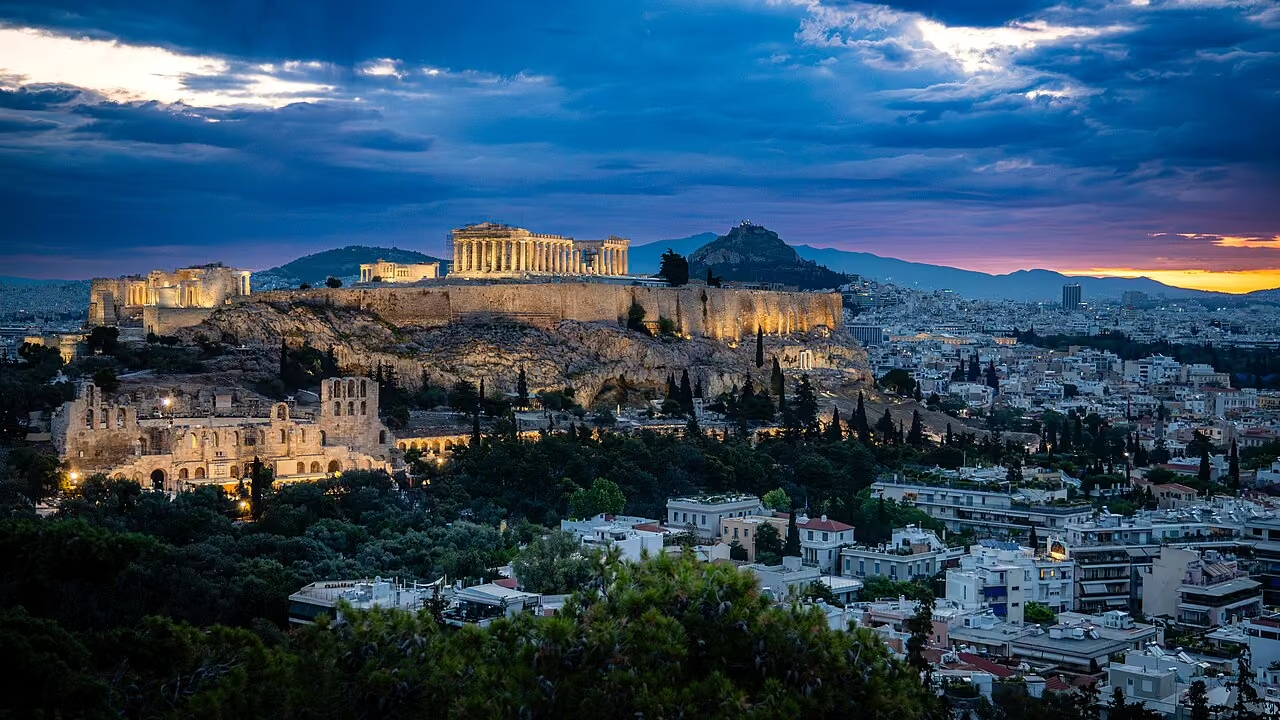
The Acropolis and its Museum
Visit the hill in the cool early hours and the museum in a separate time slot; check timed tickets and closures due to heat or strikes through official channels.
Ancient Agora and Roman Agora
Plan the two sites without assuming a single ticket; allow at least half a day for the museum, the Stoa and the Tower of the Winds.
National Archaeological Museum
Tour the collection with a chronological selection; verify temporary galleries, restoration and opening hours on the day of your visit.
Area by area: where to go
Plaka, Koukaki and Monastiraki: Easy for a first visit and walking to the archaeology; daytime crowds and tourist prices are high.
Pangrati, Petralona and Kolonaki: Metro-linked alternatives at different budgets, for local food and nightlife or museums and shopping.
Where to stay in Athens
On a first visit, staying around Plaka, Koukaki and Monastiraki keeps you close to the main sightseeing route; for more local evenings and often quieter accommodation, Pangrati, Petralona and Kolonaki is a good alternative. Look not only at the distance on the map but at your morning start and the last public transport.
What to eat in Athens
Meze and tavernas: With horiatiki, fava, dolmades and grills, ask about portions, bread/cover charges and the per-kilo price of seafood.
Souvlaki and bakery goods: Clarify the type of meat, sauce and pita contents; try spanakopita and koulouri fresh in the morning.
Getting to and around Athens
Flights to Athens arrive at ATH (Athens Eleftherios Venizelos Airport); the metro and the suburban railway connect it with the city. Ferries from the islands arrive at the Port of Piraeus, and trains arrive at Larissa station.
Metro, trams, buses and walking
Cafés, nightlife and shopping
Plan dinner and a short walk around Pangrati, Petralona and Kolonaki. Keep nightlife to a level that won't spoil the next morning's booking for The Acropolis and its Museum; for late returns use a licensed taxi or an official app.
Meze and tavernas and locally made products make good gifts. Don't buy protected natural products, undocumented antiques or food with unclear baggage and customs rules.
Day trips from Athens
Sounion: For the Temple of Poseidon, plan the coastal bus/tour, the return after sunset and the archaeological closing time together.
Delphi: Rather than a long day from Athens, consider staying overnight in Arachova/Delphi; verify museum, site and bus times.
Best time to visit Athens
For most visitors the most balanced window is March–May · September–November, but average weather is not a daily forecast. Reorder city, coast or mountain days in the last 48 hours using official weather and operator updates.
How to budget for your trip
First price accommodation, intercity connections and a main experience such as The Acropolis and its Museum. Then set money aside for local transport, meals, luggage and last-mile transfers; don't mistake the flight-plus-hotel total for the trip budget.
Safety and common mistakes
In summer heat, archaeological sites may close temporarily; bring water and a hat and go early. Keep your bag closed against pickpockets on the metro and in crowded squares; stay away from demonstrations, and don't use unlicensed taxis or ticket sellers.
Top stops
The stops that best capture the city. Timed entry, tickets and opening hours change, so check official channels before you go.
The Acropolis and its Museum
Main route · The destination's signature sight
Visit the hill in the cool early hours and the museum in a separate time slot; check timed tickets and closures due to heat or strikes through official channels.
Ancient Agora and Roman Agora
Second sightseeing cluster · Culture and local character
Plan the two sites without assuming a single ticket; allow at least half a day for the museum, the Stoa and the Tower of the Winds.
National Archaeological Museum
Surrounding experience · A change of scenery and pace
Tour the collection with a chronological selection; verify temporary galleries, restoration and opening hours on the day of your visit.
Dietary preferences
Vegan and halal restaurants in Athens
For Athens we picked one plant-based place and one aimed at Muslim travellers. Halal labels don't all mean the same thing: certification, the restaurant's own declaration and "some halal options" are shown separately on each card.
Vegan Pick
Vegan optionsVegan Beat
Monastiraki / centre · Plant-based and vegan options
A current restaurant candidate on the city route, with a plant-based menu or clear vegan options.
Why we picked it: It's a good starting point for discussing animal ingredients, meat stock and cross-contamination before ordering.
Verification note
Before booking, reconfirm directly with the restaurant, alongside the directory, that it's open, the vegan coverage of the menu and its opening hours.
Source: HappyCow's current vegan restaurant directory ↗Halal Pick
Re-check recommendedMirch
Monastiraki / centre · Halal or Muslim-friendly options
A restaurant candidate that stands out in halal food searches, but whose certificate, meat sourcing and shared-kitchen status should be asked about again on the day of your visit.
Why we picked it: For strict halal needs, it offers a visible candidate to start your verification questions with, rather than choosing a business at random.
Verification note
No current independent certificate was verified. Confirm the halal meat document, shared grill/fryer use, sauces and alcohol service directly with the business; if necessary, choose a vegan or plain fish alternative.
Source: HalalTrip restaurant guide for Muslim travellers ↗Research note: Restaurant ownership, menus and certification status can change quickly. These two picks are a starting point; reconfirm the official document and that the business is open on your travel date.
Menus, suppliers and certifications change. If you keep strict halal, confirm the current certificate, alcohol, sauce ingredients and shared-kitchen risk directly with the restaurant.
Day-by-day itinerary
- 01
Day 1 — The Acropolis and its Museum and a first neighbourhood
- Morning
- Start early with The Acropolis and its Museum; sort out any entry or transport uncertainty at the beginning of the day.
- Afternoon
- Walk around Plaka, Koukaki and Monastiraki and leave room for an unplanned coffee break.
- Evening
- End the day with a relaxed dinner built around Meze and tavernas.
- 02
Day 2 — Ancient Agora and Roman Agora and the local rhythm
- Morning
- Cover the main route around Ancient Agora and Roman Agora before the crowds build.
- Afternoon
- Add the small streets, markets and everyday life around Pangrati, Petralona and Kolonaki to the plan.
- Evening
- For Souvlaki and bakery goods, ask about ingredients, portions and booking in advance.
- 03
Day 3 — National Archaeological Museum and the surroundings
- Morning
- Confirm the weather, tickets or transfers for National Archaeological Museum the night before.
- Afternoon
- Fit in Sounion according to your energy and the last connection back.
- Evening
- Before heading back, prepare the next day's connection, luggage time and offline tickets.
Continue your Greece route
This city works well on its own; if you have time, the stops below add a different region and city to the same trip.
Thessaloniki travel guide
A port city bringing Roman, Byzantine, Ottoman and Jewish heritage together with northern cuisine.
Read the guide →Santorini travel guide
Caldera villages, volcanic vineyards, Akrotiri and dramatic Aegean sunsets.
Read the guide →Mykonos travel guide
White Cycladic streets, windmills, Delos and a lively island nightlife.
Read the guide →Frequently asked questions
How many days do you need in Athens?+
A stay of 4–5 days makes for a balanced first visit. Leave room for neighbourhoods, food and possible weather or transport delays and the trip becomes more rewarding.
Where should you stay in Athens?+
Plaka, Koukaki and Monastiraki is practical for a first visit; Pangrati, Petralona and Kolonaki is a more local alternative. Weigh the morning and late-night connections together with the room price.
When is the best time to visit Athens?+
The most balanced period is generally March–May · September–November; still, check the latest weather, festivals and capacity with official sources.
Do you need a car in Athens?+
Getting around: Metro, trams, buses and walking. Before renting, weigh up parking, licence, insurance, fuel and getting back at night together.
What can you combine with Athens on the same trip?+
Thessaloniki, Santorini, Mykonos are natural next stops. Use door-to-door travel time rather than distance on the map.
How do you get to Athens?+
Flights to Athens arrive at ATH (Athens Eleftherios Venizelos Airport); the metro and the suburban railway connect it with the city. Ferries from the islands arrive at the Port of Piraeus, and trains arrive at Larissa station.
Note: Museum and business hours, event calendars, transport fares and entry fees change periodically. Re-check places that require reservations only through official channels, close to your visit date. Last updated: .
Official sources and latest check
Visa, transport, entry and visiting rules change — re-check them with these official sources before you travel.