Contents
How to plan a trip to Brussels
Seeing Brussels only between the Grand-Place and the European institutions misses a lot; the Marolles, Saint-Gilles and Ixelles reveal the city's everyday, creative side.
The key here is to watch everyday life between Centre and Sablon and Saint-Gilles and Ixelles, not just the landmarks. Grand-Place and the historic centre, Magritte Museum and Mont des Arts and European Quarter and Atomium don't have to be squeezed into the same day; one main experience, one neighbourhood and one long meal give a stronger rhythm.
Things to do in Brussels
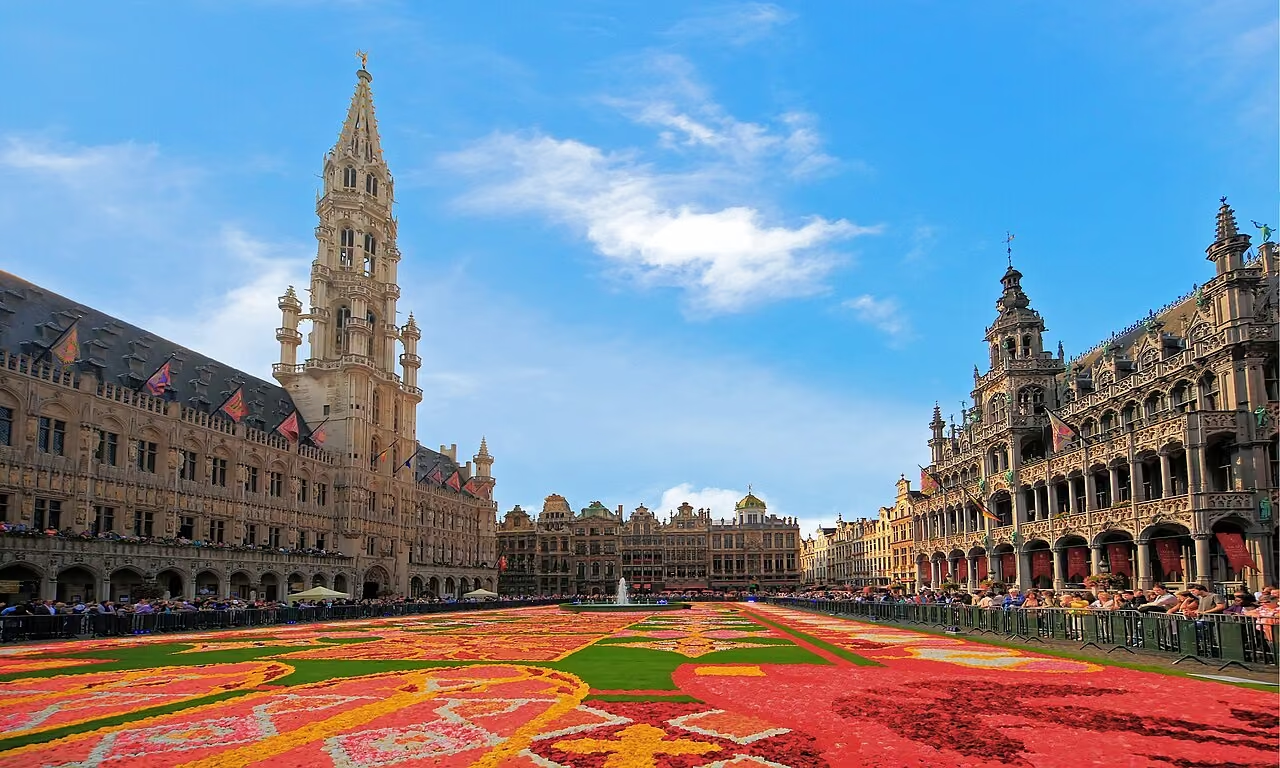
Grand-Place and the historic centre
Explore the Town Hall, the guild façades, the Galeries Royales and the surrounding streets early in the morning or in the evening light.
Magritte Museum and Mont des Arts
Decide which collections you want within the Royal Museums of Fine Arts complex; don't pile all the museums into one day.
European Quarter and Atomium
Link these two distant clusters by metro; check timed entry for the Parliament experience and the Atomium.
Area by area: where to go
Centre and Sablon: Practical for a first visit, trains and the main museums; tourist prices and night noise vary.
Saint-Gilles and Ixelles: Stronger for Art Nouveau, markets, multicultural food and local evenings.
Where to stay in Brussels
On a first visit, staying around Centre and Sablon keeps you close to the main sightseeing route; for more local evenings and often quieter accommodation, Saint-Gilles and Ixelles is a good alternative. Look not only at the distance on the map but at your morning start and the last public transport.
What to eat in Brussels
Moules-frites and carbonnade: Ask about the mussel season/origin and what's in the beer-based stew; read the extra charges on tourist set menus.
Waffles, chocolate and beer: Tell Brussels and Liège waffles apart; choose local producers without turning tastings into a sugar-and-alcohol race.
Getting to and around Brussels
Flights to Brussels arrive at BRU (Brussels Airport, in Zaventem), with train links to the city's stations. International high-speed trains mostly arrive at Bruxelles-Midi/Brussel-Zuid; names are bilingual in Brussels, so you will see both on signs.
Metro, trams, buses and walking
Cafés, nightlife and shopping
Plan dinner and a short walk around Saint-Gilles and Ixelles. Keep nightlife to a level that won't spoil the next morning's booking for Grand-Place and the historic centre; for late returns use a licensed taxi or an official app.
Moules-frites and carbonnade and locally made products make good gifts. Don't buy protected natural products, undocumented antiques or food with unclear baggage and customs rules.
Day trips from Brussels
Leuven: A relaxed day by short train ride for the town hall, university heritage and beer culture.
Waterloo: For the museum and battlefield, set up buses, opening hours and the return in advance.
Best time to visit Brussels
For most visitors the most balanced window is April–June · September–December, but average weather is not a daily forecast. Reorder city, coast or mountain days in the last 48 hours using official weather and operator updates.
How to budget for your trip
First price accommodation, intercity connections and a main experience such as Grand-Place and the historic centre. Then set money aside for local transport, meals, luggage and last-mile transfers; don't mistake the flight-plus-hotel total for the trip budget.
Safety and common mistakes
Around Bruxelles-Midi and on crowded metros, watch your phone and bag. Save stations' French and Dutch names together; check road closures during protests or EU summits.
Top stops
The stops that best capture the city. Timed entry, tickets and opening hours change, so check official channels before you go.
Grand-Place and the historic centre
Main route · The destination's signature sight
Explore the Town Hall, the guild façades, the Galeries Royales and the surrounding streets early in the morning or in the evening light.
Magritte Museum and Mont des Arts
Second sightseeing cluster · Culture and local character
Decide which collections you want within the Royal Museums of Fine Arts complex; don't pile all the museums into one day.
European Quarter and Atomium
Surrounding experience · A change of scenery and pace
Link these two distant clusters by metro; check timed entry for the Parliament experience and the Atomium.
Dietary preferences
Vegan and halal restaurants in Brussels
For Brussels we picked one plant-based place and one aimed at Muslim travellers. Halal labels don't all mean the same thing: certification, the restaurant's own declaration and "some halal options" are shown separately on each card.
Vegan Pick
Vegan optionsHumus x Hortense
Ixelles / centre · Plant-based and vegan options
A current restaurant candidate on the city route, with a plant-based menu or clear vegan options.
Why we picked it: It's a good starting point for discussing animal ingredients, meat stock and cross-contamination before ordering.
Verification note
Before booking, reconfirm directly with the restaurant, alongside the directory, that it's open, the vegan coverage of the menu and its opening hours.
Source: HappyCow's current vegan restaurant directory ↗Halal Pick
Re-check recommendedL'Express
Ixelles / centre · Halal or Muslim-friendly options
A restaurant candidate that stands out in halal food searches, but whose certificate, meat sourcing and shared-kitchen status should be asked about again on the day of your visit.
Why we picked it: For strict halal needs, it offers a visible candidate to start your verification questions with, rather than choosing a business at random.
Verification note
No current independent certificate was verified. Confirm the halal meat document, shared grill/fryer use, sauces and alcohol service directly with the business; if necessary, choose a vegan or plain fish alternative.
Source: HalalTrip restaurant guide for Muslim travellers ↗Research note: Restaurant ownership, menus and certification status can change quickly. These two picks are a starting point; reconfirm the official document and that the business is open on your travel date.
Menus, suppliers and certifications change. If you keep strict halal, confirm the current certificate, alcohol, sauce ingredients and shared-kitchen risk directly with the restaurant.
Day-by-day itinerary
- 01
Day 1 — Grand-Place and the historic centre and a first neighbourhood
- Morning
- Start early with Grand-Place and the historic centre; sort out any entry or transport uncertainty at the beginning of the day.
- Afternoon
- Walk around Centre and Sablon and leave room for an unplanned coffee break.
- Evening
- End the day with a relaxed dinner built around Moules-frites and carbonnade.
- 02
Day 2 — Magritte Museum and Mont des Arts and the local rhythm
- Morning
- Cover the main route around Magritte Museum and Mont des Arts before the crowds build.
- Afternoon
- Add the small streets, markets and everyday life around Saint-Gilles and Ixelles to the plan.
- Evening
- For Waffles, chocolate and beer, ask about ingredients, portions and booking in advance.
- 03
Day 3 — European Quarter and Atomium and the surroundings
- Morning
- Confirm the weather, tickets or transfers for European Quarter and Atomium the night before.
- Afternoon
- Fit in Leuven according to your energy and the last connection back.
- Evening
- Before heading back, prepare the next day's connection, luggage time and offline tickets.
Continue your Belgium route
This city works well on its own; if you have time, the stops below add a different region and city to the same trip.
Bruges travel guide
A living city of canals, guild houses, Flemish masters and a UNESCO-listed medieval fabric.
Read the guide →Ghent travel guide
A city that brings together the Gravensteen, three towers, canal banks and a creative student culture.
Read the guide →Antwerp travel guide
The Scheldt port, Rubens, fashion, diamond history and a magnificent central station.
Read the guide →Frequently asked questions
How many days do you need in Brussels?+
A stay of 3–4 days makes for a balanced first visit. Leave room for neighbourhoods, food and possible weather or transport delays and the trip becomes more rewarding.
Where should you stay in Brussels?+
Centre and Sablon is practical for a first visit; Saint-Gilles and Ixelles is a more local alternative. Weigh the morning and late-night connections together with the room price.
When is the best time to visit Brussels?+
The most balanced period is generally April–June · September–December; still, check the latest weather, festivals and capacity with official sources.
Do you need a car in Brussels?+
Getting around: Metro, trams, buses and walking. Before renting, weigh up parking, licence, insurance, fuel and getting back at night together.
What can you combine with Brussels on the same trip?+
Bruges, Ghent, Antwerp are natural next stops. Use door-to-door travel time rather than distance on the map.
How do you get to Brussels?+
Flights to Brussels arrive at BRU (Brussels Airport, in Zaventem), with train links to the city's stations. International high-speed trains mostly arrive at Bruxelles-Midi/Brussel-Zuid; names are bilingual in Brussels, so you will see both on signs.
Note: Museum and business hours, event calendars, transport fares and entry fees change periodically. Re-check places that require reservations only through official channels, close to your visit date. Last updated: .
Official sources and latest check
Visa, transport, entry and visiting rules change — re-check them with these official sources before you travel.